

Quick answer: A simple college student budget covers five things: money that actually lands in your account, fixed bills, food, books and supplies, and a small fund for irregular costs. Build it around your semester refund instead of a monthly paycheck you may not have. And use fresh numbers: consumer prices rose 3.4% over the year ending August 2026 (BLS’s August 2026 CPI release), so last fall’s figures can come up short.
There are two versions of you in a school year.
September you: the refund just hit, textbooks are bought, and an iced latte doesn’t feel like a decision. November you: doing mental math in the campus store over a bag of pretzels, wondering where the refund went.
Same person. Same money. The difference is having a system, and the one people usually recommend, a tidy monthly budget, quietly assumes you get paid monthly. Many students don’t. Money often comes as a lump each semester plus pay from part-time shifts, and that mismatch is where a lot of student budgets break.
So let’s build the version that actually fits a semester.
Key takeaways
- College money often arrives in lumps but leaves weekly, so budget by the week, not the month.
- Your school’s cost sheet is an allowance, not a forecast of what you’ll actually spend.
- Colleges budget about $1,330 a year for books and supplies at public four-year schools (College Board, 2025–26), so plan for it before classes start.
- Often the fix isn’t spending less. It’s knowing what’s safe to spend today.
What a college student budget actually has to cover
Ignore the intimidating cost-of-attendance PDF for a second. The part you personally control comes down to five buckets:
1. Fixed stuff. Rent and utilities if you’re off campus, phone, insurance, any subscription you signed up for late at night. 2. Food. Groceries plus the eating-out number you’re currently lying to yourself about. 3. Books and supplies. The College Board puts the 2025–26 allowance at about $1,330 a year at public four-year schools, and much of it can come due at the start of a term, not in gentle monthly slices. 4. Transportation. Gas, bus pass, or the flights home you keep forgetting to price. 5. Everything else: laundry, toothpaste, a formal you didn’t know about, a friend’s birthday.
That’s it. Five budget categories is genuinely enough. A budget with a long list of categories and a color scheme is easy to stop opening.
For context on the whole picture: the average net cost of attendance for a first-time, full-time in-state student at a public four-year school is estimated at $21,340 for 2025–26, and students at public two-year colleges are looking at roughly $6,320 in allowances for books, transportation, and personal expenses on top of housing and food. Even after grants, that’s a lot, and much of it goes to tuition and housing, which aid and loans may already cover. Your budget is the leftover slice, and the leftover slice is where the panic lives.
Why your numbers feel wrong even when the math was right
Two reasons, and neither one is that you’re bad with money.
First, prices moved. Over the year ending August 2026, consumer prices rose 3.4% (BLS’s August 2026 CPI release), with food away from home up 3.4% and shelter up 3.0%. If you built your plan on last year’s prices, eating out and rent both cost more now, and you didn’t do anything wrong.
Second, and this is the sneaky one: the school’s cost sheet is a financial-aid allowance. It’s a number that can affect how much financial aid you’re eligible for. It is not a prediction of your life. It doesn’t know you have a long commute, a dog, or a roommate who “forgets” the utility bill.
Which means the useful budget is the one you write yourself, using numbers from your own bank app.
How to budget in college: the short version
Step 1: Add up everything that lands, then divide by weeks. Job, refund check, scholarships that pay out to you, money from family, the odd payback from a friend whose lunch you covered. Take the semester total and divide by the number of weeks in the term, not the months. For example, a $4,200 refund over a 16-week semester is about $262 a week, and “$262 a week” is a number your brain can actually hold on a Tuesday. “$4,200” is just a feeling.
Step 2: Pull your fixed costs out first. Rent, phone, insurance, subscriptions. Whatever’s left is the money you actually get to decide about.
Step 3: Pre-fund the expensive month. August and January usually cost more: deposits, books, a new laptop charger, move-in stuff. Set that money aside before you start weekly spending, or the first weeks of the term will quietly borrow from the last ones.
Step 4: Give food one number and defend it. Not “groceries” and “eating out” and “coffee” and “snacks.” One number. Food is often where a student budget lives or dies, and splitting it into four categories just gives you four places to hide. If it’s tight, a few of these ways to save money on groceries can buy back more room than skipping coffee.
Step 5: Start a tiny fund for the once-in-a-while stuff. Flights home, the dentist, a lab fee, a parking ticket. For example, $20 a week over a 16-week semester adds up to $320 by finals, and $320 can be the difference between an annoying week and a crisis. If you want the fuller version of this idea, here’s how much emergency fund is actually reasonable when your income is small.
Step 6: Look at it once a week. Sunday night, before the week starts. That’s the whole maintenance plan. A budget helps when you actually open it.
Here’s a sample budget (example numbers, not national averages) for an off-campus student with about $1,150 a month coming in:
| Category | Example month | Where it goes sideways |
|---|---|---|
| Rent + utilities (shared) | $610 | Roommate pays late |
| Food (all of it) | $300 | Four categories instead of one |
| Books & supplies | $149 | Can land at the start of term, not spread out |
| Phone | $40 | Family plan changes |
| Transportation | $85 | Flights home unbudgeted |
| Laundry, toiletries, misc | $50 | Small buys add up |
| Sinking fund | $60 | First thing cut |
| Total | $1,294 | $144 short, fixable if you catch it early |
That $144 gap isn’t a character flaw. It’s the reason the plan has to be visible: when you can see the shortfall early, you can fix it with an extra shift or a cancelled subscription. When you can’t see it, you find out in November.
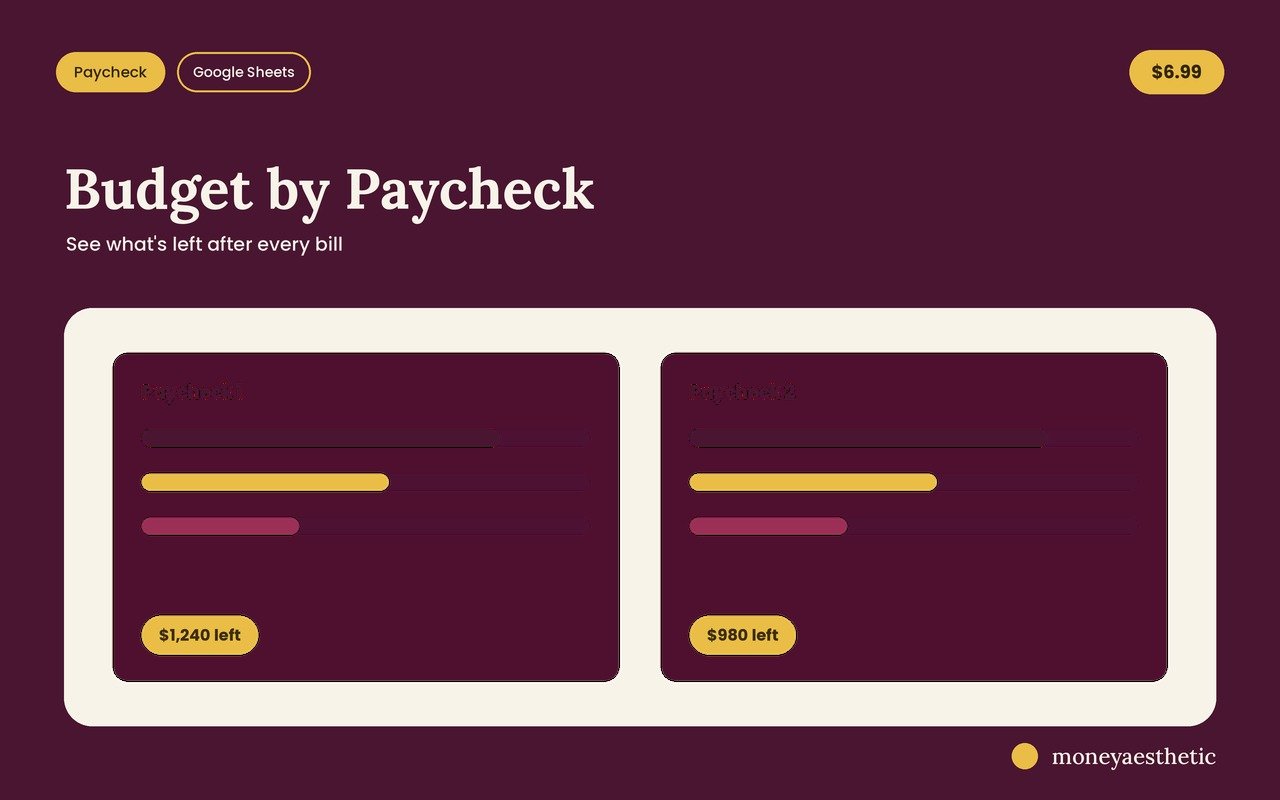
See what’s left after your bills
List each income source and how often it pays (weekly, biweekly, semi-monthly or monthly), and it converts everything to a monthly figure and shows what’s left after your budgeted expenses. A bill calendar, savings goals and debt payoff plans are in the same file. No formulas to build.
Get Budget by Paycheck →Common misconceptions about budgeting in college
“I don’t make enough for a budget to matter.” Backwards. The less money you have, the more each decision weighs, and the more a plan is worth. Budgeting is arguably a luxury when you’re rich and a necessity when you’re not, for the same reason budgeting on a low income is mostly about visibility, not discipline.
“The refund is bonus money.” It isn’t bonus money. For many students, part of it is borrowed, and it’s meant to cover a whole semester of living. Treating it as a windfall is a common and costly mistake.
“The 50/30/20 rule is the answer.” It’s a nice framework and a rough fit for a student like the example above, whose rent and utilities take about 53% of income by themselves. Use it as a sanity check, not a rule; the 50/30/20 rule can work better once you have a real salary.
“An app will handle it.” Many apps are good at showing you what already happened. They’re less helpful for knowing what’s safe to spend on Thursday, which is the question that matters day to day. If your class notes already live in Notion, a Notion budget template at least keeps money somewhere you actually open, instead of being one more app to forget.
The refund-check trap to plan for
Here’s the part that’s easy to miss.
Your income is lumpy and your spending is weekly. That mismatch does two specific kinds of damage, and they compound.
The first is the front-load. The first weeks of a term tend to be expensive: deposits, books, supplies, and a social calendar that costs money because you’re meeting new people. The back half of the semester is often cheaper by comparison. So a “monthly average” can mislead you. Divide by weeks, then set aside the front-loaded costs before classes start, and the second half of the semester stops being a slow-motion emergency.
The second is fees. When a lump-sum account runs low, small charges start landing, and in the CFPB’s 2022–23 data some college-sponsored accounts charged overdraft and NSF fees. The CFPB’s December 2024 report found that students with college-sponsored bank accounts paid an average of about $12.36 per account in fees in the 2022–23 award year, down from $26.52 the year before, and some agreements allowed providers to charge up to five overdraft or NSF penalties in one day, about $175. That’s real money, gone in one bad day if a balance dips below zero.
Spending less isn’t the main fix for either problem. Both get easier when you’re seeing the week you’re actually in: using the example above, this week’s number is about $262, and if $148 of it is already spoken for, the $114 left is fine to spend. That’s the whole feeling I’m selling here: not restriction, just the quiet confidence of knowing you’re okay this week.
You can build that in a spreadsheet yourself. Column layout, a few SUMIFs, time you’d rather spend elsewhere. Or start with the free monthly budget template instead. Either way, do it before the term starts, because a plan written in September does a lot more for you than the same plan written in November.
College student budget FAQ
How much should a college student budget per month?
It depends on where you live, but the College Board’s 2025–26 student budgets give a benchmark: public four-year colleges allow about $13,900 a year for housing and food for in-state students living on campus, plus about $5,140 for books, transportation and personal costs. Spread over a nine-month school year (an assumption, since terms vary), that second part is roughly $570 a month. These are aid allowances, not a measure of what students actually spend. Build your number from your own rent and food instead of an average. The average student doesn’t have your lease.
How do I budget with a refund check instead of a paycheck?
Divide the refund by the number of weeks in the semester and treat that as your weekly income. Set aside front-loaded costs like books and deposits first, then spend the weekly number. Lump-sum money is easy to overspend when it’s treated as a monthly average.
What is a realistic food budget for a college student?
It depends on your city and meal plan, so start from what your bank app shows you spent on food last month, then add a cushion: in BLS’s August 2026 CPI release, grocery prices were up 2.2% and restaurant prices up 3.4% over the year. Keep it as one number rather than splitting it into groceries, takeout, and coffee, because separate categories can make overspending harder to notice.
How much do books and supplies cost?
The College Board’s 2025–26 student budgets allow about $1,330 at public four-year schools and $1,340 at private nonprofit four-year schools. That’s an aid allowance, not a measure of what students actually spend. Renting, buying used, and checking the library reserve desk before classes start can lower that cost. Younger siblings still at home run on a different set of numbers, which is what the back-to-school budget covers.
Should a college student have an emergency fund?
Yes, but a small one. A starter goal of a few hundred dollars can cover smaller surprises, like a last-minute flight home or a copay, and makes it less likely that a credit card becomes the backup plan.
Does the 50/30/20 rule work for students?
It can be a tight fit as written. When rent and utilities take more than half of income, as in the example budget above, needs go past the 50% share before food and books are counted, which squeezes the 30% wants bucket. Use it as a direction to aim at once you’re earning a full-time salary.
What’s the best budgeting method for college?
A weekly spending number backed by a simple spreadsheet is a good fit for many students. It matches how student money often arrives and leaves, and it answers the question that matters day to day, which is what’s safe to spend right now.
How do I stop overspending in the first month of a semester?
Pre-fund it. Separate the one-time start-of-term costs from your weekly money before classes begin, so early spending can’t quietly borrow from the end of the semester.
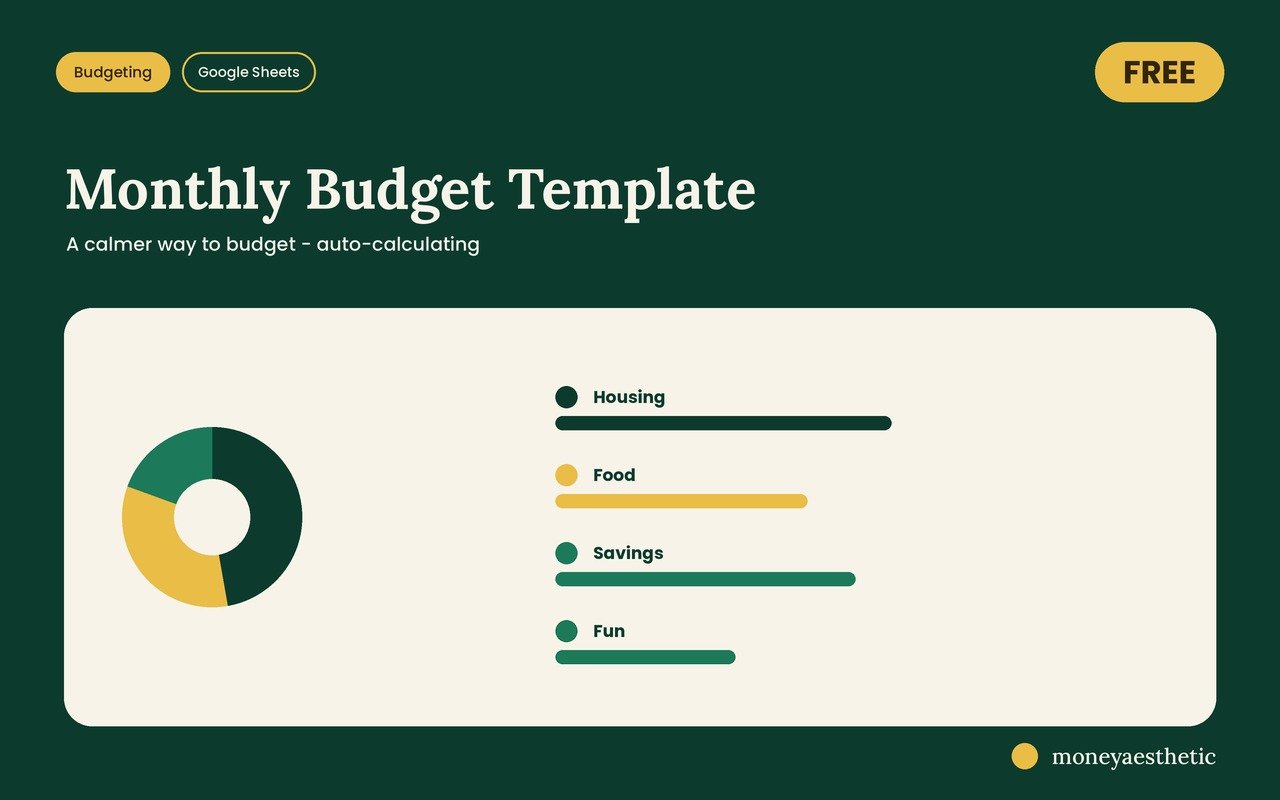
Grab the free monthly template
If the hard part is just seeing everything in one place, start there. The free Monthly Budget Template lays out your month on a single sheet and does the adding for you — no subscription, no catch.
Get the free Monthly Budget Template →This article is for general education only and isn’t financial advice. Your costs, aid package and situation are your own. Check your school’s figures and talk to a qualified professional before making decisions about borrowing.