

How do you budget on a low income? Fund your true essentials first (housing, food, utilities, transportation, minimum debt payments), then give every leftover dollar a job, even if that’s just $10 for fun and $20 for savings. Skip rigid percentage rules like 50/30/20; on a tight income your needs usually eat way more than half, and that’s normal, not a failure. With grocery prices still up 2.2% over the 12 months ending August 2026 (BLS’s August 2026 CPI release), a needs-first plan is what keeps you out of the overdraft.
Most “how to budget on a low income” advice reads like it was written by someone who has never had to make $23 last until Friday. “Just cut back on lattes!” Okay, but the problem was never lattes. When money is genuinely tight, budgeting isn’t about a jade-plant-and-journal aesthetic. It’s about making sure the lights stay on and there’s food for the week, with as little panic as possible. And if debt payments are part of what makes the month tight, the guide on how to get out of debt on a low income picks up from there.
Here’s the reframe that changes everything: a budget on a low income isn’t a punishment for not earning more. It’s the opposite. It’s the tool that gives you back a little control when the numbers are scary, so you decide where your money goes instead of finding out after it’s gone. And you are in very good company. In the Federal Reserve’s survey of household finances in 2025 (published May 2026), 37% of adults said they wouldn’t cover a surprise $400 expense entirely with cash or its equivalent. Tight is common. A plan is what makes tight survivable.
Key takeaways
- Fund essentials first, then assign leftovers. Needs come before percentages.
- Ignore the 50/30/20 rule if it doesn’t fit. On a low income, needs often take 80%+, and that’s math, not a moral failing.
- Every dollar gets a job, even the tiny ones. $10 fun money and $20 savings still count and still matter.
- Small, boring, automatic beats big and heroic. A $20 auto-transfer you never see will usually outsave a burst of willpower.
First, drop the shame (and the 50/30/20 rule)
You’ve probably seen the famous 50/30/20 rule: 50% of your take-home to needs, 30% to wants, 20% to savings and debt. It’s a fine starting point, if your needs actually fit inside half your income. On a low income, they rarely do. When rent alone is half your paycheck, telling you to keep “needs under 50%” isn’t advice, it’s a math error.
So let’s throw it out and use something honest instead: a needs-first budget. Instead of forcing your life into someone else’s percentages, you list what you truly must pay, fund that first, and then, only then, split up whatever’s left. Sometimes what’s left is $150. Sometimes it’s $15. Either way, you assigned it on purpose, which is the entire game. This is the part that quietly lowers the background hum of money stress: not more income (yet), just knowing exactly where you stand.
How to budget on a low income, step by step
None of this requires being good at math or spreadsheets. It requires a little honest time and a willingness to look at real numbers. Here’s the order that works:
- Add up your real take-home. Every source: job, side gigs, benefits, child support, the occasional cash job. Use what actually lands in your account, not the pre-tax number. If it swings month to month, use a low-ish average so you’re never planning around money that might not show up.
- List your true essentials. Housing, utilities, groceries, transportation, phone, insurance, minimum debt payments, childcare, medications. The non-negotiables that keep you housed, fed, working, and healthy.
- Fund those first, plus a $10–20 buffer. This is the needs-first move. Cover the must-pays before you budget a single dollar of “fun.” Slip a tiny buffer in there too; it’s what stops one $15 surprise from bouncing your whole account.
- Give the leftovers a job. Whatever remains gets split on purpose: a little savings, a little debt above the minimums, a little guilt-free fun. Even $5 to “fun” matters. A budget with zero joy in it rarely survives contact with a hard week.
- Check in weekly, not never. A short Sunday check to see what’s left. Low-income budgets run on thin margins, so a quick weekly glance catches problems while they’re still small.
That’s it. The reason a monthly budget template helps so much here is that it handles the math for steps 3 and 4: you type in your income and expenses, and it totals them and shows what’s left over. No formulas, no math, no finding out you’re short on the 28th.
What a needs-first budget actually looks like
Numbers make this real. Here’s a sample month for someone taking home $2,200, deliberately showing how much of a low income goes to pure survival, and why the 50/30/20 split simply can’t apply:
| Category | Monthly | Share of take-home |
|---|---|---|
| Rent | $1,000 | 45% |
| Groceries | $350 | 16% |
| Utilities + phone | $220 | 10% |
| Transportation | $250 | 11% |
| Minimum debt payments | $130 | 6% |
| Small buffer + savings | $100 | 5% |
| Everything else / fun | $150 | 7% |
Look at the top five rows: essentials eat about 89% of the budget. There is no universe where “wants” get 30% here, and pretending otherwise just makes you feel like you’re failing at a game that was rigged. The needs-first version isn’t glamorous, but it’s real, it balances, and it still carves out $100 for a cushion and $150 for being a human. That’s a budget you can actually keep.
Build your needs-first budget
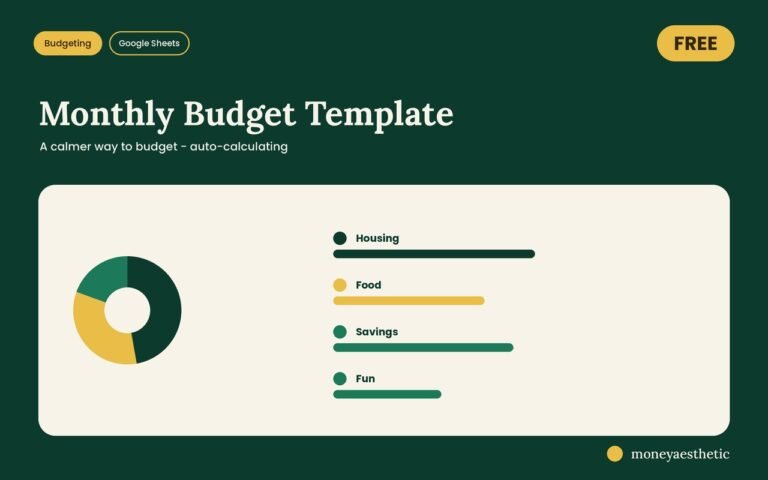
Our free Monthly Budget Template does the math so you don’t have to. Plug in your take-home, your expenses and your savings, and it totals everything and shows what’s left over. No formulas, no spreadsheet dread, no “wait, where did it all go.” Just a calm, clear number you can trust.
Get the free budget template →Free up real money (without “just spend less”)
Once your budget is honest, the next win is widening the gap between what comes in and what must go out. On a low income the biggest levers usually aren’t lattes. They’re your fixed bills and the help you’re leaving on the table:
- Attack the big fixed bills. Call your car insurer, phone carrier, and internet provider and ask for a lower rate or a cheaper plan. If they say yes, the savings repeat every month.
- Claim benefits you’re owed. SNAP, WIC, Medicaid, energy assistance (LIHEAP), and the Earned Income Tax Credit exist for exactly this. Using them isn’t cheating. It’s the safety net working as designed. Check your state’s benefits site and USA.gov’s government benefits page.
- Tame the grocery line. With food at home up 2.2% over the 12 months ending August 2026, this bill quietly creeps. A loose meal plan and a list usually beat willpower at the store. Here’s how to save money on groceries without eating beans every night.
- Try cash for the leaky categories. If groceries and “misc” always blow past plan, the cash envelope system makes overspending physically obvious: when the envelope’s empty, you’re done.
If your income lands in uneven chunks (some weeks flush, some weeks scraping), the issue is often timing, not the total. Lining your bills up with your paydays does most of the work, and a budget by paycheck template puts your income, your bills and their due dates in one place.
Common misconceptions about budgeting on a low income
“I don’t earn enough to bother budgeting.” Backwards. The less you have, the more each dollar matters and the less room there is for a surprise. Budgeting isn’t for people with spare money. It’s what creates the spare money in the first place.
“Budgeting means no fun, ever.” A budget with zero joy is a crash diet. It fails by Thursday. Even $10 of guilt-free spending keeps the whole thing alive. Fun is a line item, not a betrayal.
“The 50/30/20 rule is the ‘right’ way to budget.” It’s one method, built for a middle income where needs fit under half your pay. On a low income it usually can’t work, and that’s the rule’s limitation, not yours. Use needs-first instead.
“I need a fancy app or to be good with numbers.” You need a list and something to total it up. A free template or even a notes app beats an expensive tool you never open. Simple and used wins over sophisticated and ignored.
The buffer that changes everything
If you take one thing from this: on a low income, a tiny buffer matters more than a big savings goal. Not a full emergency fund, just $20 to $50 of breathing room sitting in your budget. Because the thing that actually wrecks a tight month isn’t overspending, it’s the unexpected $35 (the copay, the school fee, the friend’s birthday) hitting an account with nothing to absorb it. One overdraft fee (in January 2024, the CFPB said large banks typically charged $35) can erase a whole week of careful saving.
That buffer is why needs-first budgeting works and percentage rules don’t: it protects the bottom of your budget, where low-income months actually break. Build the buffer first, keep it boring, and let it quietly catch the small stuff. It’s the difference between a rough week and a spiral, and honestly, that calm is worth more than any percentage. If even the buffer feels impossible right now, the real fix is your cash flow, and our guide on how to stop living paycheck to paycheck is the right next read.
Frequently asked questions
How do I budget on a low income?
Add up your real take-home pay from every source, list your true essentials (housing, food, utilities, transportation, minimums), and fund those first along with a small $10–20 buffer. Then assign whatever’s left to savings, extra debt payments, and a little fun. Skip rigid percentage rules and check in weekly so small problems stay small.
What is the 50/30/20 rule and why doesn’t it work on a low income?
The 50/30/20 rule splits take-home pay into 50% needs, 30% wants, and 20% savings and debt payments. It assumes your needs fit under half your income, which usually isn’t true on a low income. Essentials like rent and groceries often take 80% or more. A needs-first budget, where you fund must-pays before anything else, fits reality far better.
How can I save money when I barely make enough to survive?
Start impossibly small: even $5 or $10 per payday, transferred automatically so you never see it. Free up a little room by lowering fixed bills and claiming benefits you qualify for, then funnel any windfalls like a tax refund straight into savings. Consistency matters far more than the amount; tiny deposits add up faster than waiting to save “later.”
What percentage of income should go to rent on a low income?
The common guideline is to keep rent at or below 30% of your gross (pre-tax) income, the cutoff HUD uses for housing cost burden, but on a low income rent often takes 40–50% or more, especially in expensive areas. Rather than chase an impossible percentage, budget needs-first: cover rent and essentials, then work every other lever, whether that’s cheaper bills, benefits, a roommate, or higher income, to widen the gap.
Should I pay off debt or save first on a low income?
Build a small buffer first, even $200–500, so the next surprise doesn’t push you deeper into debt. Then put extra money toward high-interest debt while paying minimums on everything else. A tiny cushion plus steady minimums keeps one bad week from undoing months of progress.
What free tools help with budgeting on a low income?
A free spreadsheet template that auto-totals your income and expenses is often all you need. It does the math and shows what is left over without any cost. Free budgeting apps and even a simple notes list work too. The right tool is the one you’ll actually open each week, not the most expensive one. For a straight cost comparison of the paid apps people end up on, see best Mint alternative.
How do I budget with an irregular or unpredictable income?
Budget from a low estimate of your income, not your best month, so you’re never planning around money that might not arrive. Cover this month’s essentials with last month’s earnings if you can, and match each bill to the paycheck that covers it. In good months, set aside extra to smooth out the lean ones.
Is it worth budgeting if I’m on government assistance?
Absolutely. A budget helps your benefits and income stretch further and helps you plan for gaps between payments. It also helps you plan around benefit schedules and avoid the small surprises that hit hardest on a tight income. Budgeting and assistance work together; one plans the money, the other provides it.
This article is for general educational purposes only and isn’t personalized financial advice. Your situation is unique. Consider your own circumstances and, if you need tailored guidance, talk to a qualified financial professional or a nonprofit credit counselor.