

Quick answer: A weekly budget planner splits your money into seven-day chunks instead of one thirty-day pile, which is exactly why people stick with it. The catch that’s easy to miss: a month is not four weeks, it is 4.33. Divide by four and you have quietly planned to spend thirteen months of money in a twelve-month year. The Federal Reserve’s May 2026 report found only 63% of adults would cover a 400 dollar emergency expense using cash or its equivalent.
You know the feeling. It’s the 22nd, the budget you made on the 1st is a work of fiction, and you genuinely cannot remember where four hundred dollars went. Not in a dramatic way. In a boring way: a Target run, two takeout nights, a vet co-pay, gas twice.
That’s not a discipline problem. That’s a time-scale problem. Thirty days is too long to hold in your head. You spend on Tuesday and reconcile on the 30th, by which point the damage is a story you tell yourself instead of a number you can act on. A week, though? A week you can actually feel.
Key takeaways
- A weekly budget planner works because seven days is short enough to course-correct, so you get 52 chances a year to fix things instead of 12.
- Never divide your monthly income by 4. The real number is 4.33, and that gap is worth a full month of spending every year.
- Monthly bills don’t belong on your weekly page. Move them to a separate bills line and budget only what’s actually left.
- The average U.S. household spent 78,535 dollars in 2024, which is about 1,510 dollars a week, a useful benchmark before you set your own.
The Weekly Budget Page, Ready to Copy
Here is the whole layout before any of the theory. Ten lines. Draw it on the back of an envelope or type it into a spreadsheet, and you have a weekly budget planner. The important part is the right-hand column: fixed bills live somewhere else, and only the variable stuff gets a weekly number.
| Line on your weekly page | What you write in it | Fixed or variable? |
|---|---|---|
| Week of | The seven dates, like Mon 6 to Sun 12 | n/a |
| Carried over | Last week’s leftover, plus or minus | n/a |
| Weekly income | Annual take-home ÷ 52 | n/a |
| Bills funded this week | Each monthly bill ÷ 4.33, moved out | Fixed, on a separate bills page |
| Safe to spend | Weekly income − bills funded, plus the carry-over | n/a |
| Groceries | Planned, then actual | Variable |
| Gas or transit | Planned, then actual | Variable |
| Eating out | Planned, then actual | Variable |
| Fun, plus one wildcard | Planned, then actual | Variable |
| Left over | Safe to spend − everything above | Carries into next week |
There is nothing to download here, and that is deliberate: ten lines do not need a file. If you would rather type than draw, the free Monthly Budget Template is a one-click Google Sheet that already totals itself, and you can add a column for each week as long as your weekly number stays at annual take-home ÷ 52. The free Monthly Budget Template does not ship a pre-built weekly page either, so treat the grid above as the weekly layer you lay on top of a monthly one.
What Is a Weekly Budget Planner, Exactly?
A weekly budget planner is a single page that covers seven days: money coming in, the bills due inside those seven days, what you’re allowed to spend on everything else, and a running total. It is not a shrunken monthly budget. The difference is that a weekly budget planner only asks one question: what is safe to spend between now and next Sunday? That question has an answer you can check in ten seconds.
Plenty of people run it on paper for a reason. Writing “37” next to “groceries” with a pen does something a banking app notification does not. You feel it.
Why Does a Weekly Budget Stick When a Monthly One Falls Apart?
A weekly budget sticks because the feedback loop is short. When you overspend on a Wednesday, a weekly page shows you on Thursday, while there are still four days left to fix it. A monthly budget shows you on the 30th, when the only available response is regret. Fifty-two small corrections beat twelve big autopsies, and that is most of the whole argument.
There’s a second reason, and it’s less flattering: a weekly budget is harder to lie to. A month has enough slack that you can tell yourself the second half will be cheaper. Seven days doesn’t offer that story. The number is the number.
The Consumer Financial Protection Bureau’s Making Ends Meet survey found the share of families with difficulty paying a bill or expense rose from 38% in 2023 to 43% in 2024. A thirty-day lag is a terrible way to catch a problem that started on day six.
Why Does Dividing Your Month by Four Quietly Break Your Budget?
Because there are 52 weeks in a year and only 12 months, so one month averages 4.33 weeks, not 4. If you set your weekly allowance at monthly income divided by four, you have budgeted 52 weeks at a rate meant to cover 48. Over a year that is one extra month of spending you never earned. This is an easy weekly-budgeting mistake to make, and an easy one to miss.
Run it against real numbers. The Bureau of Labor Statistics Consumer Expenditure Survey, released 19 December 2025, put average annual household spending at 78,535 dollars in 2024. That’s 6,545 a month. Divide that month by four and you get a weekly figure of 1,636. Multiply by the 52 weeks you’ll actually live through and you’ve planned 85,080 dollars of spending against 78,535 of real money. The overshoot is 6,545, precisely one month.
The fix takes ten seconds: take your annual take-home pay and divide by 52. Never divide a month by four. If you get paid weekly you’ll also notice four months a year contain five paydays instead of four: same math, opposite direction, and those months make great savings months if you don’t spend them by accident.
What Does One Average Week Actually Cost?
The average U.S. household spent 78,535 dollars across 2024, which works out to roughly 1,510 dollars a week. Housing alone runs about 505 a week and transportation about 256. Groceries land near 120 and restaurants and takeout near 76. These are national averages across all incomes, so treat them as a sanity check rather than a target, but they’re useful for spotting the category that’s quietly eating you.
| Category | 2024 average (year) | Per week (÷52) | Where it goes on a weekly page |
|---|---|---|---|
| All spending | 78,535 | 1,510 | Your benchmark total |
| Housing | 26,266 | 505 | Bills line, not weekly |
| Transportation | 13,318 | 256 | Split: car payment = bills, gas = weekly |
| Groceries (food at home) | 6,224 | 120 | Weekly, the main one |
| Restaurants & takeout | 3,945 | 76 | Weekly, and the first to move |
Look at that grocery line for a second. Around 120 dollars a week is the national average, and it’s often the number a weekly plan lives or dies on, which is why how to save money on groceries is often a good first thing to fix in week one. For that one line, the grocery budget worksheet guide walks through setting it for your own household.
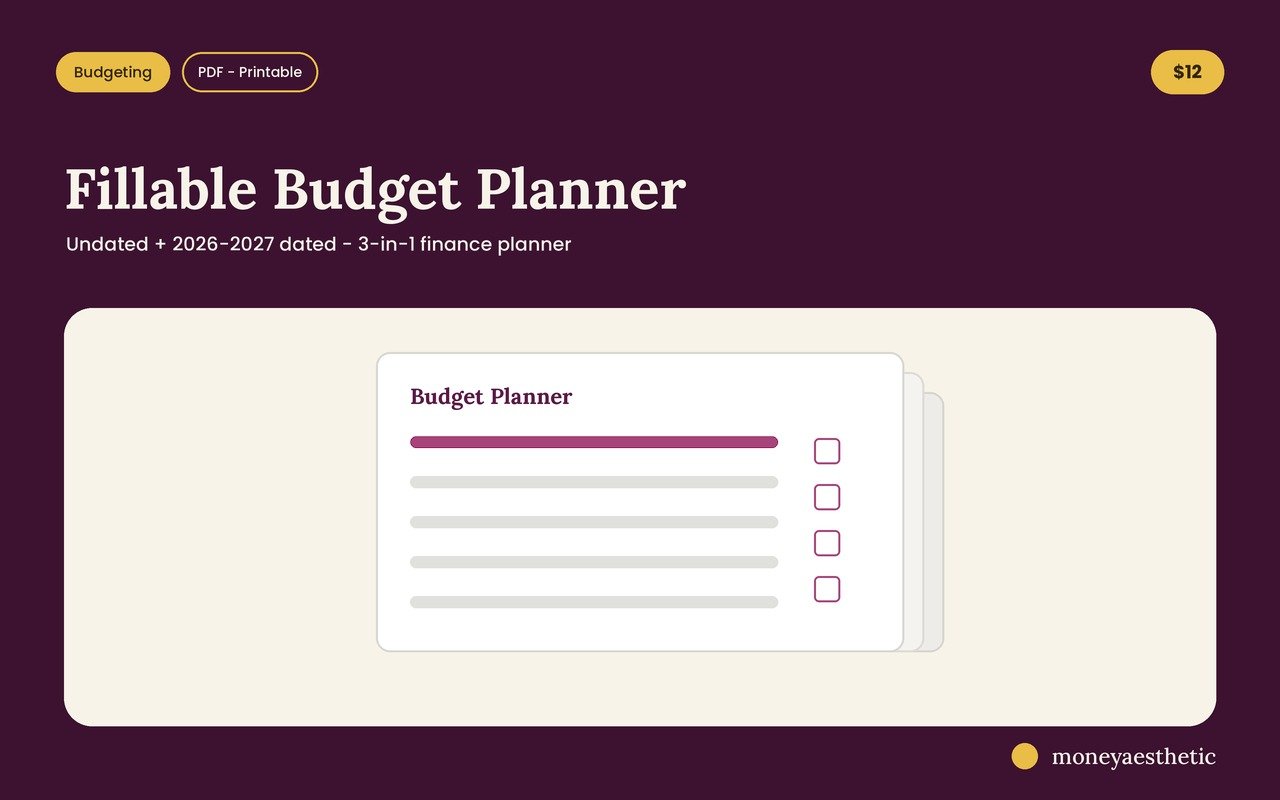
Want the pages already built?
The Fillable Budget Planner comes with an undated version, so you start on a random Tuesday with zero guilt. A monthly calendar, budget worksheet, bill tracker, expense log and savings trackers. Type into the PDF or print a fresh page whenever you want. No formulas to break, no setup. Twelve dollars, yours forever.
Get the Fillable Budget Planner →How Do You Set Up a Weekly Budget Planner in One Sitting?
Setting up a weekly budget planner takes one sitting and four steps: find your true weekly income, pull the monthly bills out of the way, set spending categories for what’s left, and pick one day to reset. Do it once and the weekly upkeep becomes a short check-in. A lot of people who quit didn’t quit the budget. They quit the setup.
- Get your real weekly income. Annual take-home ÷ 52. Not monthly ÷ 4. If your pay varies, use your lowest-earning three months as the base and treat everything above it as a bonus.
- Move fixed bills off the weekly page. Rent, insurance, car payment, and subscriptions get their own list with due dates. What survives is your real weekly number, and it will be smaller than you hoped. That’s fine. It’s honest.
- Pick four to six weekly categories. Groceries, gas, eating out, fun, one wildcard. That’s plenty. Fourteen categories is how a planner becomes a chore, and a chore is how a planner becomes a drawer decoration.
- Choose your reset day and defend it. Sunday night with coffee, Monday morning, whatever. Five minutes: log the week, total it, write next week’s numbers. If you want the logging half to be painless, how to track expenses covers the systems that survive past February.
If you’d rather not draw the grid yourself, a fillable budget planner hands you a pre-built monthly calendar, bill tracker and expense log to pair with your weekly split. And if you want the whole thing to live in one place with dividers and tabs, the budget binder setup is the natural next step.
How Do You Handle Bills That Are Monthly, Not Weekly?
Monthly bills go on a separate bills page with due dates, never inside your weekly spending number. The clean method is to divide each monthly bill by 4.33 and move that amount into a holding account every week, so the bill is already funded before it arrives. Rent of 1,700 becomes 393 a week. Nothing lands as a surprise, and your weekly page stays about the stuff you actually decide on.
This one habit is what separates a weekly budget that survives from one that collapses in week three. The collapse often looks the same: a great first two weeks, then the car insurance hits, then the whole thing feels pointless. It wasn’t pointless. The bill was just never in the plan.
What Happens to the Money Left Over on Sunday?
Roll it forward. Whatever is left at the end of the week becomes the first line on next week’s page, and an overspend comes off next week’s number the same way. That one rule is what turns seven-day budgeting into a system instead of 52 disconnected experiments, because no week is ever written off. It just changes weeks.
Two habits keep the carry-over honest:
- Write the carry-over before you write anything you plan to spend. A plus-18 at the top of the page feels like a small win. A minus-40 at the top is the fastest budgeting lesson there is, and the best part is that it is over in seven days.
- Empty the pile when it gets big. If leftovers stack up for a month or two, give that money a job instead of letting it drift back into normal spending: next month’s bills, a debt payment, or a sinking fund for the expense you know is coming.
A quick warning about the other direction. If you find yourself carrying a negative balance three or four weeks running, the problem is not the week you are in. Your weekly number is set too high, which usually means a bill never made it onto the bills page. Go back to the grid at the top and rebuild the safe-to-spend line before you try harder.
Common Misconceptions About Weekly Budgeting
“A weekly budget means I have to track every coffee.” No. You track four to six category totals. A weekly budget planner cares that groceries came to 143 dollars, not that one of them was a bag of limes.
“Weekly budgeting only works if you’re paid weekly.” It works on any pay schedule. Monthly and biweekly earners divide annual pay by 52 and treat their paycheck as a deposit into a weekly system. If you’re paid every other Friday specifically, the biweekly budget template approach maps 26 paychecks onto the calendar first.
“A four-week month is close enough.” It is not, and that’s the whole point of this article. Four extra weeks a year at an average household’s rate is over six thousand dollars of phantom budget.
“Paper is outdated.” Paper is slow, and slow is the feature. The friction of writing a number down is what makes you notice it. Plenty of people who abandoned three apps stuck with one printed page. That’s not nostalgia, that’s just what how to stick to a budget actually looks like in practice.
If you want to start free and see whether the weekly rhythm suits you before spending anything, grab the free monthly budget template and log each week against your annual-take-home-÷-52 number. Rough, free, and enough to tell you whether the rhythm suits you.
Frequently asked questions
Is it better to budget weekly or monthly?
Weekly budgeting is better for variable, everyday spending, and monthly budgeting is better for fixed bills. Many people who stick with it run both: a monthly bills calendar and a weekly spending page. The weekly page gives you 52 correction points a year instead of 12, which is why it holds up under real life.
How much should I budget per week for groceries?
The U.S. average is about 120 dollars a week for food at home, based on the BLS figure of 6,224 dollars a year in 2024. Adjust for household size and region. By BLS 2024 averages, that is about 65 dollars a week for a one-person household and about 167 for a four-person household.
How do you budget weekly when you get paid biweekly?
Divide your annual take-home pay by 52 to get a weekly allowance, then treat each biweekly paycheck as funding two weeks. Because 26 biweekly paychecks land unevenly across 12 months, two months a year contain three paychecks, so park those extras in savings rather than absorbing them into the week.
What should be included in a weekly budget?
Include income for those seven days, any bills due inside them, four to six variable categories such as groceries, gas, eating out and fun, plus a savings transfer and a running total. Leave rent, insurance and subscriptions on a separate monthly bills page so the weekly number stays honest.
How do I use a weekly budget planner with an irregular income?
Base your weekly number on your three lowest-earning months from the past year, not your average. Everything above that baseline goes into a buffer account first. Weekly planning suits irregular income well, because you re-set the number every seven days instead of guessing thirty days out.
Is a printable weekly budget planner better than an app?
Neither is objectively better, but many people find a printable easier to stick with. Writing a number by hand creates friction that registers in a way a push notification does not. Apps win on automation. If you have abandoned two or more budgeting apps, a printed weekly page is worth trying.
How many weeks should a weekly budget planner cover?
Use a 52-week planner or an undated set you print as needed. Undated is safer, because a dated planner started in March leaves you with a ten-month book and a guilt trip. A weekly page plus a monthly bills view is the minimum useful setup.
What is a realistic amount of weekly spending money?
There is no single right number, but national averages give you a starting point. By BLS 2024 figures, the average household spent about 120 dollars a week on groceries, 76 on food away from home, 46 on gasoline and 69 on entertainment, roughly 311 a week in total. Adjust for your household size and income.
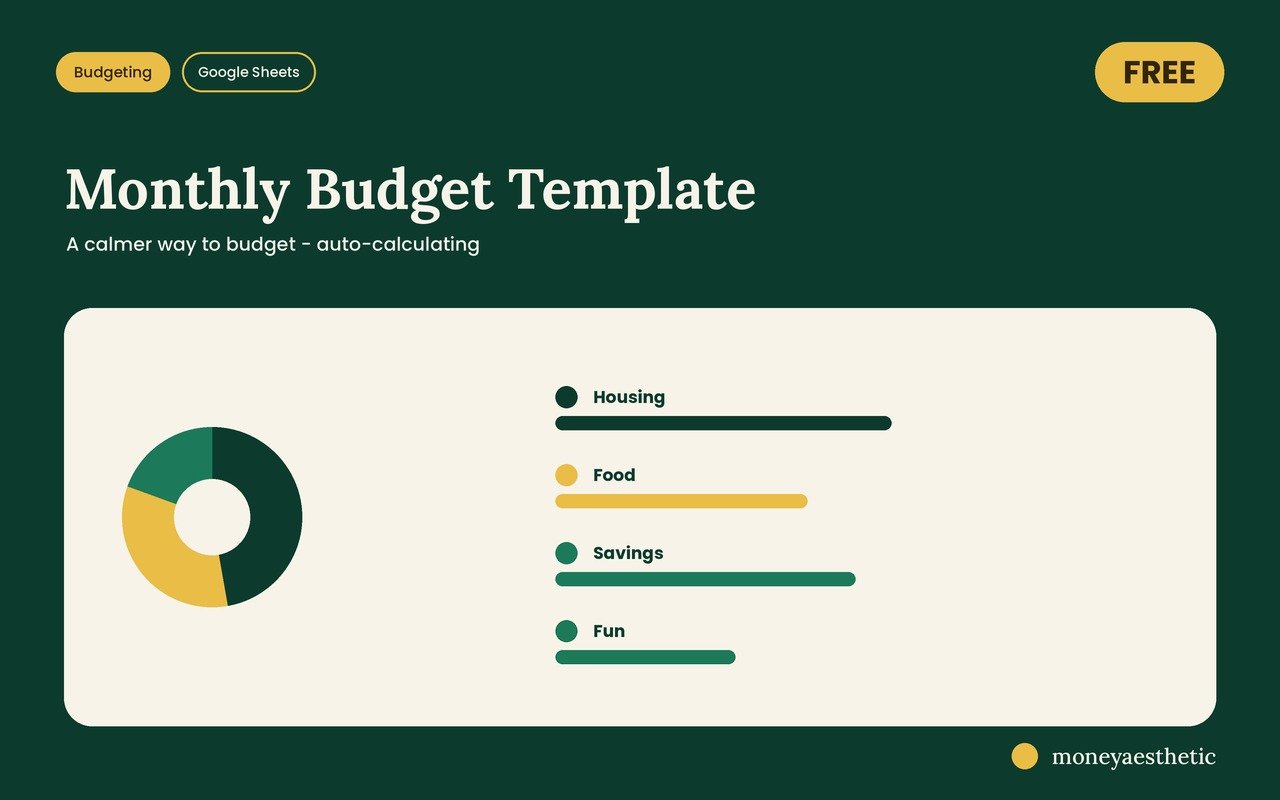
Start with the free one
Every number in this guide has to live somewhere. The free Monthly Budget Template gives it a home: one clean Google Sheet that adds itself up, yours to copy in a single click.
Get the free Monthly Budget Template →This article is for general education only and is not financial advice. Your situation is specific to you. Consider speaking with a qualified financial professional before making decisions about debt, savings or investments.