

Quick answer: A sinking fund is money you set aside a little at a time for a specific expense you know is coming (car repairs, the holidays, that once-a-year insurance bill), so it’s already paid for when it lands. Think of it as planned saving, not emergency saving. And it matters: in the Federal Reserve’s 2025 report, released in May 2026, only 63% of adults said they would cover a surprise $400 expense using cash or its equivalent, meaning more than one in three said they would not cover it that way.
You know the feeling. The car makes A Noise, the vet says “so, about this lump,” or the registration renewal lands in the mail. Even though it isn’t technically a surprise, it hits your checking account like one. Suddenly the month you’d budgeted so nicely is on fire, and the credit card is right there, being helpful in a very unhelpful way.
Here’s the quietly useful idea: a lot of these “emergencies” aren’t really emergencies. You knew the car would need tires eventually. You knew December was coming (it shows up on schedule, the nerve). A sinking fund is just the trick of paying for those slowly, in advance, so future-you opens the bill and shrugs instead of spiraling. Once it clicks, budgeting can stop feeling like bracing for impact.
Key takeaways
- A sinking fund is savings with a job: a set amount, tucked away monthly, for one known upcoming cost.
- It’s the opposite of an emergency fund: planned expenses, not true surprises. You want both, doing different jobs.
- The math is friendly: goal ÷ months until you need it = what to save each month. That’s the whole formula.
- Start with a few categories that have actually wrecked your budget before, not a giant list off the internet.
What a sinking fund actually is
Strip away the old-fashioned name and a sinking fund is just a labeled jar. You decide “this money is for Christmas” or “this is the car fund,” you drip a bit into it each month, and you don’t touch it for anything else. When the expense finally shows up, the money’s already sitting there with its coat on, ready to go.
The magic isn’t the account. It’s the labeling. A vague pile of “savings” can get raided for takeout on a Tuesday, because in your head it’s just… money. But money that’s mentally assigned to “vet fund” can feel weirdly hard to spend on anything else. You’ve pre-made the decision, so willpower gets the night off. That’s also why a tracker that shows each fund on its own line can feel more motivating than one lump total in a banking app: you can see the jars.
Sinking fund vs. emergency fund (a common mix-up)
These often get lumped together, and they really shouldn’t, because they protect you from different things. An emergency fund is for the stuff you can’t see coming and can’t schedule: a job loss, a burst pipe, an ER visit in the middle of the night. A sinking fund is for the stuff you can see coming and just don’t want to think about: holidays, annual bills, new tires, the wedding you’ll get invited to.
Here’s the part that sells it: sinking funds can protect your emergency fund. If you’ve quietly been saving for Christmas throughout the year, December doesn’t have to force you to drain your safety net or reach for a card. If Christmas is your biggest one, our free Christmas budget planner splits it into a set-aside amount for each paycheck. The predictable expenses stay in their own lane, and your real emergency cash stays put for a real emergency. If you’ve ever used the cash envelope system, a sinking fund is the same give-each-dollar-a-job idea, just aimed months ahead instead of at this week’s groceries.
Why sinking funds work (and why they matter)
The case for planning ahead is, frankly, a little grim in the data, which is why this small habit can pay off. In the Federal Reserve’s 2025 household well-being report, released May 2026, just 63% of adults said they would cover a $400 emergency with cash or its equivalent, down from a 2021 high of 68%. So for more than a third of adults, a very ordinary $400 bill is not something they’d cover with cash or its equivalent.
And when the cash isn’t there, the card is. Americans were carrying $1.26 trillion in credit card debt in the second quarter of 2026, up $54 billion from a year earlier, per the New York Fed, and some of that can start as exactly these “surprise” expenses that weren’t really surprises. Meanwhile prices keep grinding upward (consumer prices rose 3.4% in the 12 months ending August 2026, says the BLS), so the car repair and the holiday haul can cost a little more each time around. A sinking fund is how you meet those with your own money instead of the bank’s, without paying card interest on them. That’s not deprivation; that’s just refusing to pay extra for being caught off guard.
How to start a sinking fund, step by step
No finance degree required. This is honestly more of a labeling exercise than a math one.
- List the costs that ambush you. Car stuff, gifts, insurance, medical, pet care, travel, back-to-school. If it’s ever made you wince, it’s a candidate.
- Put a price and a date on each. Roughly what will it cost, and when do you need it? “About $1,500, by December” is plenty precise.
- Do the one bit of math. Divide the goal by the months until then. $1,500 for the holidays, split over 12 months, is $125 a month. Boom, that’s your number.
- Automate it for the day after payday. Move the money before you can feel it, and saving stops relying on you remembering (or being disciplined, which, same).
- Keep each fund visible. Separate savings sub-accounts, labeled envelopes, or a tracker where each category is its own line. The point is to see the jars fill up, which can help keep you going.
You can absolutely run this in a plain notebook, but it gets easier when the math calculates itself. Our free monthly budget template has a savings goals section built right in: type each goal, its target and what you’ve saved so far, and it shows what’s left and the percent done, with no formulas to write.
How much to save: sinking fund examples
Here’s an example starter set with round numbers. Yours will look different, and that’s the point, but this shows how much gentler the monthly amounts get once you spread a cost across a year.
| Sinking fund | Yearly goal | Set aside monthly |
|---|---|---|
| Holidays & gifts | $1,500 | $125 |
| Car maintenance | $900 | $75 |
| Insurance premiums | $1,200 | $100 |
| Home / renter repairs | $2,400 | $200 |
| Medical & dental | $600 | $50 |
| Annual subscriptions | $240 | $20 |
Notice how the monthly amounts look a lot less scary on their own: $75 here, $50 there. That’s the trick. A bill that could have wrecked a random Tuesday becomes a small line you handled months ago.
Keep your sinking funds on paper
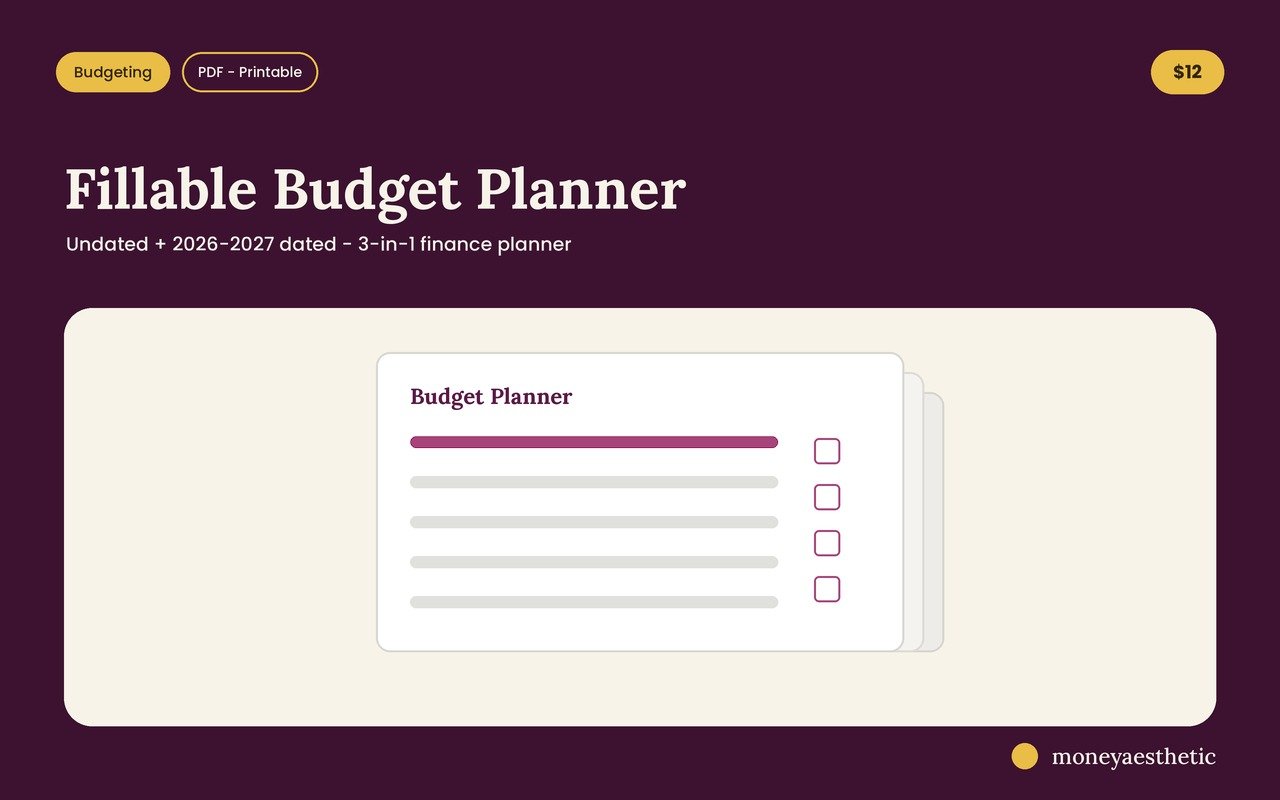
Some of us just think better on paper, and sinking funds suit it. Our Fillable Budget Planner has a “setting aside for” sinking funds box on each monthly goals page, plus a Savings Goals page, so your Christmas jar and your car jar are right there in front of you instead of hiding in a banking app. Type into the fillable PDF or print the pages, tuck them in a binder, and feel quietly powerful when you fill one in. Calm and cute can make it easier to keep going. Once you are running more than a few, a sinking funds tracker is the page that holds them in one place.
Get the Fillable Budget Planner →Common sinking fund mistakes
“It’s basically my emergency fund.” Please don’t merge them. When Christmas and a broken furnace share one pot, you can end up raiding your safety net for wrapping paper and having little left for the actual emergency. Different jobs, different jars. The December jar has its own timeline, laid out in how to save for Christmas.
“I need a separate bank account for every category.” Nice if your bank offers sub-accounts, but not required. One savings account with a simple tracker that splits it on paper can work fine. Don’t let setup perfectionism stop you from starting.
“I have to fund all of them at once.” Nope, and trying to can make it easy to burn out early. Pick a few that have hurt your budget and add more as the habit sticks.
“It’s only for big expenses.” The annual app renewal that annoys you each year? That’s a sinking fund too. Small, boring, and predictable is this system’s whole home turf.
An often-skipped move: build funds from last year’s statements
Plenty of guides hand you a long list of sinking fund categories and wish you luck. Skip it. That list is a stranger’s life, not yours, and copying it can mean you dutifully save for “boat maintenance” while the thing that actually blows up your budget goes unfunded.
Do this instead. Open a year’s worth of bank and card statements and highlight the bigger charges that weren’t a normal monthly bill. The tire replacement. The dentist. The weddings. The dog’s mystery vet visit. Those highlights are your sinking funds: personal, drawn straight from the receipts of your own life. It doesn’t take long, and it tends to be spookily accurate, because what surprised you last year is a good clue to what’ll surprise you next year. A whole replacement car is a much bigger version of this, and how to save for a car sizes that one properly.
Then it’s just upkeep, and upkeep is a friction problem, not a willpower one. Automate the transfers, glance at your jars each week, and let the system carry it. The habits that help a regular budget last are the same ones that help sinking funds work. If you want the full playbook, here’s how to stick to a budget without white-knuckling it. If one of those jars is an expensive hobby, size it from what the hobby actually costs you per outing instead of a round guess. Our astrophotography session tracker does that for one gear-heavy hobby, and the cost-per-hour idea can carry over to other hobbies.
Sinking fund FAQ
What is a sinking fund in simple terms?
A sinking fund is money you save gradually for a specific expense you know is coming, so it’s fully paid for by the time the bill arrives. You pick a goal, divide it by the months until you need it, and set that amount aside each month. It’s planned saving for predictable costs like the holidays, car repairs, or an annual insurance premium.
What’s the difference between a sinking fund and an emergency fund?
A sinking fund covers planned, predictable expenses you can name and date, like gifts or new tires. An emergency fund covers true surprises you can’t schedule, like a job loss or an ER visit. You want both: the sinking fund helps keep predictable costs from forcing you to raid the emergency fund.
What are common sinking fund categories?
Popular sinking fund categories include car maintenance, holidays and gifts, insurance premiums, medical and dental costs, home or renter repairs, pet care, travel, and annual subscriptions. A good approach is to start with a few categories that have surprised your budget in the past rather than trying to fund everything at once.
How much should I put in a sinking fund each month?
Divide your total goal by the number of months until you need the money. For example, saving $1,500 for the holidays over 12 months is $125 a month; a $900 car-repair fund over a year is $75 a month. Spreading a cost across a year keeps each monthly amount smaller and easier to manage.
Where should I keep my sinking fund money?
Keep sinking fund money somewhere separate from your everyday checking so you’re not tempted to spend it, such as a high-yield savings account, labeled savings sub-accounts, or cash envelopes. The key is that each fund is clearly labeled and easy to see, which can make it harder to spend by accident.
Can you have too many sinking funds?
You can. Spreading yourself across lots of funds at once can mean each one grows slowly, which can make it hard to stay motivated. Start with a few high-impact categories, get them funded, and add more once the habit feels automatic. A few fuller jars can feel better than many empty ones.
Is a sinking fund the same as cash stuffing?
They overlap but aren’t identical. Cash stuffing is one way to hold sinking funds, using physical cash in labeled envelopes. A sinking fund is the concept of saving ahead for a planned expense, and you can keep it in cash, in a savings account, or in a spreadsheet. Cash stuffing is simply the envelope version of the same idea.
Do sinking funds go in your budget?
Yes. A sinking fund contribution can be a line in your monthly budget, treated like a bill you pay yourself. Listing each fund and its monthly amount alongside rent and groceries can help turn saving from an afterthought into a regular habit.
Don’t have a budget sheet yet?
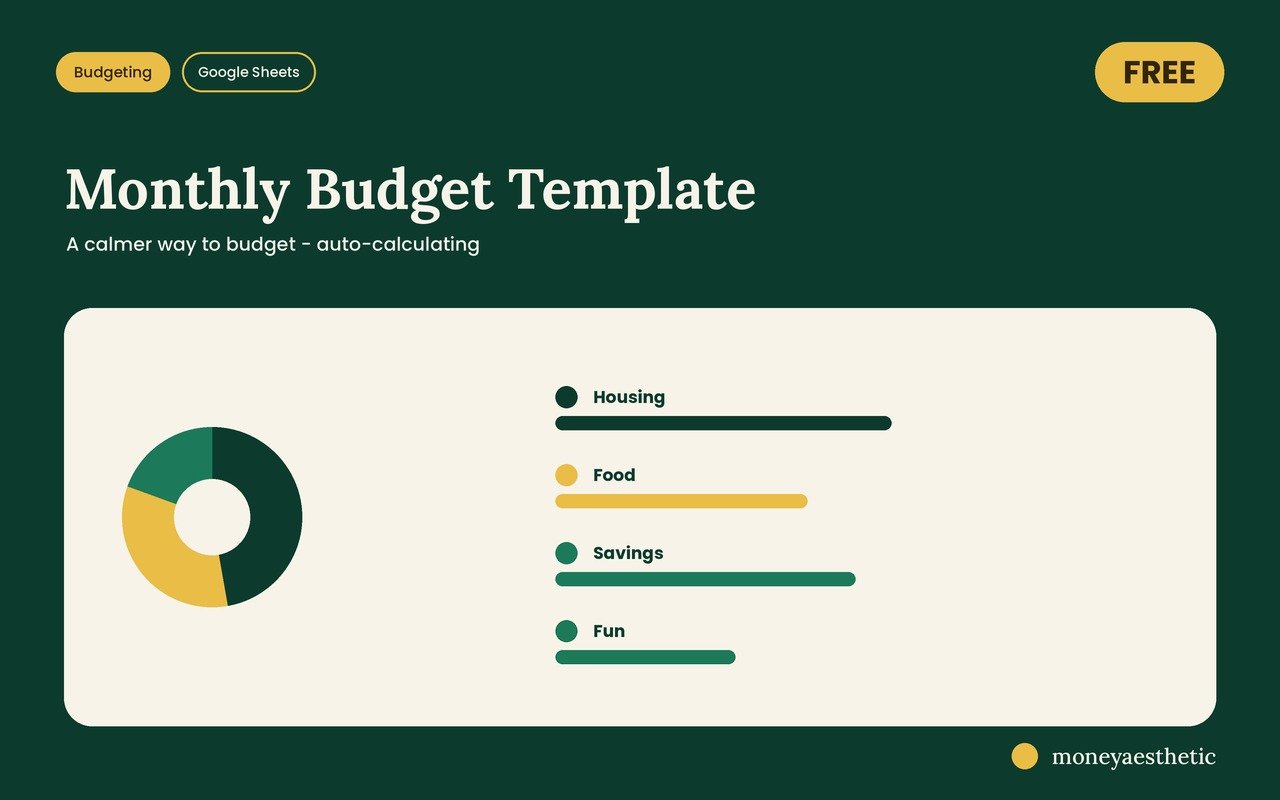
The free Monthly Budget Template is an easy place to start: one tab, income near the top, bills further down, and the totals already wired in. No formulas to write, and it costs nothing.
Get the free Monthly Budget Template →This article is for general educational purposes only and isn’t financial advice. Your situation is unique, so consider consulting a qualified financial professional before making decisions about saving, budgeting, or borrowing.