

Quick answer: Living paycheck to paycheck means your income is already spoken for before the next payday lands, with nothing left over and nothing carried forward. It is a surplus problem, not automatically a poverty problem. The Federal Reserve’s May 2026 report doesn’t use the phrase, but in 2025, 41% of adults said they always or often had money left over at the end of the month, and 63% would cover a $400 emergency with cash or its equivalent.
You get paid. For a few days you feel rich. Then rent clears, the car insurance you forgot about clears, a shopping run happens, and soon you’re checking your balance before buying coffee. Payday arrives, and the whole thing loops.
Here’s the part that doesn’t get said enough: that loop is not proof you’re bad with money. It happens across income levels. But it also doesn’t fix itself. Each month you spend inside it is a month you don’t build the cushion that makes emergencies boring instead of catastrophic. And the fix depends on which version of paycheck to paycheck you actually have.
Key takeaways
- Living paycheck to paycheck means zero surplus at the end of a pay period. It doesn’t necessarily mean low income or unpaid bills.
- Estimates differ depending on who’s measuring and how, and that gap matters.
- There are two different versions: a shortfall (money isn’t enough) and a sequence problem (money is enough but arrives in the wrong order). They need different fixes.
- The sequence version may ease without earning more, and mapping bills to paydays is the first step.
What Does Living Paycheck to Paycheck Mean, Exactly?
Living paycheck to paycheck means your income is fully consumed by expenses before the next paycheck arrives, leaving no meaningful surplus to save or roll forward. The Federal Reserve’s May 2026 household report doesn’t use the phrase, but it tracks the same idea: in 2025, 41% of adults said they always or often had money left over at the end of the month.
The Bank of America Institute draws a harder line in its November 2025 report: a household counts when necessity spending, such as housing, groceries, gas, childcare and insurance, exceeds 95% of income. By that spending-based measure, nearly 24% of the households in its data were living paycheck to paycheck in 2025 (data through the third quarter). Childcare is one of the necessity costs that measure counts, and the guide on how to budget for a baby shows how to plan for it.
Notice what the definition does not require. It doesn’t require missed payments. It doesn’t require debt. It doesn’t require a small salary. It just needs the month to end at zero. That’s why the phrase covers such wildly different situations, and why two people can both say “I live paycheck to paycheck” and mean completely different things.
Why Do the Percentages Vary So Much?
The Federal Reserve’s and CFPB’s household surveys don’t define the phrase, and each organization measures something slightly different. The CFPB’s difficulty-paying-bills measure came in at 43% for 2024. Bank spending data and polls that ask people whether they live paycheck to paycheck use their own definitions, so their numbers aren’t directly comparable to that figure. These measures are counting different groups of people.
| Who’s measuring | How they define it | Latest figure | Who that actually counts |
|---|---|---|---|
| Bank of America Institute | Necessity spending that leaves relatively little or nothing left over | Not a government figure (private bank data; see above) | People whose real spending data leaves almost no room |
| CFPB Making Ends Meet | Had difficulty paying a bill or expense in the past year | 43% of households (2024, up from 38% in 2023) | Households that had trouble paying at least one bill in 12 months |
| Federal Reserve (SHED) | Doesn’t use the phrase; tracks whether money is left over monthly | 41% always or often have money left over (2025 data) | U.S. adults, split by whether months end with surplus |
| Self-reported surveys | Asks people whether they live paycheck to paycheck (self-report) | Not a government figure (private opinion polls) | People who describe themselves that way |
The gap between these measures isn’t sloppy research. It’s the distance between “I cannot pay my bills” and “I can pay my bills but nothing is left.” Those are different problems wearing the same name, and lumping them together can be one reason generic advice doesn’t land.
Can You Earn Good Money and Still Live Paycheck to Paycheck?
Yes. In the Federal Reserve’s survey for 2025, 59% of adults with family income of $100,000 or more said they always or often had money left over at the end of the month, so the rest said sometimes, rarely or never. Among adults with income under $25,000, 19% said the same. Higher income shrinks the odds. It does not remove them.
The mechanism can be boring. A raise arrives, and it can quietly get absorbed by a bigger apartment, a newer car payment, better groceries, more subscriptions. Nothing dramatic, nothing irresponsible, just lots of small yeses. Your income went up and your surplus stayed at zero. That’s the gap pay yourself first is meant to close: move savings out before spending instead of promising to save whatever’s left.
How Do You Tell a Shortfall From a Sequence Problem?
Look at whether anything was actually late. A shortfall means your income genuinely doesn’t cover your necessities: bills go unpaid, minimums get missed, balances creep. A sequence problem means your income does cover the month, but it arrives on the wrong days relative to when bills hit, so you’re broke early in the month and flush later in it. The money is there. The timing isn’t.
Here’s a quick test. Pull up a few recent months of your checking account and answer these questions:
- Did anything go unpaid or late? If yes, and it keeps happening, that’s a shortfall. If no, keep going.
- Did your balance hit near-zero at the same point in the month more than once? The same week each time points to a calendar issue, not a spending issue.
- Add up the deposits, then add up the bills. If deposits beat bills but you still ended at zero, you have a sequence problem plus leakage, not a shortfall.
Why this matters: the fixes point in different directions. A shortfall needs more income or fewer fixed costs, and it’s slow, structural work. A sequence problem needs the exact same money assigned to the right payday, and you can start on that this weekend. Some people who think they’re “bad with money” are really running a sequence problem while following shortfall advice, which may be why cutting lattes didn’t seem to work.
See your bills and due dates in one place
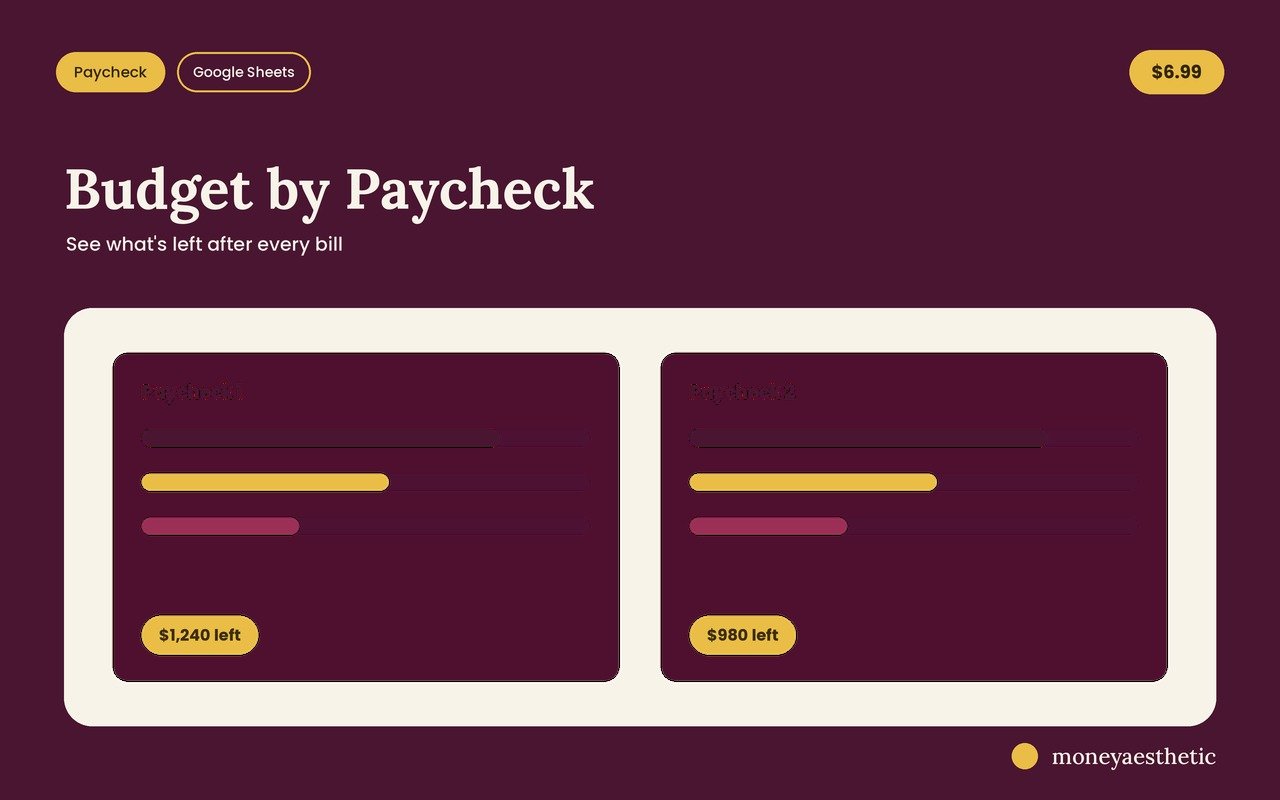
Budget by Paycheck converts weekly, biweekly or semi-monthly pay into a monthly figure, keeps a bill calendar with due dates and Paid or Upcoming status, and shows your monthly money left on the dashboard.
Get Budget by Paycheck →How Do You Break the Cycle From Here?
Start by creating a surplus on purpose instead of hoping one shows up. The Federal Reserve’s May 2026 household report found that 86% of adults who always had money left over at month’s end had three months of savings, versus 13% of those who never did. That’s a link, not proof of cause, but surplus and savings showed up together.
- List your bills by due date, not by category. Rent isn’t due “in the housing category.” It’s due on a date. Dates can break a budget.
- Assign each bill to the paycheck that lands before it. This is the core of the sequence fix. The biweekly budget template guide covers the months when an extra paycheck shows up.
- Move one bill’s due date. Some billers will change your due date on request as a courtesy, though it isn’t a right and not every company offers it, so it’s worth asking. Moving a big bill out of a crowded week can ease that week.
- Automate a small transfer the day after payday. Even a token amount counts. The point is proving a surplus can exist before you scale it.
- Name the leftover. Unlabeled money can drift into ordinary spending. Give it a job (sinking fund, car repair, December) and it’s less likely to evaporate.
If you want a no-cost starting point, the free monthly budget template will show you the shape of your month. When you want your pay frequency, bills and debts planned in one file, that’s where the paid Budget by Paycheck earns its keep.
What Do People Often Get Wrong About It?
“It means you’re broke.” It means you have no surplus. Those overlap, but they aren’t the same. A household can pay its bills on time and still have no surplus.
“A raise will fix it.” It can, if the surplus is protected before the money reaches your checking account. Otherwise expenses can quietly absorb the raise.
“It’s a discipline problem.” Sometimes it’s a calendar problem. When rent, insurance, and daycare cluster in the same week before payday, restraint alone may not make that week affordable. The money simply hasn’t arrived yet.
“Lots of people are like this, so it’s fine.” It’s common, and it can still be costly. The CFPB’s Making Ends Meet survey found that in January 2024, 42% of households could cover expenses for a month or less if they lost their main income. Common isn’t the same as safe.
“You need a bigger emergency fund first.” Backwards. You need a repeatable surplus first; the emergency fund is what a surplus turns into. Figuring out how much emergency fund you need is step two, not step one.
Frequently Asked Questions
Is living paycheck to paycheck the same as being broke?
No. Living paycheck to paycheck means no surplus at the end of a pay period, while being broke means you can’t cover your obligations. A household can have no surplus and still pay its bills on time. The Federal Reserve found 63% of adults would cover a $400 emergency expense with cash or its equivalent in its May 2026 report.
What percentage of Americans live paycheck to paycheck in 2026?
The Federal Reserve’s and CFPB’s household surveys don’t report a paycheck-to-paycheck rate, so it depends on the measure. In the CFPB’s Making Ends Meet survey, 43% of households said in January 2024 that they had difficulty paying a bill or expense in the past 12 months. The Federal Reserve’s May 2026 report found 63% of adults would cover a $400 expense with cash or its equivalent in 2025. Private bank data and opinion polls use their own definitions, which is one reason published figures differ.
How much should you have left over at the end of the month?
Aim for a steady starting surplus, even a small one, then raise it as fixed costs come down. Making it consistent and automatic can matter more than the amount. The Federal Reserve’s May 2026 report found 86% of adults who always had money left over had three months of savings, compared with 13% of those who never did.
Does living paycheck to paycheck hurt your credit score?
Not directly. Credit scoring models typically weigh factors like your bill-paying history, your current unpaid debt, how long your accounts have been open, and how much of your available credit you’re using, not your monthly surplus. It hurts indirectly when zero cushion leads to late payments or rising credit card balances, since both feed into those factors.
Can you build an emergency fund while living paycheck to paycheck?
Yes, and starting small is the point. Automating even a small amount per paycheck the day after it lands can build the habit and show a surplus is possible before you scale it. Waiting until you have extra can backfire, because unassigned money can get absorbed by ordinary spending.
Why do I still live paycheck to paycheck after a raise?
Without a plan for the extra money, a raise can get absorbed by upgraded housing, a newer car payment, or added subscriptions. Routing the increase straight to savings before it reaches checking can stop the pattern.
Is living paycheck to paycheck normal?
It is common, but common is not the same as safe. The CFPB’s Making Ends Meet survey found that in January 2024, 43% of households had had difficulty paying a bill or expense in the past 12 months, and 42% could cover expenses for a month or less after losing their main income source.
How long does it take to stop living paycheck to paycheck?
It depends on the cause. A sequence problem, where income covers the month but arrives at the wrong times, is mainly a matter of mapping bills to paydays, so it can ease once due dates line up. A true shortfall, where income doesn’t cover necessities, generally takes longer because it requires changing income or fixed costs.
One last thing. If you read the diagnostic above and landed on “sequence problem,” please don’t file that under someday. That’s the version you can start fixing right away, and the difference between an account that dips to zero each month and one that holds a small cushion can come down to knowing which paycheck each bill belongs to. If you want the deeper playbook, the guide on how to stop living paycheck to paycheck picks up right where this leaves off.
Grab the free monthly template
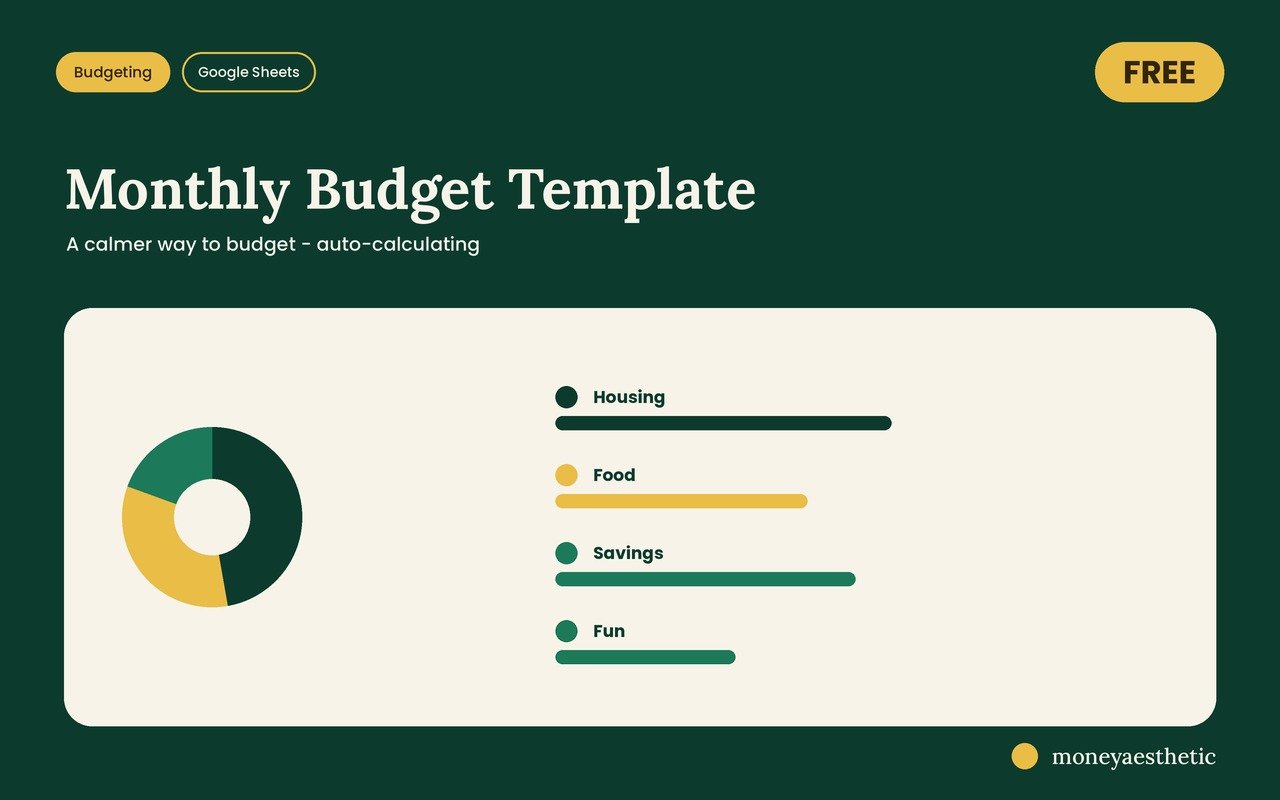
If the hard part is just seeing everything in one place, start there. The free Monthly Budget Template lays out your month on one sheet and does the adding for you — no subscription, no catch.
Get the free Monthly Budget Template →This article is for general education only and is not financial, tax, or legal advice. Your situation is specific to you — consider speaking with a qualified professional before making major money decisions.