

Quick answer: An expense tracker printable is a sheet you print and fill in by hand: date, what you bought, how much. Nearly all of them use one of four layouts, and the wrong pick is a common reason a sheet gets abandoned. The Bureau of Economic Analysis put the US personal saving rate at 3.0 percent of disposable income in July 2026, so the margin is thin.
Search for an expense tracker printable and you will drown in generosity. Twenty-odd free options here. Another pile of cute spending logs there. A whole pack in six colors. It is a lovely corner of the internet and it is also useless if you do not know which page to print.
The problem is not supply. Very few people quit tracking because they ran out of printables. They quit because they printed a daily log when their life is a weekly life, and by day nine the page on the fridge has four entries and a coffee ring on it.
So this is not another list of downloads. This is how to pick the one layout that survives a full month, and what to put in the column almost every free sheet leaves off.
Key takeaways
- Almost every expense tracker printable comes down to four layouts, and the right one is decided by how often you naturally sit down with money, not by which design is prettiest.
- Free printables tend to give you date, item and amount. That is a record, not a decision tool. One extra column turns the page from a diary into something you act on.
- A tracker with no closing ritual is just paper. Ten minutes at the end of the month is what converts a full page into a changed number.
What an Expense Tracker Printable Actually Is
It is a sheet of paper with rows on it. You print it, you keep it somewhere you cannot avoid looking at it, and you write down money as it leaves. Date, what you bought, how much. That is the whole technology.
People reach for paper for three reasons, and they are all good ones. Pen and paper is slower than an app, and slow is the point, because the friction is what makes you notice. Nothing needs a login or a bank connection that breaks every six weeks. And a page on the counter is visible to everyone in the house, which quietly turns a private habit into a shared one.
If you want the habit side of this, I wrote a whole piece on how to track expenses without quitting on day four. This article is about the page itself.
Why Most Printable Expense Trackers Die in Week Two
Here is the thing that took me an embarrassingly long time to see. A tracker that asks you to log everything is asking you to write down a lot of money you cannot do anything about this month.
In 2024, the most recent full year the Bureau of Labor Statistics has published, the average US household spent $78,535. Housing was the biggest line at $26,266, transportation came to $13,318, and food to $10,169.
Now look one level down, because that is where the argument for your sheet lives. Inside that housing line, owned dwellings account for $9,310 and rented dwellings for $5,660; the rest is other lodging, utilities, supplies, furnishings and the odds and ends of running a home. Of the food line, $3,945 was eaten away from home. Of transportation, $5,337 was vehicle purchases.
Same category, two completely different kinds of money. A mortgage payment does not change because you wrote it in a box. A Thursday lunch might. Log the first kind and you are not tracking, you are transcribing, and transcription is boring enough to kill the habit inside a fortnight.
The fixed stuff belongs on a bill tracker printable where you tick it off once and forget it. Your expense tracker is for the money that is genuinely still up for grabs. That is a much shorter list, which is exactly why it works.
Which of the Four Layouts Should You Print?
Nearly everything you will find is a variation of four. Read these in order and stop at the first one that sounds like your actual life, not your aspirational one.
1. The daily log. One row per purchase, dated, running down the page. Print this if you spend in lots of small amounts, mostly cash or card taps, and you want to catch the drip. It is the highest effort layout and the highest resolution. If you have ever said the words “I genuinely do not know where it goes,” this is your sheet.
2. The weekly log. Same idea, but the page is divided into seven boxes and you sit down once, maybe twice, to fill in what happened. Print this if you already have a weekly money moment, a Sunday coffee, a Friday check of the bank app. It forgives you for being two days behind, which the daily log does not.
3. Monthly by category. No individual purchases at all. Just a set of budget categories down the left, a planned number, and what you actually spent. Print this if you have already done a month of detailed tracking and you know your patterns. It is the lowest effort and it tells you the least, which is a fair trade once you have the detail behind you.
4. By paycheck. The page resets on payday, not on the first of the month. Print this if your money arrives every two weeks and calendar months have never quite made sense to you. That is a scheduling mismatch, not a personal failing, and it is worth fixing at the page rather than in your head.
If you are not sure, start with the weekly log. The daily log is the one people pick because it feels the most virtuous, and the one most likely to be lying face down under a stack of mail by the 12th.
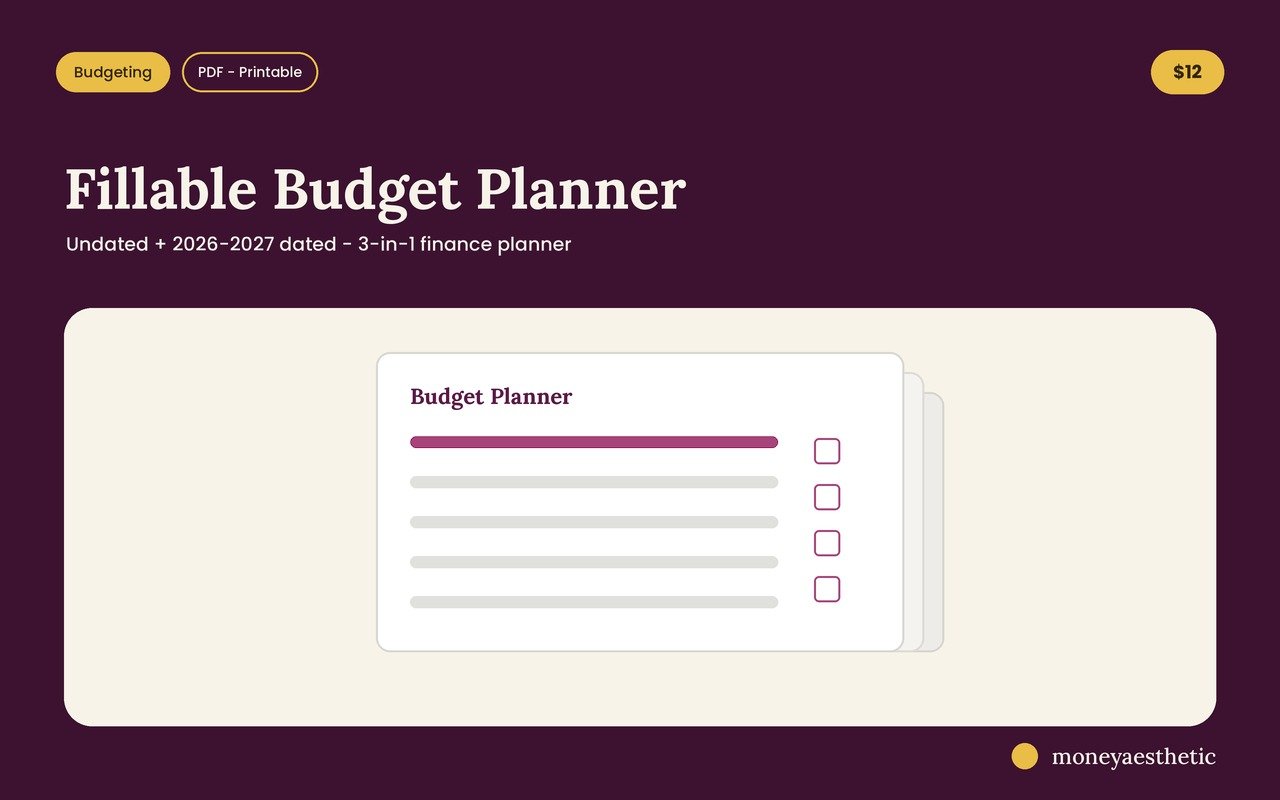
All four layouts, already drawn for you
The Fillable Budget Planner has the daily, weekly, monthly and by-paycheck pages built, and every one of them is typeable on your phone or tablet as well as printable. Print the layout that fits this month, switch next month, no redesigning anything at midnight.
Get the Fillable Budget Planner →The Column Almost Every Free Printable Leaves Off
Go and look at those free sheets again. The columns are usually the same handful: date, description, category, amount. Sometimes a payment method box if they are feeling generous.
Date, description, category, amount. Every one of those records what already happened. None of them asks you a question.
So add a narrow fifth column headed planned? and put a tick or a cross in it. That is the entire upgrade. Was this purchase something you knew about when the month started, or did it appear out of nowhere?
When I built the expense pages for the fillable planner this was the one column I refused to cut, even though it makes the grid tighter and the design less pretty. “Where does my money go” is almost never the real question. People already roughly know. The real question is how much of it they chose, and a column of crosses answers that at a glance, before you add anything up.
Two more things I decided on purpose. The category list on those pages is deliberately short, because long lists look thorough on screen and then stall you mid-sentence while you decide whether a pharmacy run is health or household. And the monthly total sits at the top of the page rather than the bottom, because a number you have to flip to the end to find is a number you will not look at until the month is already over.
How Do You Fill In the First Week Without Falling Behind?
Put the page where the money happens. Fridge, wallet, the inside of a cupboard door. A tracker in a drawer is a tracker you have already quit.
Write the amount before anything else. If you are standing in a car park with a receipt in your teeth, the number is the part you will forget. The description can be three letters and still make sense on Sunday. Round to whole dollars, too. The cents contribute nothing, and fiddliness is what turns a sheet into a chore.
And when you miss two days, which you will, do not backfill. Start again at today’s date. A tracker with a gap in it is still a working tracker. A tracker you threw away because it had a gap in it is not.
Common Misconceptions About Expense Tracker Printables
“Paper is pointless, my bank app already categorises everything.” Your bank app tells you what happened after it happened, in an interface you open when you are already anxious. Writing it down happens at the moment of spending, while the behaviour can still change. Different job entirely.
“I need to track every single expense or it does not count.” You do not. Track the flexible money, leave the fixed money to a bill sheet. Precision you abandon is worth less than a rough system you keep.
“Tracking is only for people in financial trouble.” The Federal Reserve’s 2025 household survey, published in May 2026, found 58 percent of adults said price changes over the prior year had made their financial situation worse. That is not a niche group in crisis. That is most of the people who answered.
“A free printable is the same as a paid one.” Often, honestly, yes. Plenty of the free ones are lovely. The difference tends to be whether the layouts work as a set, whether you can type into them, and whether anyone thought about month three. Print a free one first if you like. If it sticks, you will know exactly what you want to pay for.
What Happens When the Page Is Full?
This is the step most printable round-ups skip, and it is the one that decides whether any of this was worth the pen.
Give it ten minutes at the end of the month. Add up your crosses first, the unplanned purchases, and total only those. That single number is the one worth carrying into next month, because it is the money that was genuinely available for you to redirect.
Then pick exactly one category to change next month. One, not a whole reformed lifestyle. Write the new planned number at the top of next month’s page before the month starts, so the sheet is telling you something instead of asking you.
Then file the old page somewhere you can find it. Three of these stacked up is a powerful thing to look at, and it is how you graduate from the daily log to the monthly category sheet, because by then you already know your own numbers.
Frequently Asked Questions
How long should I use an expense tracker printable before it tells me anything?
One full month, and the second half of it matters more than the first. Week one tends to be artificially tidy because you are paying attention. It is weeks three and four, when the novelty is gone and normal life resumes, that show you your actual pattern.
Should I track cash and card on the same sheet?
Yes, same sheet, and add a tiny column for which one it was. Cash is easy to spend without writing it down, so keeping it on the same page is the point. If you find your cash rows are always the vague ones, that is useful information about where your leak is.
How do I record a refund or a returned item?
Write it as a normal row with the amount in brackets or with a minus sign, on the date the money actually came back, not the date you returned the thing. Those two dates can be a week apart and pretending otherwise is how the page stops matching your bank.
Is a printable better than a spreadsheet for tracking expenses?
Neither is better, they fail differently. Paper fails when you are away from it. A spreadsheet fails when you have to open a laptop to log a $4 coffee. A lot of people end up writing on paper during the week and typing the totals in once a month, which is a perfectly good answer.
What if I already have a printed budget and do not need another sheet?
Then you probably want a category page rather than a purchase log, because your budget already holds the plan and you just need the actuals beside it. A free printable budget planner plus one monthly category page is a complete system for a lot of households.
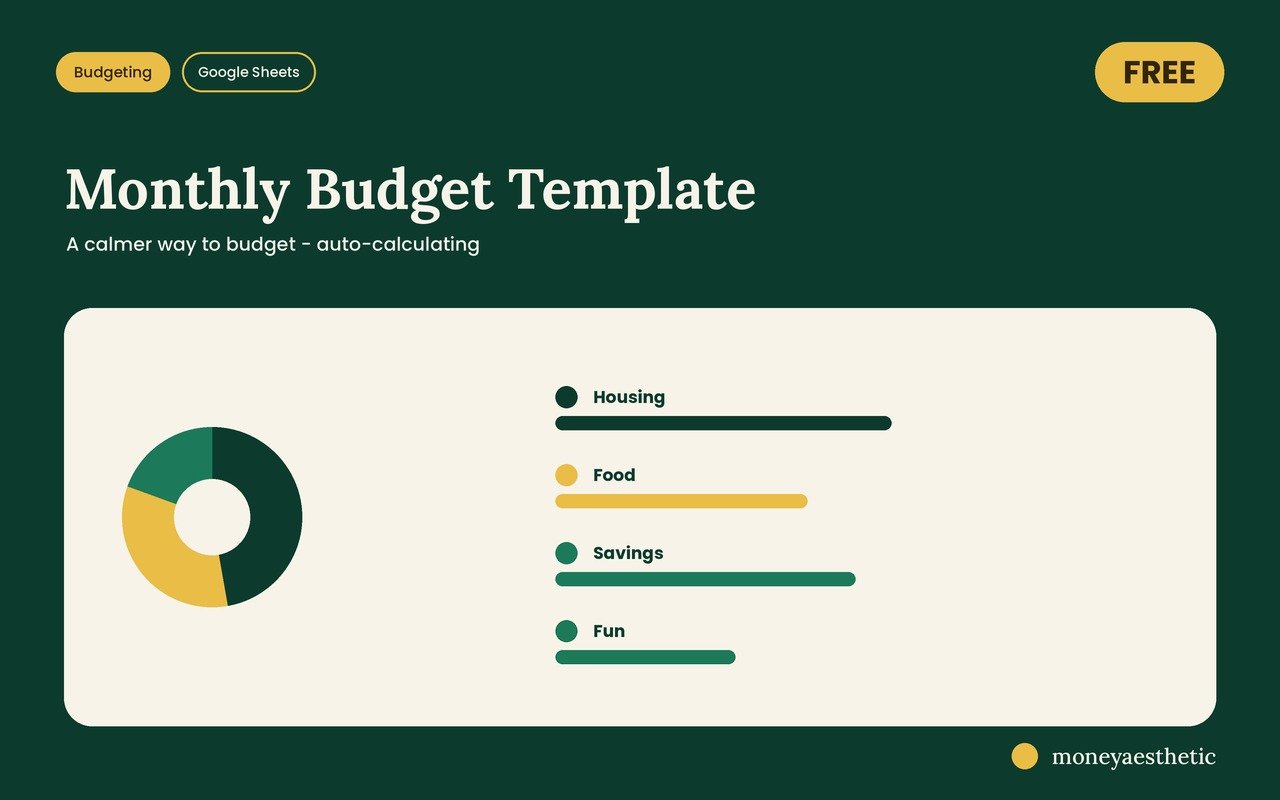
Want the planned numbers to fill themselves in?
The free Monthly Budget Template holds the plan side, so your printed page only has to carry the actuals. It adds up on its own, and it costs nothing.
Get the free Monthly Budget Template →This article is general information, not financial advice. Your situation is your own, and figures cited here describe national averages and survey shares rather than any individual household. Check the current BLS, BEA and Federal Reserve releases for the latest data before making a decision.