

Quick answer: A pay period is the stretch of days your paycheck actually covers, not the day the money lands in your account. Two weeks is the most common cycle: in February 2023, BLS estimated 43.0% of U.S. private establishments paid biweekly, 27.0% weekly and 19.8% semimonthly. And 2026 is a 27-paycheck year for one Thursday schedule: a biweekly Thursday schedule whose first payday was January 1 has 27 scheduled paydays this year instead of the usual 26, while the other Thursday schedule, starting January 8, has 26.
Here’s something worth knowing before you get your first job: your employer picks a rhythm for paying you, and that rhythm quietly becomes the real shape of your financial life. Not the calendar month. Not the 1st. The pay period.
And if you’ve ever built a beautiful monthly budget that worked in January, wobbled in March and fell apart completely by June, this may be why. The budget was built on months. Your money arrives in pay periods. Those two things often don’t line up, and the gap between them is where money can go missing.
Key takeaways
- A pay period is the range of work days a paycheck pays you for. The pay date is when the money actually shows up, which can be several days after the period closes.
- Biweekly (every two weeks, 26 checks) and semimonthly (twice a month, 24 checks) sound identical and behave completely differently.
- On average, biweekly paydays drift about two and a half days earlier in the month each month, so the bills each paycheck has to cover keep changing.
- Budget per paycheck instead of per month and the drift matters much less.
What Is a Pay Period, Exactly?
A pay period is the block of time your employer measures your work in: the days a single paycheck is paying you for. For example, a two-week pay period might run Sunday through Saturday, close on a Saturday, and pay out the following Friday. So the money you get on the 20th might be paying you for work you did between the 1st and the 14th.
The pay date is a separate thing, and mixing the two up can cause real problems. Your pay period is the work window. Your pay date is the deposit. The lag between them can be several days, and some states cap it: Iowa, for example, requires payment no later than 12 days (excluding Sundays and legal holidays) after the period ends. That gap is exactly long enough to make you think a paycheck is “late” when it’s right on schedule.
Federal law has surprisingly little to say here. The Fair Labor Standards Act sets a minimum wage and overtime rules, and the Department of Labor’s FLSA guide says wages are due on the regular payday for the pay period covered, without setting how often that payday has to come. For frequency rules, look to the states. The Department of Labor’s state payday requirements table (last revised January 1, 2023) shows the rules varying from state to state: Montana, Nebraska, North Carolina, Pennsylvania and South Carolina show no required frequency in the table, and Alabama and Florida are noted as having no regulations or none specified. Within those rules, your pay rhythm comes down to the schedule your employer picks.
Why Is Biweekly Not the Same as Getting Paid Twice a Month?
Biweekly means every 14 days. Semimonthly means twice per calendar month, for example the 15th and the last day. They sound like the same sentence said two ways. They are not, and mixing them up can throw off a budget.
A year has 52.18 weeks in it, so paying someone every 14 days gets you 26 paychecks. Paying someone twice a month gets you 24. Same annual salary, different-sized checks, and (the part that actually matters) completely different behavior against your bills. Semimonthly paydays sit on fixed calendar dates, such as the 15th. Biweekly paydays float. They land on the same weekday, and the date walks backward through the calendar over the year.
If you’re on the two-week cycle, a biweekly budget template is not a nice-to-have. It can be the difference between a plan that holds up through the year and one that stops fitting after January.
How Many Paychecks Do You Actually Get in a Year?
BLS sorts U.S. private establishments into four pay schedules, and each one produces a different number of deposits. The share column below comes from the Bureau of Labor Statistics Current Employment Statistics survey, whose February 2023 pay-period estimates cover U.S. private establishments.
| Schedule | Paychecks a year | Share of private establishments (Feb 2023) | What it does to your budget |
|---|---|---|---|
| Weekly | 52 | 27.0% | Smallest checks, frequent deposits, can be easy to overspend between bills |
| Biweekly | 26 (sometimes 27) | 43.0% | Paydays drift; in a 26-check year, two months get a third check |
| Semimonthly | 24 | 19.8% | Fixed dates, bigger checks, plays nicely with a monthly budget |
| Monthly | 12 | 10.3% | One deposit to make last a whole month; unforgiving if you front-load |
Notice that in the February 2023 BLS data, biweekly is the most common setup among U.S. private establishments, and because its paydays float, it’s also harder to fit into a monthly budget than a fixed-date schedule. That’s not a coincidence so much as a cruel joke: the most common way establishments pay and the usual month-by-month way of budgeting feel as if they were designed by different people who didn’t compare notes.
Let the sheet do the paycheck math
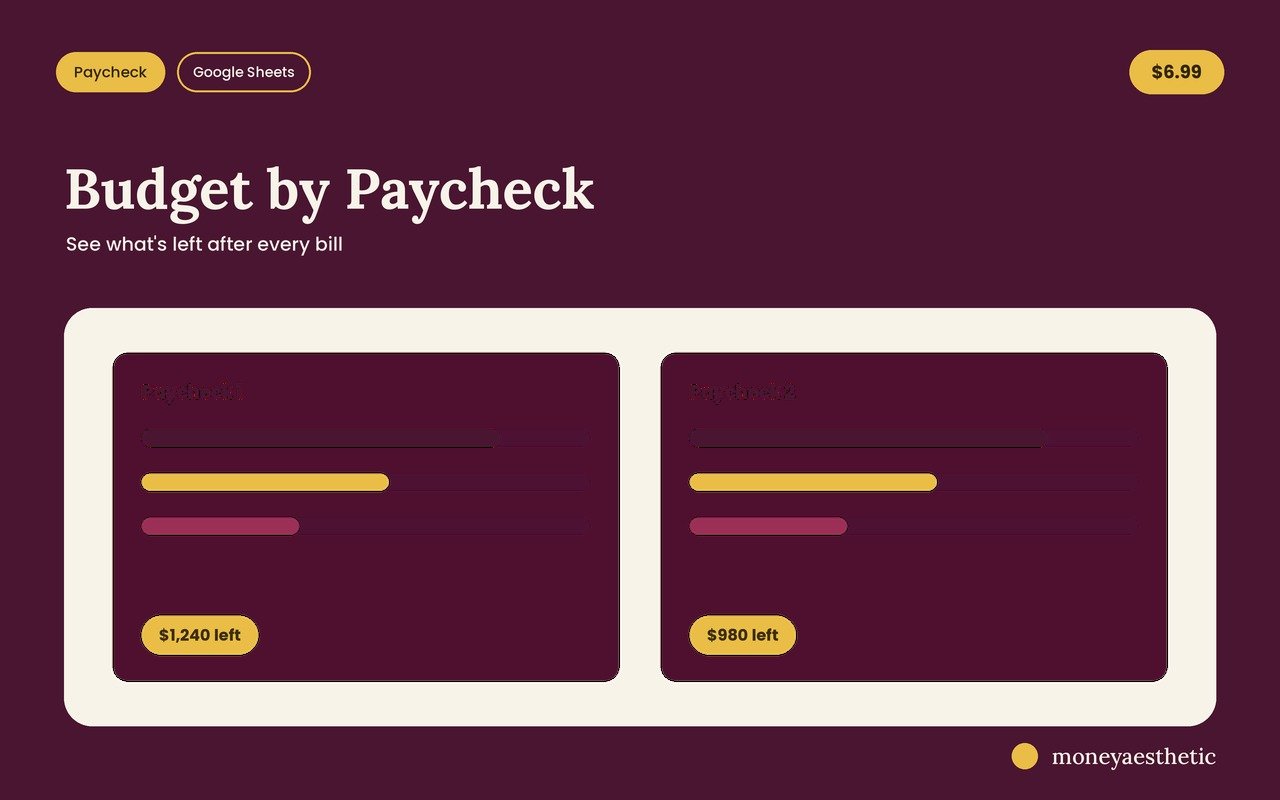
The Budget by Paycheck spreadsheet turns weekly, biweekly or semimonthly pay into a monthly income figure, sets it against your fixed and variable expenses, and shows what is left. You pick your pay frequency from a dropdown and it does the conversion.
Get the Budget by Paycheck sheet →Why Does a Monthly Budget Break on a Biweekly Pay Period?
Because your paydays move and your bill due dates usually stay put.
Run the arithmetic. The average month is 30.44 days long; a biweekly cycle is 14 days. So, on average, each payday lands roughly two and a half days earlier in the month than the matching payday a month before. In January your two paychecks might arrive on the 9th and the 23rd, which means the second one has to carry rent on the 1st of February… except by May those same checks are landing on the 1st, the 15th and the 29th, and now the rhythm has shifted underneath you. Whatever split you worked out in January (groceries and utilities from check one, rent and car from check two) is describing a calendar that no longer exists.
It’s easy not to notice this happening. What you notice is the symptom: a month that feels tight for no visible reason, a card that gets used “just this once,” and a slow slide toward living paycheck to paycheck on an income that looks like it should cover the bills.
There’s a research finding that fits this uncomfortably well. Gelman, Kariv, Shapiro, Silverman and Tadelis analyzed transaction data from about 75,000 people for a 2014 Science paper and found that spending jumps when a paycheck arrives, largely because regular income and regular spending tend to happen at the same time, with the remaining jump concentrated among people with less cash on hand. In that data, spending already lined up with paydays. Budgeting by month asks you to pretend it doesn’t.
How Do You Build a Budget Around Your Pay Period Instead?
Switching to a per-paycheck budget is mostly copying information you already have.
- Write down your actual pay dates for the next three months. Not “the 15th and the 30th” but the real dates, pulled from your pay stubs or payroll portal. If you’re biweekly, count 14 days forward from your last deposit and keep going.
- List every bill with its due date. A simple budget calendar works fine for this, and it’s an easy step to skip if you think you remember. An annual charge is easy to miss.
- Assign each bill to the paycheck that lands before it. This is the whole trick. Rent due the 1st gets funded by the check that arrives in the second half of the previous month, not by “January.”
- Check each paycheck’s total. If one check is carrying most of the bills, move something. Watch for annual insurance and other irregular costs.
- Redo the assignment every quarter. The drift is real. A quick review every three months keeps the map honest.
If you’d rather not build the grid from scratch, that’s fair — it’s fiddly, and the formulas are the annoying part. A ready-made sheet takes care of the formulas: the Budget by Paycheck sheet converts your pay frequency into a monthly figure and tracks each bill’s due date and paid status, so the part left to you is deciding which check covers which bill. And if you just want to start somewhere free, the monthly budget template is a decent on-ramp before you go per-paycheck.
What Do People Get Wrong About Pay Periods?
Here are three misconceptions to watch for.
“My monthly income is my paycheck times two.” Only if you’re semimonthly. On a biweekly schedule your monthly income is your paycheck times 2.167, and that extra fraction is why 3 paycheck months exist. Multiply by two and you’ll underestimate your year by at least two full checks, money that can slip away because it wasn’t planned for.
“A third paycheck is a bonus.” It isn’t. It’s your own money arriving in a lump because of how the calendar fell. Treating it as found money can leave you with a great three-paycheck month and a broke month right after it.
“Payday is the start of my pay period.” Not necessarily. Payday often pays for a cycle that has already closed. If you quit mid-cycle, you’re still owed those days (federal law doesn’t require immediate final payment, so the timing depends on your state). And if you’re picking up extra hours to cover something specific, that money can be weeks out, not next Friday.
Fix those three and the pay period stops being a piece of payroll trivia and starts being what it actually is: the unit your money moves in. Once your budget speaks that language, the whole thing gets a lot quieter: you see what’s left and get on with your day.
Frequently Asked Questions
What is a pay period in simple terms?
A pay period is the range of days a single paycheck pays you for. If your pay period runs the 1st through the 15th, that paycheck covers the work you did during those fifteen days, regardless of when the deposit actually lands.
What is the difference between a pay period and a pay date?
The pay period is the work window; the pay date is when the money hits your account. Payroll needs time to process hours, so the pay date can fall several days after the pay period closes, and some states cap how long that gap can be.
Do biweekly and semimonthly pay come out to the same amount per year?
For the same salary, yes in a normal year, but it arrives differently. Biweekly gives you 26 smaller checks on floating dates, semimonthly gives you 24 larger checks on fixed calendar dates. In a 27-paycheck year, a biweekly worker receives one extra deposit in that calendar year.
Does a pay period include weekends and holidays?
Yes. A pay period is a continuous block of calendar days, so weekends and holidays fall inside it. For hourly employees, pay for a holiday you didn’t work depends on your employer’s policy, because the FLSA doesn’t require holiday pay.
What is the most common pay period in the United States?
Biweekly. The Bureau of Labor Statistics Current Employment Statistics survey found that in February 2023, 43.0% of U.S. private establishments used a biweekly pay period, ahead of weekly at 27.0%, semimonthly at 19.8% and monthly at 10.3%.
Can my employer change my pay period?
It depends on your state: a new schedule still has to meet state payday requirements, and some states also require notice (Vermont, for example, allows biweekly and semimonthly paydays with written notice). The tricky part is the transition, because a switch from weekly to biweekly can leave a longer than usual gap before your next deposit, so build a buffer before it takes effect.
How do I calculate my real monthly income if I am paid biweekly?
Multiply your net paycheck by 26, then divide by 12. That gives your true monthly average. One cautious plan is to cover bills from two checks a month and treat the extra checks (two in a 26-check year, three in a 27-check year) as separate planned money rather than spending room.
What is a 27-paycheck year and how do I know if I am in one?
It happens when a biweekly schedule squeezes a 27th payday into the calendar year, which for any one fixed schedule comes around about every 11 or 12 years. Count 14 days forward from your first payday of the year, and if you reach a 27th payday on or before December 31, you’re in one. In 2026, a biweekly Thursday schedule whose first payday is January 1 has 27 scheduled paydays through December 31, with three-paycheck months in January, July and December; the other Thursday schedule, starting January 8, has 26. January 1 is a Federal Reserve holiday, so if your employer moved that first deposit to December 31, 2025, you’ll see 26 deposits in 2026.
New here? Start free
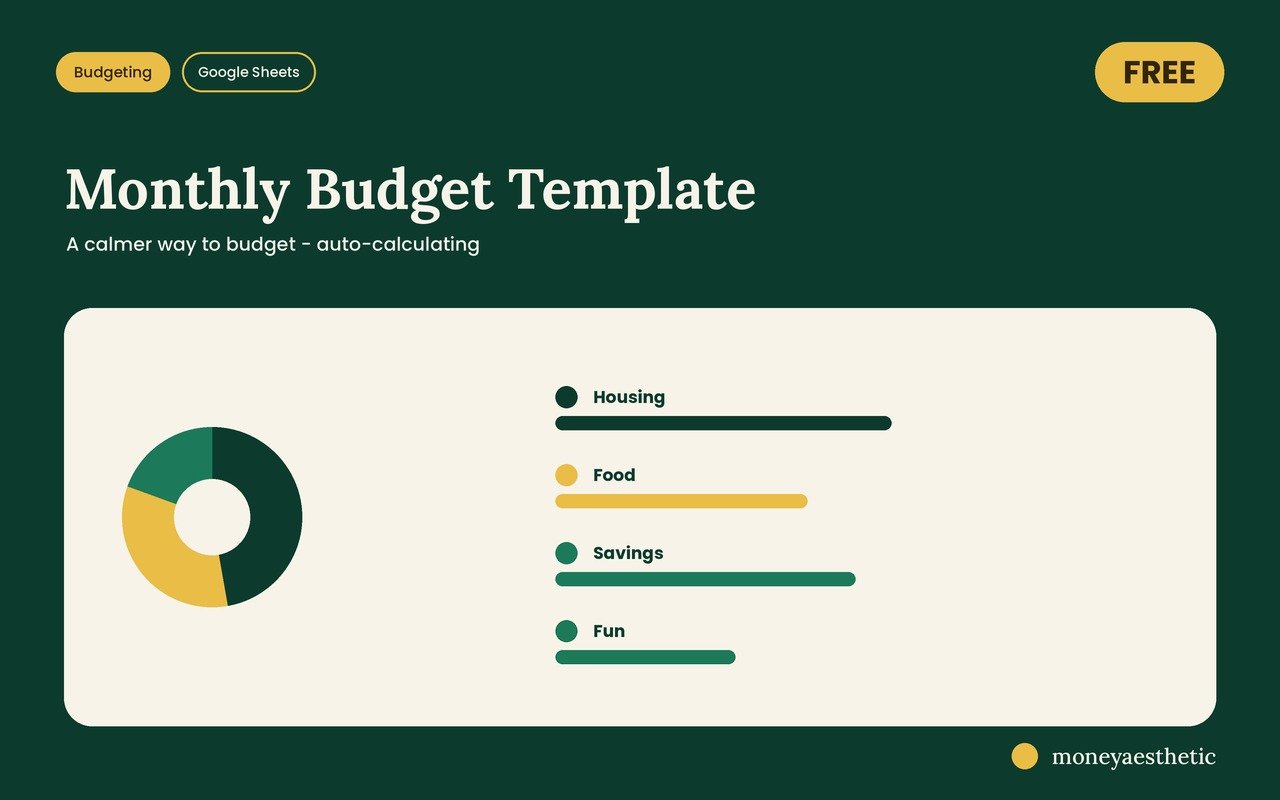
You don’t have to buy anything to get going. The free Monthly Budget Template puts your income, bills and leftover on one page, and it keeps working whether or not you ever buy another thing.
Get the free Monthly Budget Template →This article is general information, not financial advice. Pay frequency rules vary by state and employer — check your own pay stub and state labor office for specifics.