

Quick answer: How to pay for a wedding, in one line: decide the monthly amount you can move without flinching, multiply it by the months between now and your date, and let that number decide the size of the wedding. Borrowing runs the logic backwards. The Federal Reserve put the average 24-month personal loan rate at commercial banks at 11.86 percent in the second quarter of 2026, so a borrowed gap is never the size you agreed to.
Search this question and you will meet a wall of lenders. Loan pages, bank pages, “8 flexible ways to fund your big day” pages. They are all polite and they all end in the same place, which is a monthly payment that outlives the honeymoon. If the trip itself still needs a number, start with a honeymoon budget before any loan page gets a vote.
There is a version of this that does not involve borrowing, and it starts with a much smaller question than “what does a wedding cost.” It starts with what you can actually move from checking to savings on a bad month, not a good one.
Key takeaways
- Pick the monthly number first. Multiply by the months to the date. That product is your wedding, not a national average.
- Sending that same monthly payment to a savings account instead of a lender gets you there for less, and the $1,923 stays yours.
- Cash gifts from guests arrive on or after the day, so they cannot fund the deposits that come first.
- The date is one of the cheapest levers in the plan, and it is the one most couples decide first and never revisit.
How Do You Pay for a Wedding Without a Loan?
You pay for a wedding without a loan by working backwards from one number. Take the amount you can move to savings in a month where the car needed brakes, call that your floor, and multiply it by the months until the date. Fifteen months at $800 a month is $12,000. That is the wedding. Every guest count, every venue tour and every “we could do a plated dinner” conversation now has a real ceiling to bump into instead of a vague feeling of unease.
Plenty of couples do it the other way around. They pick a vision, price it, land on a number bigger than anything they have ever saved, and then go looking for the difference. That gap is what the lender pages in the search results are for. The gap is the product.
A floor built on a bad month is the whole trick. Your best month is rarely repeatable, and your best month is exactly what you will use if nobody stops you. It is the same instinct that quietly wrecks an emergency fund, and it wrecks wedding savings faster because there is a deadline attached.
Where Wedding Money Actually Comes From
Wedding money rarely arrives from one place. It arrives in four or five streams with different sizes and, more importantly, different arrival dates. Listing them by what they cost you is the fastest way to see which ones deserve to be load-bearing and which ones are a bonus you should not plan around.
| Source | What it costs | When it lands |
|---|---|---|
| Money already in savings | Nothing, unless it was the emergency fund | Now |
| Monthly saving between now and the date | Nothing but patience | Steadily, if the date holds |
| A contribution from family | Nothing, if the terms are said out loud | Usually one lump, on their timeline |
| Cash and checks from guests | Nothing | The day itself, or the week after |
| Credit card carried past the statement | 22.15 percent | Instantly, then for years |
| Personal loan | 11.86 percent | Instantly, then for years |
Look at the third column, because that is the one that surprises people. Guest gifts are real money and they are also the last money to show up. Venues and photographers take deposits at booking, which for popular dates is long before the wedding. Money that arrives on the day cannot pay a bill that was due before it.
Family money has its own timing problem, plus a conversation problem. A pledge is only useful if it comes with a number, a date and a category, and the etiquette side of that is worth reading up on in our guide to who pays for the wedding before anyone commits out loud.
When I built the wedding budget spreadsheet I gave every line two columns, Estimate and Actual, instead of one column called Budget. A single column lets you quietly edit the plan until it matches reality, which feels great and tells you nothing. Two columns keep the drift visible while you can still do something about it.
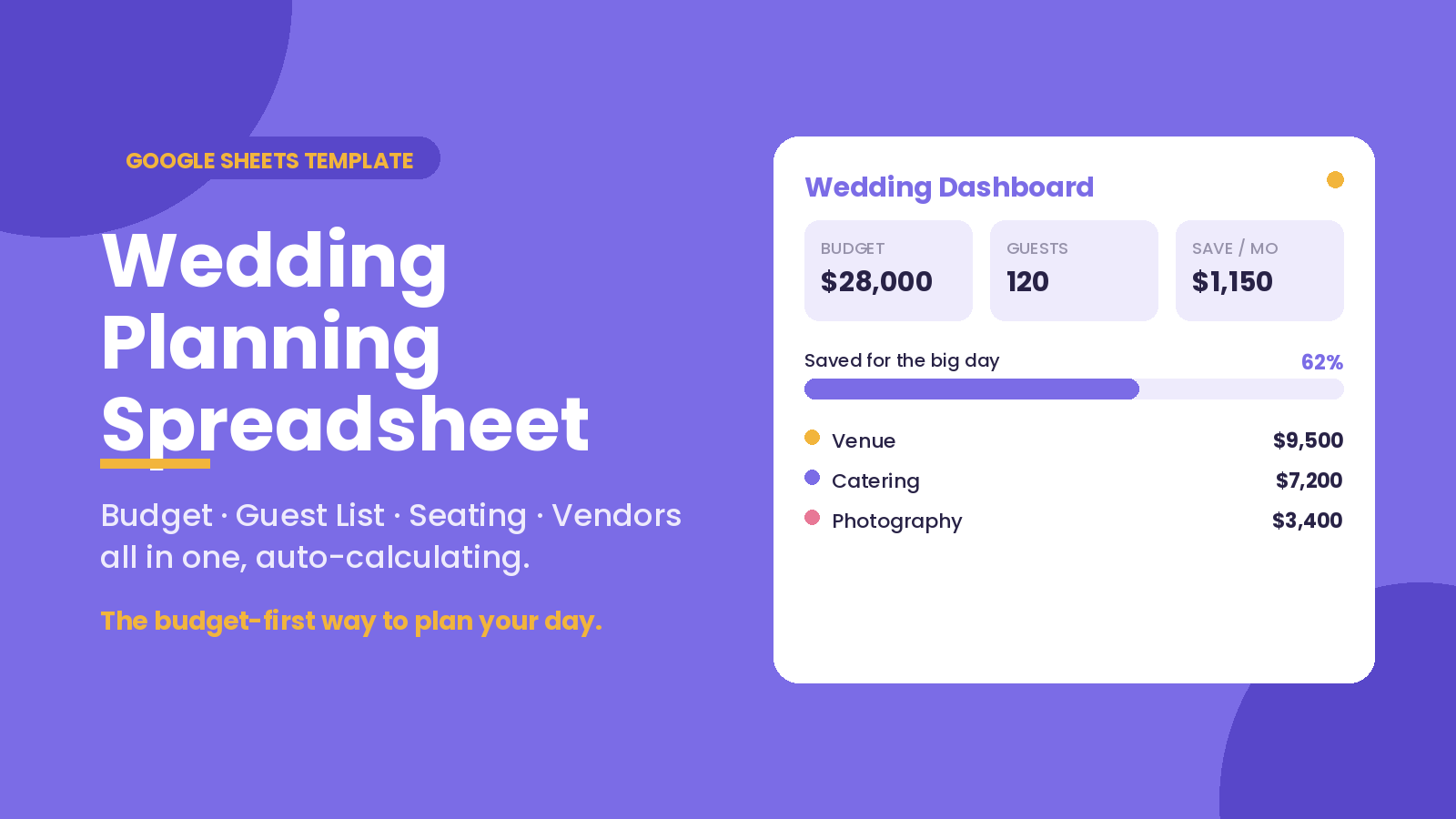
See your funding gap on one screen
Estimate and Actual side by side, deposits split from balances, and a running total that tells you whether the date still works. Built in Google Sheets, with no formulas to touch.
Get the Wedding Budget Spreadsheet →What Does Borrowing the Gap Actually Cost?
Borrowing the gap costs more than the sticker, and the size of “more” is knowable before you sign anything. Take a $15,000 shortfall. At the Federal Reserve’s second-quarter 2026 average of 11.86 percent on 24-month personal loans, the payment is about $705 a month and you hand over roughly $16,923 in total. Put the same gap on a card and carry it, and the second-quarter 2026 rate on card accounts assessed interest was 22.15 percent.
| Route for a $15,000 gap | Monthly | Months | Total paid |
|---|---|---|---|
| Personal loan at 11.86 percent | $705 | 24 | $16,923 |
| Credit card at 22.15 percent | $779 | 24 | $18,703 |
| Save $705 a month first | $705 | 21.3 | $15,000 |
Read the last row twice. The same $705 a month, sent to a savings account instead of a lender, reaches $15,000 partway through month 22, and you keep the $1,923. What the loan actually sells is early access. The money is in your hands on day one instead of nearly two years later, and the price of that head start is about $1,923, which is exactly what those 2.7 extra months of payments come to. If your date is far enough out that you never needed the early access, you paid for nothing.
That is the honest version of the arithmetic, and it is the version the top of the search results structurally cannot give you. A lender has no reason to recommend patience.
Move the Date, Not the Numbers
The date is one of the cheapest variables in wedding finance, and it is usually the first thing locked and the last thing reconsidered. Couples will cut the bar, cut the flowers and cut twenty people from a guest list they agonized over, and never once consider moving the wedding a season later. Yet four extra months at $800 a month is $3,200 in the bank, which is real money for a decision that costs nothing but a different backdrop in the photos.
This matters more when the savings underneath are thin. In the Federal Reserve’s Report on the Economic Well-Being of U.S. Households in 2025, published in May 2026, 63 percent of adults said they would have covered a hypothetical $400 emergency expense exclusively using cash, savings, or a credit card paid off at the next statement, and 55 percent said they had set aside money for three months of expenses. Read those two together and a lot of couples are planning a five-figure event on top of a buffer that would not survive a transmission.
So treat the date as a dial rather than a decision you already made. Ten months and a stretch number, or fourteen months and a floor you will actually hit. One of those two versions ends with a wedding and no payment book, and it is not usually the first one.
Which Funding Route Fits You Right Now?
The right route depends on which of your streams is genuinely load-bearing. Read down until one of these describes you, then stop.
- You have savings and a flexible date. Set the monthly floor, pick the date that floor pays for, and stop touring venues above it. Nothing else required.
- You have a fixed date and a gap. Do not borrow first. Cut head count, because head count moves catering, bar, stationery and favors all at once. Our wedding budget breakdown shows which lines actually carry the weight.
- Family has offered to help. Get the number, the date and the category before you fold it into the plan. A pledge without those three is a hope, not a stream.
- Deposits land before your savings catch up. That is a timing problem, not a funding problem. Build a sinking fund per vendor instead of one big pot, so every deposit gets its own runway.
- You are already carrying a balance. Fix that first. Borrowing at 22.15 percent to celebrate is a decision you will still be paying for on your first anniversary.
The column buyers ask me about most is the deposit one, and it is always the same story. They set a sensible total, then find out how much of it is due up front and realise the total was never the real problem. A lot of a wedding gets paid for long before anyone throws confetti. That gap between the total and what is due up front is exactly what a wedding payment schedule makes visible.
The other column I added on purpose is Paid From, because the question that kept coming back was never “what does this cost.” It was “whose money is this.” Two people, four parents and one shared account will generate that question about forty times, and a column answers it faster than a group chat does.
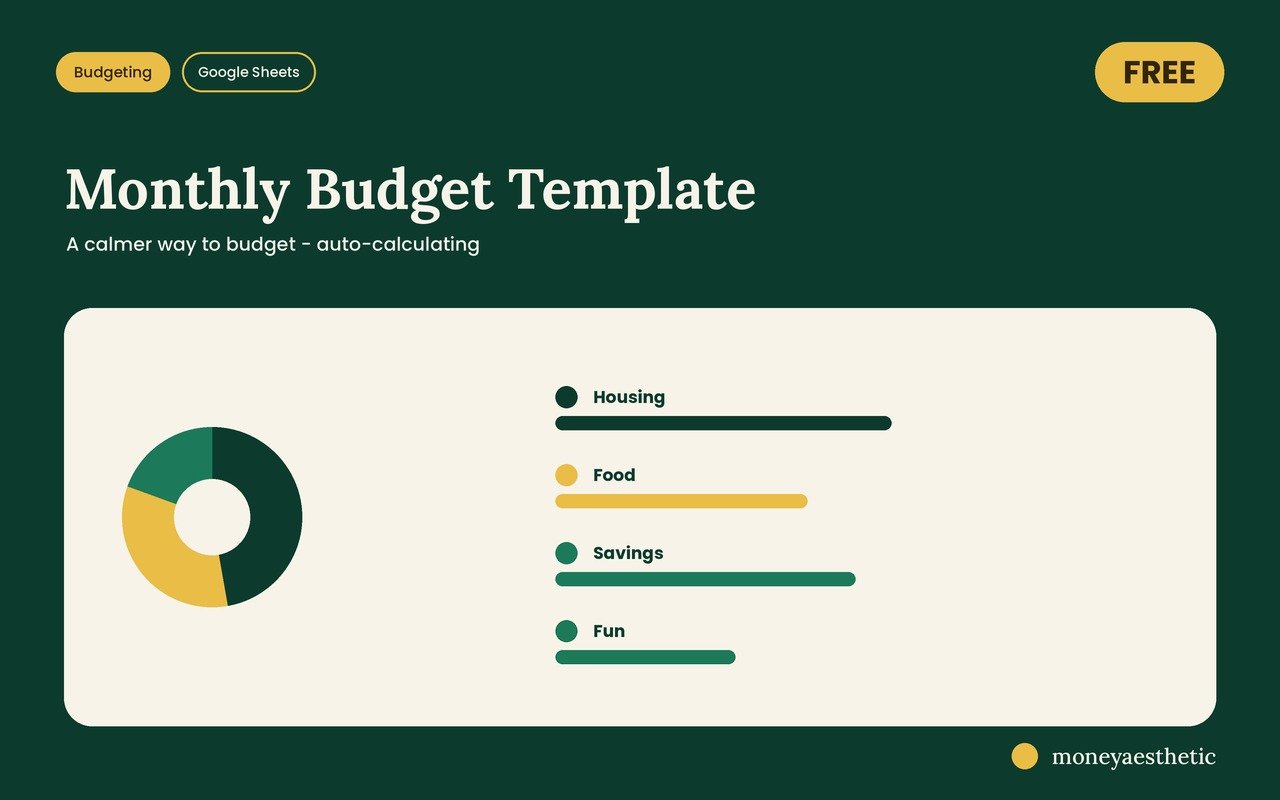
First, find the monthly number
You cannot multiply a number you have never measured. Run one ordinary month through the free template, look at what is genuinely left over, and use that as your floor.
Get the free Monthly Budget Template →How to Pay for a Wedding: FAQ
How do people usually pay for weddings?
Couples generally use a mix: money already saved, money saved monthly between the engagement and the date, and a contribution from one or both families. Guest cash arrives on or after the day, so it usually reimburses the couple afterwards rather than paying vendors directly. Borrowing is common enough, but it is a gap filler rather than a plan.
Is a wedding loan ever a good idea?
Rarely, and mostly when the alternative is worse debt. At the Federal Reserve’s second-quarter 2026 average of 11.86 percent on 24-month personal loans, a $15,000 loan costs about $1,923 in interest. What that buys is early access to the money, not a cheaper wedding. If the date is far enough out that you could have saved the same $705 a month and reached $15,000 in month 22, the loan bought nothing you needed.
How much should we save each month for a wedding?
Divide the total you want by the number of months until the date, then test that figure against a month where something broke. If it only works in a good month, it is not your number. Lower it and move the date rather than promising yourself a streak of perfect months.
Can parents give us money for a wedding without a tax problem?
Usually, yes. Ordinary family contributions tend to fall under the annual gift tax exclusion, which applies per recipient per year, so check the current amount before anyone writes a large check. The etiquette is harder than the tax rule. Agree the number, the date and the category up front, and our guide on who pays for the wedding walks through how families usually split it.
Can you pay for a wedding with a credit card?
You can, and it is fine if you clear the balance at the next statement. Carrying it is the expensive part. The second-quarter 2026 rate on card accounts assessed interest was 22.15 percent, nearly double the personal loan rate, which makes a card the worst of the borrowing options rather than the most convenient one.
This article is general information, not financial, tax or legal advice. Rates and tax figures change, so check the current Federal Reserve and IRS releases before you make a decision.