

Quick answer: You can get out of debt on a low income, but the plan has to start from numbers you already have instead of money you do not. If the payoff estimate printed on your statement runs longer than three years, the statement also has to show the monthly payment that would clear the balance in 36 months. With card rates at 22.15% on accounts assessed interest in the second quarter of 2026, those two lines decide most of it.
Here is the thing almost nobody says out loud. Most debt payoff advice quietly assumes there is a spare few hundred dollars sitting somewhere in your month. Find $500 in your budget. Start a side hustle. Throw everything at the smallest balance and feel the momentum.
If your income is genuinely low, that advice does not fail because you lack discipline. It fails because it was written for a different budget than yours.
Meanwhile the interest keeps working. The Federal Reserve G.19 release dated September 8, 2026 put the rate on credit card accounts assessed interest at 22.15% for the second quarter of 2026, and 20.94% across all accounts. At that rate the gap between a balance that shrinks and one that quietly grows comes down to whether your payment covers more than the month’s interest. Which is why the small numbers deserve a real plan instead of a shrug.
Key takeaways
- Your statement prints your minimums-only payoff timeline, and whenever that runs past three years, a 36-month payment too. Read those before you calculate anything yourself.
- When the extra money is tiny, the order of your debts matters much less than making sure every minimum lands on time.
- A payoff date you can see is what turns $20 a month from pointless into progress.
What Counts as a Low Income, Anyway?
There is no single definition, but the closest thing to an official line is the federal poverty guideline. For 2026, published in the Federal Register in January, the guideline for the 48 contiguous states and DC is $15,960 for a household of one and $33,000 for a household of four, adding $5,680 for each person past eight. Many assistance programs use a multiple of that number rather than the number itself.
Why bother with it? Because “low income” is usually a feeling, and feelings do not qualify you for anything. Knowing roughly where you sit against that figure tells you whether income-tested help is even on the table before you start cutting groceries to find debt money. It also tells you something kinder. You are not failing at a normal budget. You are running a different one.
Your Statement Already Did the Math Everyone Tells You to Go Do
Open your most recent credit card statement and look for the box near the payment information. Under Regulation Z, card issuers have to print a Minimum Payment Warning with an estimate of how long the balance takes if you pay only the minimum, plus the total you would pay that way. If minimums would take longer than three years, the statement also has to show the monthly payment that clears the balance in 36 months, what that route costs in total, and how much it saves you.
That is three numbers you were about to reverse engineer, printed on paper you already own. No article on the internet knows your APR, your balance and your issuer’s minimum payment formula. Your statement does.
| If you pay | Payoff takes about | Total you pay |
|---|---|---|
| The minimum | 15 years | $7,467 |
| $115 | 3 years | $4,133 (saves $3,334) |
Sit with that second row, because it is the whole argument of this article. The first minimum on that balance is about $85. The payment that ends it in three years is about $115. The distance between a fifteen-year problem and a three-year one is roughly $29 a month, not the $500 everyone tells you to find.
Use the box like this. The 36-month payment is your ceiling, not your target. The minimums-only total is your baseline. Anything you pay between those two lines buys back time, and now you can see roughly how much time it buys instead of guessing. When I built the debt payoff spreadsheet, I put a minimums-only baseline behind the dashboard for that reason. A payoff date on its own is just a date. Sitting next to the date you would have had anyway, it becomes an argument for the extra $20.
How Do You Make Progress When There Is No Extra Money?
Some months there is no extra. Not a small amount. None. That is a real situation and it has its own moves, and none of them involve pretending harder.
Call the issuer before you miss the payment, not after. Hardship and workout arrangements exist, and the phone call is free. Then look at nonprofit credit counseling. The CFPB describes credit counseling organizations as groups that “can advise you on your money and debts, help you with a budget, develop debt management plans, and offer money management workshops,” notes they are usually nonprofits, and says an initial session typically lasts an hour.
Protecting the minimums is not a consolation prize, either. Falling behind is common and it is expensive. The New York Fed quarterly report released on August 11, 2026 found 4.7% of outstanding household debt in some stage of delinquency in the second quarter of 2026, and 6.97% of credit card balances newly transitioning into serious delinquency, up slightly from 6.93% a year earlier. On a tight income, getting through a year without a 90-day late is a genuine financial result, not a low bar.
| If this is your month | The next move | Why this one |
|---|---|---|
| Minimums are covered, a little is left over | Send the extra to one debt and keep it there | Splitting $30 across four cards barely moves any payoff date |
| Minimums are covered, nothing is left over | Skip the extra, keep every payment on time | Staying current is what protects the plan you will start later |
| You will miss a minimum this month | Call that issuer before the due date | Hardship and workout arrangements exist, and calling costs nothing |
| You are behind on more than one account | Book a session with a nonprofit credit counselor | A debt management plan is built for this, and a first session is a conversation, not a commitment |
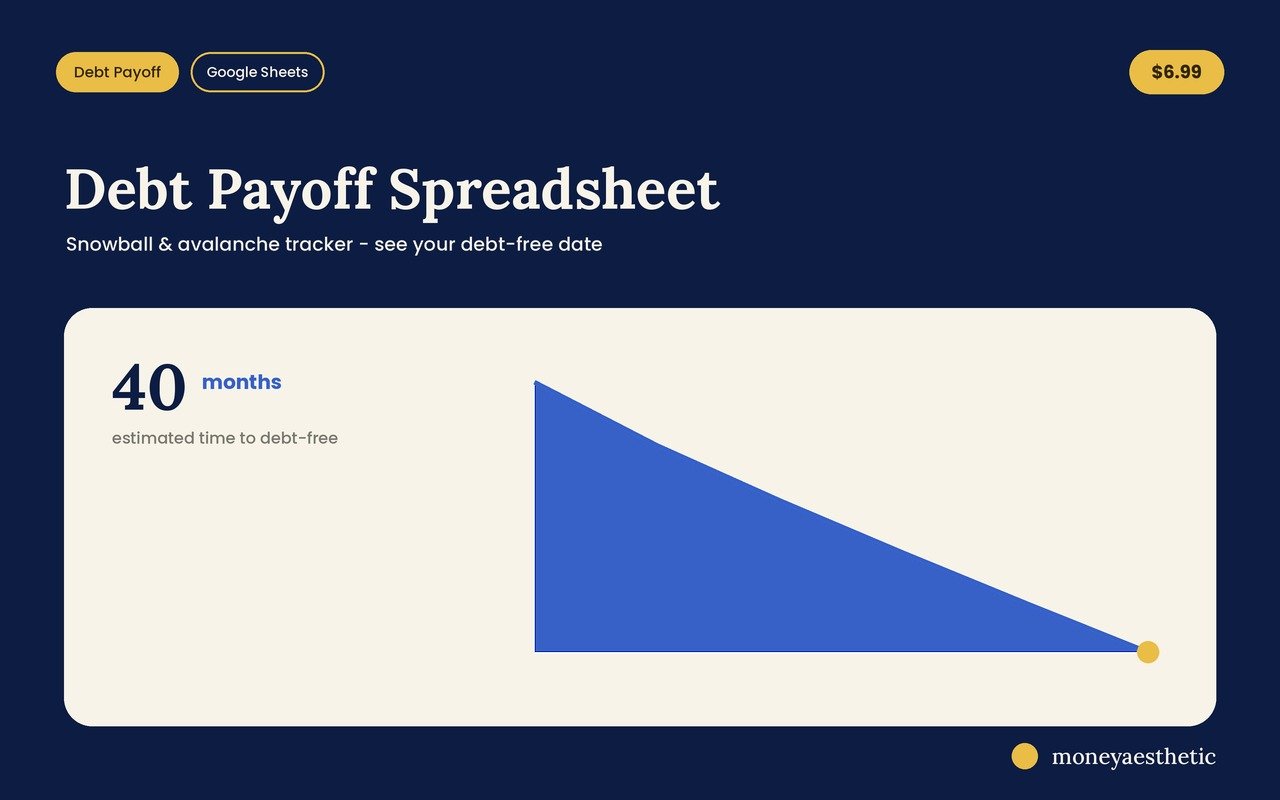
See what your $20 actually buys
Type your balances in once. The dashboard gives you a debt-free date and the interest you save measured against paying minimums only, so a small extra payment stops feeling pointless. Snowball, avalanche and your own custom order are all built in, the Compare tab puts snowball and avalanche side by side, and it flags any debt the minimum will not clear.
Get the Debt Payoff Spreadsheet →Which Debt Goes First When the Extra Is Tiny?
Pick one and stop researching. When the extra payment is $20 or $40, the gap between the highest-rate approach and the smallest-balance approach is usually small enough that finishing matters more than optimizing. The order you will actually stick to for a year tends to beat the order that is technically better for three weeks. If you want the full comparison, the guide on which debt to pay off first walks through both.
One exception worth knowing. If a minimum payment is not large enough to outrun the interest charged on that account, the balance goes up no matter how faithfully you pay. That debt goes first whichever method you picked, because every other plan is built on top of it. I added a warning line to the sheet that fires on exactly that case, since it is the one situation where the usual advice can work against you.
How Much Does an Extra $20 a Month Actually Change?
People overestimate what one month of extra payments does and underestimate what twelve do. Twenty dollars looks like nothing next to a $6,000 balance. Over a year it is $240 that never accrued interest, and on a revolving account the interest you avoid keeps compounding in your favor for the rest of the life of that debt.
The honest way to find out is to test it rather than argue about it. Put your real balances and rates somewhere that recalculates, change the extra payment, and watch the date move. That is the reason the what-if lives in one cell on the setup tab of my sheet instead of behind a separate calculator. You should be able to try $15, then $40, then $15 again in about ten seconds without leaving the screen you are already looking at.
And when a month goes sideways, put the extra back to zero and keep the minimums going. The plan is not ruined. It paused. If you want the longer version of building and holding one, the debt payoff plan guide covers the whole build.
Frequently asked questions
Can I get out of debt if I have no money left after bills?
Yes, though the first stage looks different. When nothing is left after bills, the work is protecting every minimum payment and calling issuers about hardship options before a due date is missed. Extra payments come later, once something frees up. Staying current keeps your options open and keeps the balance from growing through fees and added costs.
What is a realistic way to pay off debt with a low income?
Start from the 36-month payment your statement prints when its minimums-only estimate runs longer than three years, and work down to a number you can repeat every month without missing anything else. A small repeatable payment tends to beat a large one you abandon in month two. Put every extra dollar on one account rather than spreading it, and leave the order alone once you pick it.
Is debt consolidation an option on a low income?
Sometimes, but it depends on your credit and income, and a consolidation loan does not reduce what you owe by itself. A nonprofit credit counselor can tell you whether a debt management plan fits your situation before you apply for anything. The CFPB notes these organizations are usually nonprofits and that an initial session typically lasts an hour.
Should I save anything while I am paying off debt?
A small buffer usually earns its keep, because without one the next car repair goes back on the card you are trying to clear. How you split it depends on your rates and how steady your income is. The guide on how to budget on a low income lays out a needs-first version of that split.
How much credit card debt do Americans actually carry?
US credit card balances stood at $1.263 trillion at the end of the second quarter of 2026, part of $18.771 trillion in total household debt, according to the New York Fed report released on August 11, 2026. Useful context, and a reminder that your balance is a normal number rather than a personal verdict.
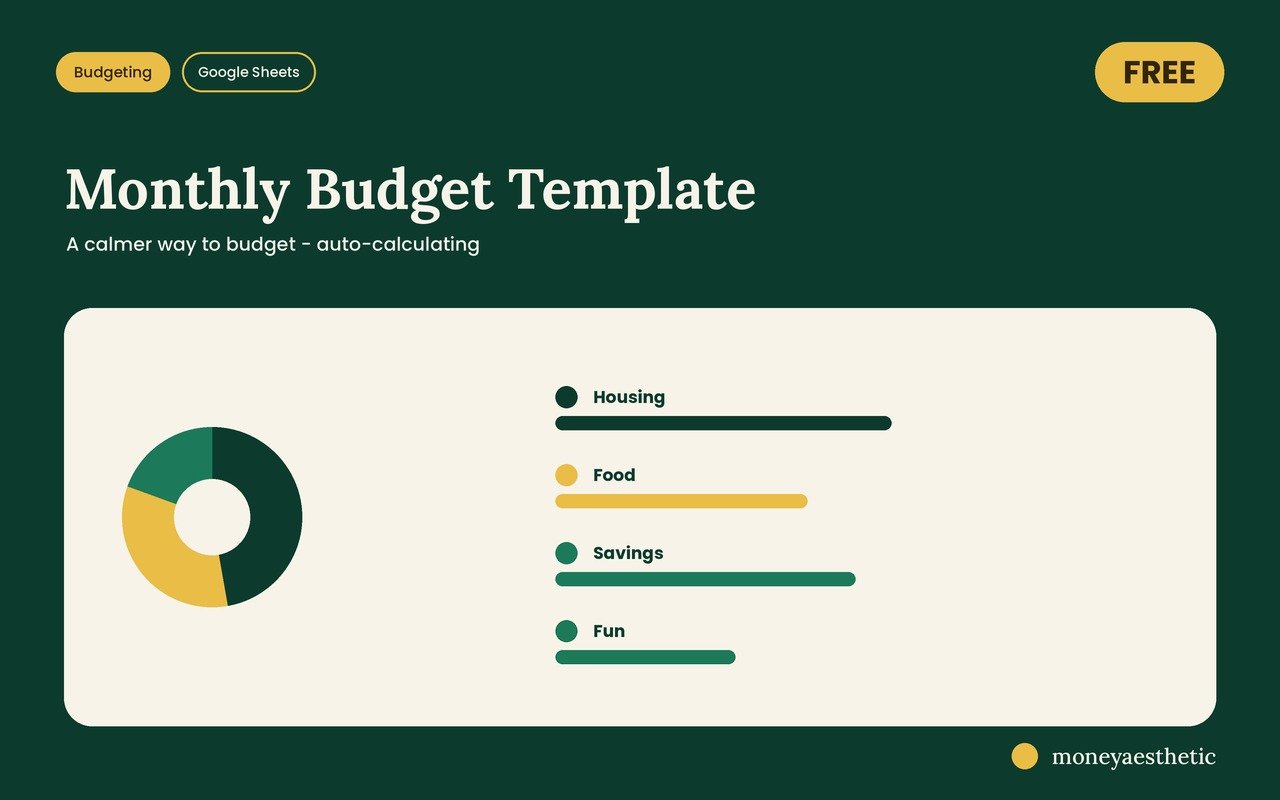
Not ready to spend anything? Start here
One tab, free. Income, budget versus actual, a bill checklist, and a simple debt section with balance, minimum, extra and what is left. No payoff date and no interest math, on purpose, because a first budget should not have to ask you for an APR.
Get the free Monthly Budget Template →This article is general information, not financial advice. Rates, program rules and your own account terms change, so check your statement and your issuer before making a decision.