

Quick answer
The 52-week savings challenge is a gentle way to build real savings: you set aside a small, growing amount each week ($1 the first week, $2 the next, all the way up to $52) and finish the year with $1,378. It starts almost insultingly small on purpose. That matters, because in 2025, 63% of U.S. adults said they would cover a surprise $400 expense entirely with cash or its equivalent (Federal Reserve). This is how you quietly join them.
Here’s a number that stings a little. In July 2026, Americans were saving just 3% of their disposable (after-tax) personal income, according to the Bureau of Economic Analysis. Three percent. For example, on $4,000 a month of after-tax income, that’s about $120, and it’s easy for even that to slip away before the month is out.
The problem usually isn’t that you’re bad with money. It’s that “save more” is a goal with no on-ramp. It’s hard to flip from saving nothing to saving $500 a month overnight; it feels like a diet that opens with a marathon. So you don’t start at all, another year slides by with a flat savings account, and there’s that low hum of dread every time the car makes a new noise.
The 52-week savings challenge fixes the on-ramp. It asks for one dollar to begin. You can do a dollar.
Key takeaways
- Save $1 in week one, then add $1 more every week. By week 52 you’re tucking away $52, and you’ve banked $1,378.
- It’s built to start small enough to feel like nothing, then scale up as the habit sets.
- Flip it (start at $52 and count down to $1) so the biggest weeks land while your motivation is fresh.
- Where you park the cash matters: savings rates vary by bank, so compare any account’s rate with the FDIC’s 0.38% national average.
What the 52-week savings challenge actually is
It’s a simple savings game. Week one, you move $1 into savings. Week two, $2. Week three, $3. You keep nudging the amount up by a single dollar until, in the final week, you’re setting aside $52. Add every one of those weekly deposits together and you land on $1,378, because the numbers 1 through 52 happen to sum to exactly that.
That’s the whole thing. No app required, no fancy math, no minimum balance. A jar would technically work (though we’ll talk later about why a jar is leaving money on the table). The magic isn’t the mechanism. It’s the shape of it. You practice the boring skill of “money leaves checking, money stays saved” fifty-two times, starting so gently that the first weeks ask very little.
And by the time the deposits get real ($40, $45, $52), you’ve had months of practice and a growing balance you don’t want to abandon. The habit can carry some of the weight willpower can’t.
Why a challenge this tiny actually works
Sometimes the hard part of saving isn’t the size of the paycheck. It’s starting. The idea is that a smaller, more specific first step can feel easier to take. “Save $1 this week” is hard to talk yourself out of. “Build a $1,000 emergency fund” is easy to postpone forever.
The stakes are real, too. The Federal Reserve found that 63% of adults said they would cover an unexpected $400 expense entirely with cash or its equivalent in 2025, which is a polite way of saying more than a third wouldn’t. A finished 52-week challenge puts $1,378 in your corner, which clears that $400 line with room to spare. That’s a real cushion, built one small week at a time.
There’s a momentum bonus, too. Watching a balance climb can feel weirdly satisfying, and each deposit is a small “look what I did” moment you can build on.
How to start the 52-week savings challenge
- Open a separate savings account (or at least a separate labeled pocket) so the money isn’t sitting in checking waiting to get spent. Out of sight can help keep it out of mind.
- Pick your start week and print a tracker. You do not have to wait for January 1st. Any week is week one. Crossing off boxes can make it fun and help you stay accountable.
- Set the weekly transfer. Move that week’s amount the day it makes sense. Payday works well, because the money’s there and you haven’t spent it yet.
- Decide your direction now (forward or reverse, more on that in a second) so future-you isn’t negotiating with present-you every week.
- Give the money a job. Starter emergency fund, holiday gifts, a real vacation. A challenge with a named goal can be easier to stick with on the weeks you’d rather skip.
Step three deserves extra attention. A manual transfer every week is a small chore that can slip your mind. The fix is to set up an automatic transfer on payday, and it’s easier to size that transfer when your budget shows what’s left each month. That’s the idea behind a budget by paycheck: you enter each income source and how often it pays, it converts them to a monthly figure, and it shows what remains after your expenses, so you can pick a transfer amount that fits instead of guessing.
The 52-week savings challenge chart
You don’t need to memorize 52 rows. Here’s where you’ll be at a few checkpoints so the whole year is easy to picture:
| Where you are | That week you save | Total banked |
|---|---|---|
| End of month 1 (week 4) | $4 | $10 |
| End of month 3 (week 13) | $13 | $91 |
| Halfway (week 26) | $26 | $351 |
| Week 39 | $39 | $780 |
| Final week (week 52) | $52 | $1,378 |
Notice how gentle the first three months are: under $100 saved by week 13, with the biggest single deposit still only $13. That’s the ramp doing its job. By the time you hit the pricier weeks, you’re already hundreds of dollars in, with plenty of reason not to bail.
Give every one of those weekly dollars a home
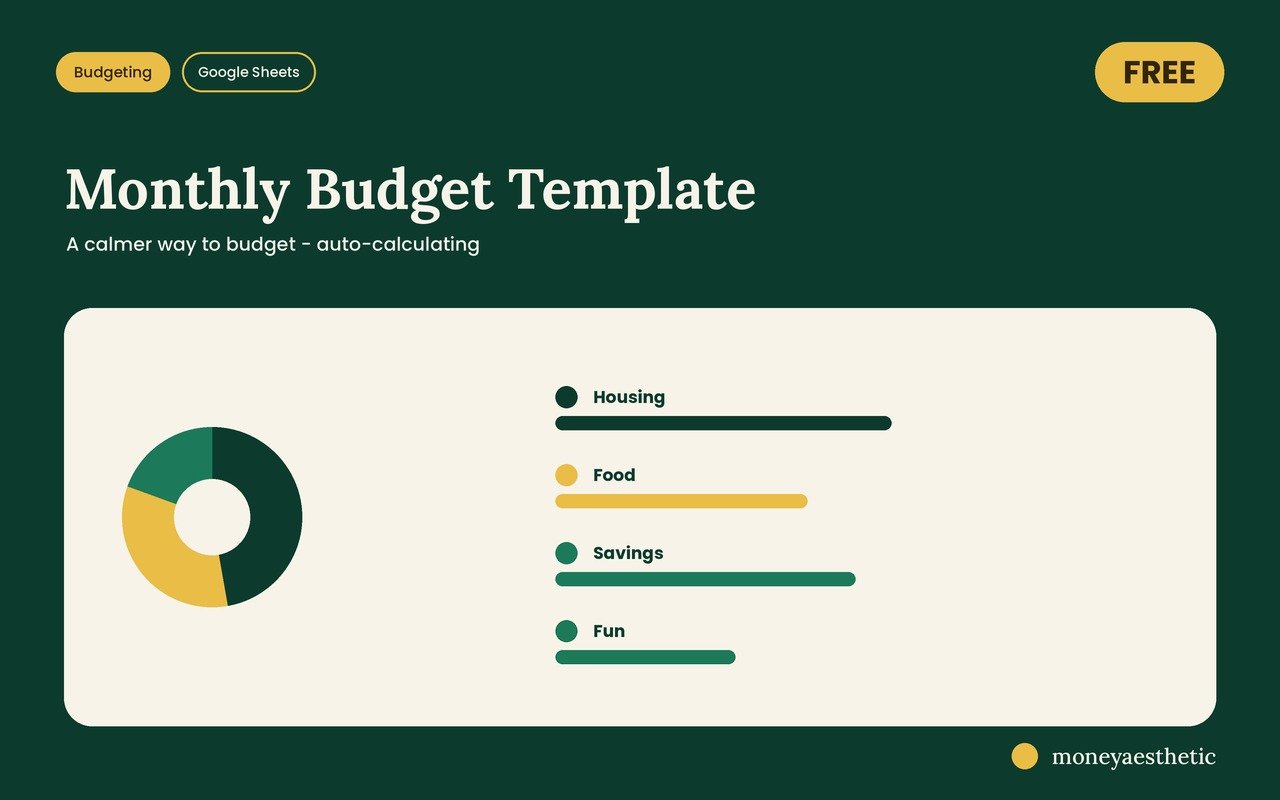
A challenge tells you how much to save. A budget shows you where it comes from. The free Monthly Budget Template does the second job for you: income, bills, and savings in one clean Google Sheet that adds itself up, so you can see where this week’s deposit comes from without robbing your grocery money. Type your numbers in, watch the totals land, and let the challenge run without the guesswork.
Get the free budget template →Reverse it, flatten it, or randomize it
The classic version is great, but it has a catch: if you start the first week of January, the four most expensive weeks ($49 to $52) land in December, on top of holiday spending. That can make the home stretch tough. So bend the challenge to fit your life:
- Reverse it. Start at $52 and count down to $1. Same $1,378 total, but the big weeks come first while your resolve is fresh, and with a first-week-of-January start, the challenge gets easier as the holidays get expensive.
- Flatten it. Not into surprises? Save a flat $26.50 every week. Identical total, zero mental math, simple to automate.
- Randomize it. Write the numbers 1 to 52 on slips, drop them in a jar, and pull one each week. Cross that amount off your chart. It can keep the game fun and take the dread out of the big weeks.
If you love the “make it a game” energy, the same idea is behind the 100 envelope challenge and a good no-spend challenge. Any of them gives you a clearer plan than “save whatever’s left” (spoiler: sometimes nothing is left).
Where to keep the money
“Put it in a savings account” is a start. But which account you choose changes what you walk away with.
The national average savings rate is 0.38%, according to the FDIC’s national rates published August 17, 2026. On a balance that climbs from $0 to $1,378 over the year, that rate earns under $2 in interest. Rates vary by bank, so an account paying more than that average would earn more on the same deposits. Any extra won’t change your life, but it takes no extra effort, and if you keep the habit rolling into year two, the interest compounds on a bigger and bigger pile.
So: keep your challenge cash somewhere it’s separate (so you don’t spend it), FDIC-insured (so it’s protected), and actually earning (so your discipline earns you something, too). Then automate the weekly move. Missing a week can make the streak feel broken, and a recurring transfer scheduled to your payday helps take forgetting out of the equation.
Common misconceptions
“$1,378 is too small to bother with.” In 2025, 63% of adults said they would cover a surprise $400 expense entirely with cash or its equivalent (Federal Reserve). That leaves 37% who would need another way to pay or couldn’t pay at all, and $1,378 is more than three times that $400. It’s a legitimate starter emergency fund, and it can be the difference between a surprise bill being an annoyance versus a crisis.
“I have to start January 1st.” You don’t. The challenge is 52 weeks from whatever week you begin. Starting today beats waiting months for a tidy calendar date. A tidy date can become one more reason to put it off.
“I missed a week, so I’ve blown it.” Nope. This isn’t pass/fail. Double up next week, or just carry on from where you are. A challenge you resume beats a perfect one you never started.
“A savings challenge replaces a budget.” Different jobs. The challenge supplies the motivation; a budget supplies the actual dollars. Run the challenge on top of a simple budget and you’ll know where this week’s deposit is coming from instead of hoping it appears.
Frequently asked questions
How does the 52 week savings challenge work?
You save a growing amount each week for a year: $1 in week one, $2 in week two, and so on up to $52 in the final week. Those deposits add up to $1,378, and the slow ramp can help it stick when bigger savings goals don’t.
How much money do you save with the 52 week challenge?
Exactly $1,378 over the year, because the numbers 1 through 52 add up to that total. Want more? Start each deposit at $2 and climb by $2 a week and you’ll finish with $2,756 instead.
What is the reverse 52 week savings challenge?
You run the challenge backwards: $52 in week one, $51 in week two, down to $1 in the last week. The total is the same $1,378, but the biggest deposits happen early while your motivation is fresh, and with a first-week-of-January start, it eases off right as the holidays get expensive. If December is the actual target, our guide on how to save for Christmas covers that goal.
Can I do the challenge with the same amount every week?
Yes. Save a flat $26.50 each week and you’ll hit the identical $1,378 with no escalating math. It’s a simple version to set up as an automatic transfer, which can make it easier to stick with to the end.
Where should I keep my 52 week challenge savings?
In a separate, FDIC-insured savings account, not your checking. Rates vary by bank, so compare an account’s rate with the FDIC’s 0.38% national average savings rate (published August 17, 2026) before you choose one.
What if I can’t afford $52 in the final weeks?
Switch to the reverse or flat version, or simply cap your weekly deposit at whatever you can sustain. Finishing a smaller challenge beats abandoning a bigger one. The habit is worth more than the exact number.
Is the 52 week savings challenge worth it?
For many people, yes. It turns “save more someday” into a concrete weekly action and ends the year with a real cushion. Given that more than a third of adults wouldn’t cover a $400 emergency entirely with cash or its equivalent (Federal Reserve, 2025), $1,378 is a meaningful head start.
When should I start the 52 week savings challenge?
This week. There’s nothing special about January 1st; the challenge simply runs 52 weeks from your start date. The sooner you begin, the sooner the habit and the balance start compounding.
This article is for general education, not personalized financial advice. Figures cited come from the sources linked (Federal Reserve, U.S. Bureau of Economic Analysis, FDIC) as of their publication dates. Savings account rates vary by institution and can change, so confirm current APYs before you open an account.