

Quick answer: A debt snowball spreadsheet lists every debt from smallest balance to largest, tracks the minimum payment on each one, and rolls each finished payment into the next debt down the list. That rollover is the entire trick. With credit card accounts that get charged interest averaging 22.15% APR in May 2026 (Federal Reserve G.19), a plan you’ll actually stick to beats a mathematically perfect one you abandon by March.
You know your debt number. Sort of. It lives in three apps, one paper statement you keep meaning to open, and a vague feeling in your stomach around the 28th of every month.
That fog is expensive. Not in a dramatic way. In a quiet, $40-here, $85-there way, because when you can’t see the whole picture you default to paying minimums on everything and hoping. Meanwhile Americans were carrying $1.26 trillion in credit card balances in the second quarter of 2026, up 4.5% from a year earlier, according to the New York Fed’s Q2 2026 household debt report. A lot of that isn’t reckless spending. It’s just… drift.
A spreadsheet fixes the fog. Not because spreadsheets are magic, but because you can’t roll a snowball you can’t see.
Key takeaways
- The snowball orders debts by balance, smallest first, not by interest rate.
- The rollover is what accelerates it: every paid-off payment gets added to the next debt.
- In one four-debt example, the snowball cost about $141 more than the avalanche, and delivered the first win three months sooner.
- The silent killer isn’t your interest rate. It’s letting your payment shrink as your balance shrinks.
What a debt snowball spreadsheet actually does
Four columns do the heavy lifting: creditor, current balance, interest rate, minimum payment. Sort by balance ascending, and you’ve got your attack order.
The fifth column is where it gets fun. That’s your snowball amount: whatever extra you can throw at the smallest debt this month. Ten dollars counts. Then when debt #1 dies, its minimum payment doesn’t go back into your life. It gets stapled onto debt #2. Then those two get stapled onto debt #3. The payment aimed at your current target debt grows every time you finish one, which is why the last debt (usually the scary one) falls faster than feels possible.
You can absolutely build this yourself. Budget an evening for the formulas, another for the amortization tab, and a small argument with yourself about why the payoff date says 2031. Or you can open one that already does the math and just type your balances in. I’m biased about which of those two evenings is more fun.
Why the snowball works when the math says it shouldn’t
Here’s the thing plenty of finance nerds will tell you: paying the highest interest rate first saves more money. That’s true. It’s also beside the point for a lot of people, because debt payoff isn’t a math problem you solve once. It’s a behavior you have to repeat 26 times in a row.
Researchers David Gal and Blakeley McShane looked at data from about 6,000 people working through a debt settlement firm. Their finding, published in the Journal of Marketing Research: what predicted whether someone eliminated their debt entirely was the fraction of accounts they’d closed, not the dollar value of what they’d knocked out. The researchers suggest that closing accounts may help keep people going. Small victories, then bigger ones.
Which lines up with something you already know about yourself. It’s hard to feel motivated by “you shaved 0.4% off your weighted average interest rate this quarter.” People feel motivated by that card is gone.
How to set up your debt snowball spreadsheet
- Dump everything into one place. Every card, loan, medical bill, buy-now-pay-later plan, the $600 you owe your brother. All of it. This step feels awful for about nine minutes and then feels amazing.
- Sort smallest balance to largest. Ignore interest rates for now. Yes, really.
- Add up your minimums. That total is your floor: the number you must hit every month no matter what.
- Find your snowball. Whatever you can add on top of the floor. This is where a working zero-based budgeting setup pays for itself, because it shows you the leftover you didn’t know you had.
- Lock the total payment, not the minimum. More on why in a second. This is the step that often gets skipped.
- Put a real date on it. “Debt-free by November 2028” is a goal. “Someday” is a mood.
If you’ve been going back and forth on ordering, we broke down the tradeoffs in which debt to pay off first. Short version: pick one and start this week.
Snowball vs avalanche, with actual numbers
Let’s run a realistic pile: a $650 medical bill at 0%, an $1,150 store card at 29.99%, a $3,200 credit card at 22.15%, and a $7,400 car loan at 7.14% (that’s the Fed’s May 2026 average commercial bank rate for a 60-month new car loan). Minimums total $355 ($35, $30, $75 and $215), and you’re putting $200 extra on top, so $555 a month.
| Debt snowball | Debt avalanche | |
|---|---|---|
| Order | Medical → store → card → car | Store → card → medical → car |
| First debt gone | Month 3 | Month 6 |
| Total interest | $1,642 | $1,501 |
| Debt-free in | 26 months | 26 months |
Same finish line. The avalanche saves $141 total, about $5.42 a month. The snowball hands you a completed debt three months earlier, back when quitting is still tempting. If you want to build the other side yourself, our guide on the debt avalanche spreadsheet walks through the columns it needs. If $141 buys you the momentum to make it to month 26, that’s a bargain, and I will die on this hill.
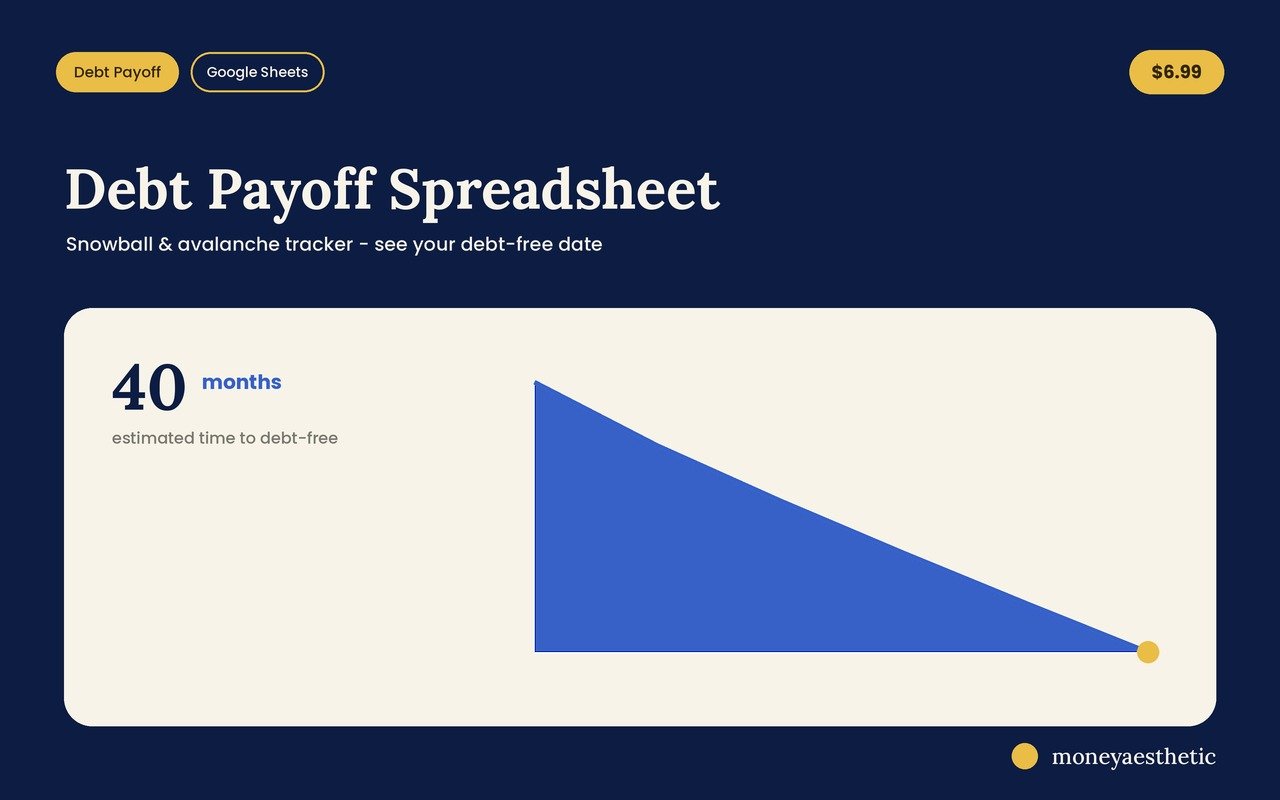
Skip the formula-building part
Type in your balances, rates and minimums. It sorts your snowball order, handles the rollover automatically, and shows your debt-free date updating as you go. Snowball or avalanche? Flip between them and watch the date move.
Get the Debt Payoff Spreadsheet →Common misconceptions
“The avalanche is objectively better, so the snowball is dumb.” The avalanche wins on paper. It loses whenever it makes you quit in month four because nothing has visibly changed. The best method is the one still running next spring.
“I need an app for this.” You need a list and a rule. Apps are lovely and also one more login you’ll abandon. A sheet you open on Sunday with coffee is a system.
“I should pause saving until the debt is gone.” Please don’t go to zero. One flat tire on a bare-bones month puts everything right back on the card. Keep a small buffer running alongside. how much emergency fund covers what “small” should look like while you’re paying off debt.
The minimum-payment trap that quietly deflates your snowball
Here’s the part many free templates don’t model, and it’s one way plans stall without anyone noticing.
Your credit card minimum isn’t a fixed number. It’s usually a formula: most commonly 1% of the balance plus that month’s interest and fees, and some cards use 2% of the balance instead, with a dollar floor that ranged from $15 to $50 in the card agreements the CFPB reviewed for its December 2025 credit card market report (most often $40). Which means as your balance goes down, your required payment goes down too. Pay the number the statement prints, and you are quietly being demoted every month.
What that costs on a $3,200 balance at 22.15%:
- Pay a locked $75 every month: gone in about 7 years, roughly $3,152 in interest.
- Pay whatever the statement says (1% + interest, $40 floor): about 11.7 years and roughly $4,194 in interest, on the exact same debt. With a $25 floor, it stretches to about 15.5 years and $4,836.
Same balance. Same rate. More than four years longer at a $40 floor, and more than double the time at a $25 floor, because the payment quietly shrank. On a 2%-of-balance formula it gets genuinely absurd: decades. The CFPB’s consumer tools are worth a look if you want to see the mechanics on your own card.
So the single most valuable cell in your debt snowball spreadsheet isn’t the interest column. It’s the one that says this is what I pay, every month, regardless of what the statement asks for. Set it once. Let the minimums fall away underneath it. That gap is your snowball, growing on autopilot.
And when a debt does get paid off, name where that money is going before it lands in your checking account. Freed-up money that hasn’t been assigned a job has a way of becoming brunch. If you don’t have a plan for it yet, the free monthly budget template is an easy place to park it.
That’s really the whole thing. See it, sort it, lock the payment, roll it forward. The spreadsheet just makes it impossible to lie to yourself about the date.
Debt snowball spreadsheet FAQ
What is a debt snowball spreadsheet?
It’s a sheet that lists your debts from smallest balance to largest and automatically rolls each paid-off payment into the next debt. It tracks balances, rates, minimums and your projected debt-free date in one place.
Does the debt snowball actually work?
It can help. Research by Gal and McShane using data from roughly 6,000 clients of a debt settlement firm found that the share of accounts a person had closed predicted full debt elimination better than the dollar amounts they had paid off.
Is the snowball or avalanche better?
The avalanche costs less in interest; the snowball delivers wins sooner. In the four-debt example above the difference was $141 over 26 months, which is a small price for momentum if the avalanche makes you quit.
Should I use Excel or Google Sheets?
Google Sheets, if you want it on your phone without thinking about it. Excel is fine too, since the core formulas work the same way, and a sheet you open weekly beats a perfect one you don’t.
What should my extra snowball payment be?
Whatever survives a real budget, even if it’s $25. Consistency does more work than size, because the rollover compounds your payment every time a debt disappears.
Do I include my mortgage in a debt snowball?
Usually not. A common approach is to leave the mortgage out and snowball consumer debt such as cards, car loans, personal loans and medical bills, then decide about the house afterward.
What happens if I miss a month?
If you miss the extra snowball payment, nothing catastrophic happens. Update the balances, let the payoff date move, and restart the same payment next month. Keep paying every minimum on time, though: a missed payment can bring a late fee, negative credit reporting and a higher interest rate. The plan only fails if you stop opening it. If you have not written one down yet, start with a simple debt payoff plan and let the sheet carry the math.
Can I switch from avalanche to snowball halfway through?
Yes. Re-sort by balance, keep your total payment the same, and continue. Switching order changes which debt gets the extra money, but it doesn’t reset anything you’ve already paid.
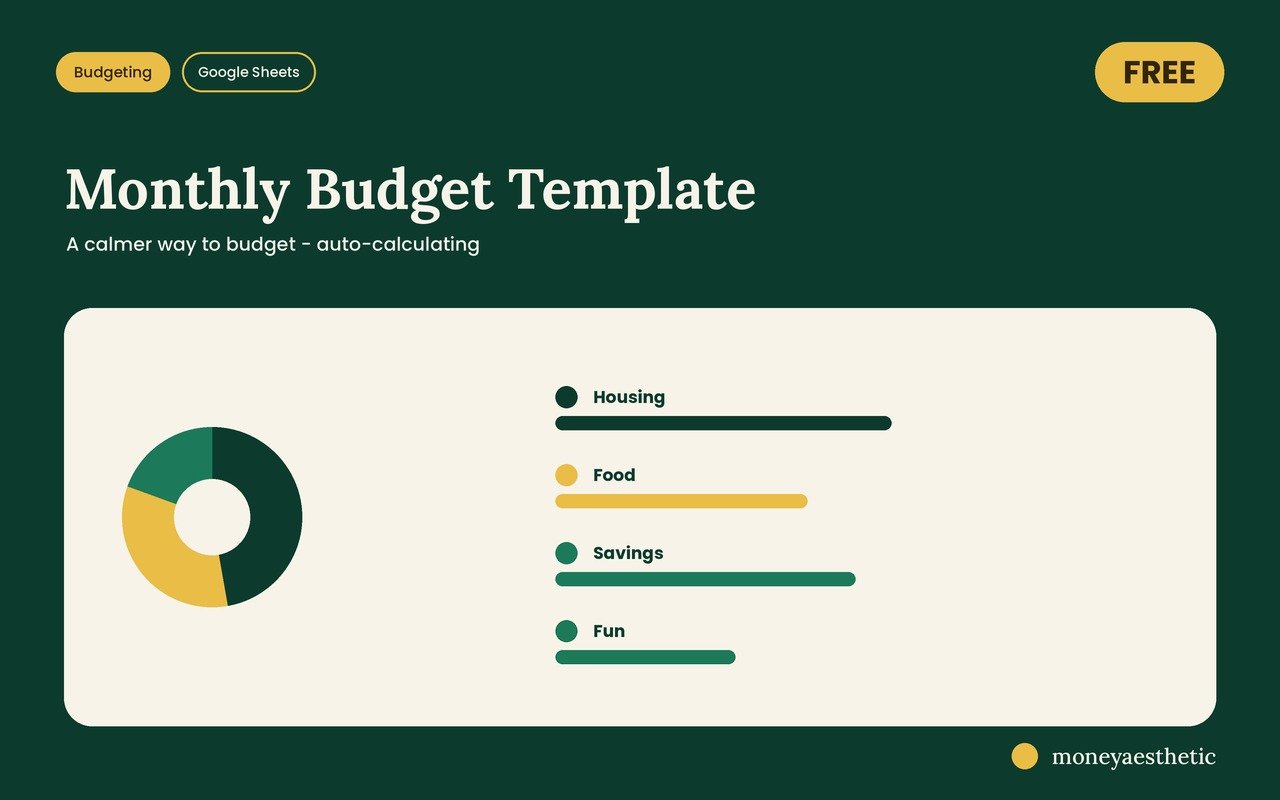
New here? Start free
You don’t have to buy anything to get going. The free Monthly Budget Template puts your income, bills and leftover on one page in about ten minutes, and it keeps working whether or not you ever buy another thing.
Get the free Monthly Budget Template →This article is for general education only and isn’t financial advice. Your rates, minimums and situation are your own. Check your statements and talk to a qualified professional before making decisions about debt.