

Quick answer: A debt payoff plan is a written list of every debt you owe, the order you will clear them in, and one number you commit to every month on top of the minimums. That last number is what sets your payoff date. With credit card balances at 1.26 trillion dollars in the second quarter of 2026 and the average rate on commercial-bank cards carrying a balance sitting at 22.15% in May 2026, picking a number you can hit in a bad month beats picking a bigger one you abandon.
A lot of debt payoff plans die in month two.
Not month one. Month one is great. You’re fired up, you found an extra 300 dollars, you wrote a payoff date on a sticky note. Then February has a vet bill in it, you pay the minimum instead, and the plan quietly stops being a plan. It becomes a thing you feel bad about.
That gap is expensive. The CFPB found that consumers were assessed 160 billion dollars in interest charges in 2024, up from 105 billion in 2022. Every month a balance sits there at today’s rates, a real chunk of your payment does nothing but rent the money.
So let’s build the version that survives February.
Key takeaways
- A debt payoff plan needs three things: every balance and rate written down, an order, and a monthly extra payment amount.
- Pick two extra-payment numbers, not one. A floor you can hit in your worst month and a stretch for good months.
- Set your payoff date off the floor number. A date built on your best month is a wish, not a plan.
- The order you pay debts in matters less than whether you keep paying at all.
What Is a Debt Payoff Plan?
A debt payoff plan is a single document that answers three questions: what you owe, what order you are clearing it in, and how much extra you send each month beyond the minimum payments. That’s the whole thing. It’s not a budget, and it’s not a strategy essay. A plan that fits on one screen and actually gets updated beats an elaborate one you open twice.
What separates a plan from a wish is the extra payment number. Minimums keep the account current. They do not get you out. The CFPB reported that average required minimum payments reached 129 dollars for general purpose cards in 2024, and that about 15 percent of general purpose cardholders paid only that minimum, the highest share since at least 2015. Minimums are the bank’s plan. The extra payment is yours.
How Do You Build a Debt Payoff Plan in One Sitting?
You can build this in about 30 minutes with your statements open. Five steps, in order:
- List every debt with its balance, APR, and minimum payment. All of them, including the 400 dollar store card you forgot about. You can’t plan around a number you haven’t looked at.
- Add up the minimums. This is your non-negotiable monthly floor before any progress happens.
- Find your extra payment. Look at your last three months of spending, not your best one. Whatever was left over in the worst of those three months is your starting number.
- Pick an order. Smallest balance first for motivation, highest rate first for math. Either works. If you’re torn, we walked through which debt to pay off first in more detail.
- Calculate the payoff date and write it down. Not a vibe, a month and a year. This is the number that keeps you going when the balance barely moves.
Step five is where most people stall, because doing it by hand means an amortization formula per debt, then redoing all of them every time a balance changes. That’s exactly the kind of math a spreadsheet should be doing while you drink your coffee.
How Much Extra Should You Actually Put Toward Debt?
Pick two numbers instead of one: a floor and a stretch. The floor is what you can send in a month with a car repair in it. The stretch is what you send when nothing goes wrong. Build the plan on the floor, treat every stretch month as a bonus, and the plan stops depending on your life being tidy.
This is the part almost nobody writes about. Most payoff guides tell you to find extra money and send it, as if the amount you found in January is a fixed property of your life. It isn’t. Income wobbles, cars break, kids need shoes. A plan built on one good month is a plan with a built-in failure date. When the income itself is the constraint, the guide on how to get out of debt on a low income covers that version of the problem.
When I rebuilt the debt payoff spreadsheet, I put in two extra-payment fields instead of one for exactly this reason. The single-field version made the payoff date look like a promise, and a promise you break in month two is worse than no date at all. With a floor and a stretch, the sheet shows a range, and a range is honest. People kept using it longer once the number stopped being a thing they were failing.
The extra payment cell is also, by a wide margin, the one buyers get stuck on. Almost nobody asks me how the interest math works. They ask what number to put in that box.
The Payoff Date Everyone Gets Wrong
Here is why the extra payment matters more than the order. Take a 6,000 dollar balance at 22.15%, the Federal Reserve’s May 2026 average for commercial-bank cards that carry a balance, and run it two ways:
- 150 dollars a month: about 74 months, roughly six years, with just under 5,000 dollars in interest.
- 250 dollars a month: 32 months, and about 2,000 dollars in interest.
One hundred extra dollars a month cuts three and a half years and roughly 3,000 dollars off the same debt. (That is straight amortization math at that rate, not a projection.)
Now the part that stings. In month one of the 150 dollar plan, the interest alone is 110.75 dollars. Only 39 dollars of your payment touches the balance. That’s not a sign you’re doing it wrong, it’s just what a 22% rate does, and it is why the balance looks frozen for the first few months. Knowing that in advance is most of what keeps people from quitting.
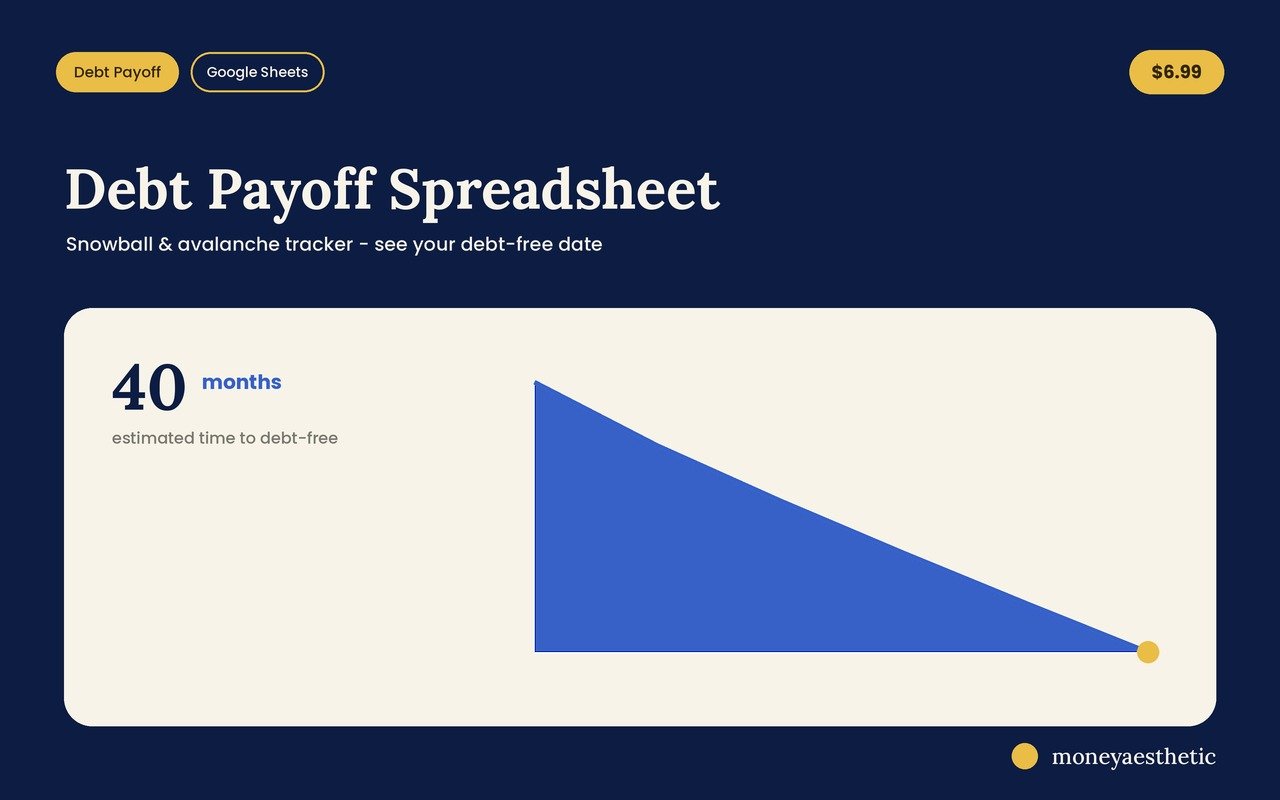
Stop redoing the math every month
Type in your balances, rates and minimums once. The sheet handles the amortization, shows a payoff date for both your floor and your stretch payment, and updates the whole plan when a balance changes. Snowball and avalanche are a dropdown, not a rewrite. Our guide on the debt avalanche spreadsheet covers how to lay the same thing out by hand.
Get the Debt Payoff Spreadsheet →Which Debt Goes First in Your Plan?
Order your debts either by smallest balance (snowball) or highest interest rate (avalanche), then throw your entire extra payment at the top one while everything else gets minimums. Avalanche saves more money on paper. Snowball closes accounts faster, which many people find easier to sustain. Pick one and stop relitigating it.
If you want the side-by-side numbers, the debt snowball spreadsheet walkthrough compares both on the same set of balances. And if a single large card is the whole problem, the specific playbook for paying off 10,000 in credit card debt goes deeper than this page does.
What Happens When You Miss a Month?
You go back to the floor payment next month. That’s the whole recovery rule. You don’t restart, you don’t invent a punishment payment, and you don’t throw the plan out because you broke it once. Missing a stretch month costs you a few weeks on the payoff date.
Missing a minimum payment is a different animal, and I don’t want to blur the two. That one can cost you a late fee, and it is not a small business: the CFPB reports that large issuers charged 17.0 billion dollars in late fees in 2024, up 17 percent since 2022. Payment history matters more than the rest of this page, too. The CFPB puts it plainly: most credit scores treat repayment history as the number one factor. So automate the minimums and let the extra payment be the part that flexes.
By far the most common question I get after someone buys a debt template is not about snowball versus avalanche. It is some version of “I went off plan last month, do I start over?” The answer is no. And the fact that so many people assume yes tells you how much of this is really just about not quitting.
One honest caveat. If your plan says six or seven years and the balance keeps growing anyway, the problem is not your payoff order. That’s a cash flow problem wearing a debt costume, and it is worth reading about how much credit card debt is too much before you white-knuckle a plan that cannot work.
Spreadsheet, App, or Printable: Where Should the Plan Live?
Put your plan wherever you will actually open it monthly. A spreadsheet wins if you have more than two or three debts, because it recalculates payoff dates automatically when a balance changes. A printable wins if seeing the progress on paper is what keeps you honest. An app wins if you want reminders and will tolerate linking accounts.
The failure mode is the same for all three: a plan nobody updates. If paper is what gets touched, the debt tracker printable pairs well with a spreadsheet that does the math behind it. And if you’re still deciding whether the extra money should go to debt at all instead of savings, that tradeoff is its own decision, covered in pay off debt or save.
Context for scale, if you want it: Americans were carrying 1.26 trillion dollars in card balances as of the second quarter of 2026, up 21 billion in a single quarter, according to the New York Fed. You’re not behind. You’re just at the part where you write it down.
Frequently asked questions
How much should my debt payoff plan pay each month?
Send every minimum payment plus a fixed extra amount you can cover in a below-average month. That floor number is your real plan. Anything above it in a good month is a bonus that pulls your payoff date in, but the date you write down should assume only the floor.
How long should a debt payoff plan take?
That depends on the balance and on how big the extra payment is, so run your own numbers before you commit to a date. The 6,000 dollar example above takes about 74 months at 150 a month and 32 months at 250. If your own math lands years past the point you can stay patient, the plan needs more income, a lower rate, or outside help rather than more willpower.
Should I save money while paying off debt?
Keep a small cash buffer before you go aggressive on payoff. Without it, the first unexpected expense goes straight back onto a card and undoes the progress. After that buffer exists, extra money generally does more good against a 22% balance than in a savings account.
Does a debt payoff plan help my credit score?
Usually yes, through two different doors. Paying balances down lowers how much of your limit you are using, and the CFPB’s guidance points to keeping that at no more than 30 percent of your total credit limit. The bigger lever is simply paying on time, which the CFPB calls the number one factor in most credit scores. One caution from the same guidance: closing cards and piling your balances onto one remaining card can hurt your score, because it drives that card’s utilization up.
What should be in a debt payoff spreadsheet?
Balance, APR and minimum payment for every debt, a payoff order, one extra payment field (ideally two, for a floor and a stretch), a calculated payoff date per debt, and a running total of interest paid. Anything beyond that is decoration.
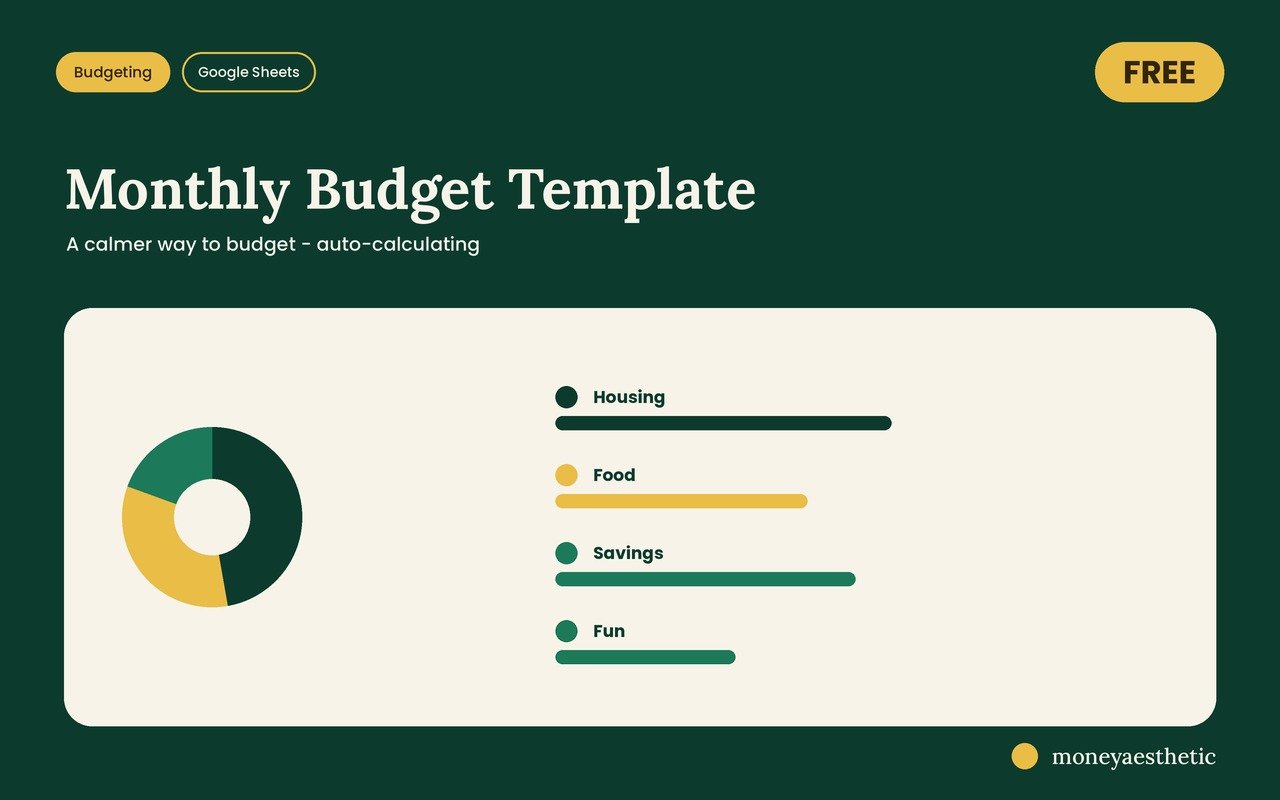
Not sure what your floor payment is yet?
You can’t pick an extra payment number until you know what’s actually left over each month. This free monthly budget template lays out income, bills and spending on one page so the leftover number stops being a guess.
Get the free Monthly Budget Template →This article is for general information only and is not financial, tax, or legal advice. Rates and figures cited are as of their published dates and change over time. Consider speaking with a qualified professional about your specific situation.