

Quick answer: A good elf arrival letter does four jobs in under 150 words: says hello by name, gives the elf’s name, sets one or two house rules, and tells your child when the elf leaves. Keep the tone warm, skip the “be good or no presents” threat, and write it so a six-year-old can read it aloud at breakfast.
It’s 11 p.m., the elf has to be on the mantel by morning, and you’re staring at a blank page trying to sound like a tiny magical being from the North Pole. You’re not alone. The letter is the part people put off, because it feels like it has to be perfect.
It doesn’t. Kids remember the moment they find it, not the grammar. Below you’ll find what to put in the letter, five ready-to-steal wording ideas for different situations, and a few ways to keep the whole elf season from quietly turning into another line on the December card bill.
Key takeaways
- Four parts: hello by name, the elf’s name, one or two rules, and when the elf goes home.
- Short beats clever. Aim for something your child can read in one breath.
- Write a different letter for a first-time elf, a returning elf and a late elf.
- The letter is one of the cheapest bits of magic in the season. You don’t need props to make day one feel big.
What should an elf arrival letter say?
An elf arrival letter should say hello to each child by name, introduce the elf by name, explain one or two simple house rules, and say the elf will head home on Christmas Eve. Those four pieces answer the questions kids ask first: who are you, why are you here, what do I do, and how long are you staying.
Everything else is decoration. Some families add a line about kindness, a joke, or a hint about where the elf will hide tomorrow. Others keep it to five sentences. Both work. The mistake people make is trying to cover the whole season in one page, when the letter only has to carry the first morning.
Five elf arrival letter wording ideas you can copy
These five openings cover five common situations: a brand-new elf, a returning elf, a kindness-first family, more than one child, and an elf who shows up late. Change the names, keep what fits, and cross out the rest.
- The first-ever arrival. “Dear Maya, I’m Pip, and Santa picked me to spend the holidays at your house! I flew all night to get here. I’ll be watching, listening and cheering you on until Christmas Eve.”
- The returning elf. “I’m back, Leo! Did you miss me? The North Pole was busy, but I asked Santa if I could come back to you, and he said yes.”
- Kindness instead of a naughty list. “I’m not here to count mistakes. I’m here to spot kind things, like sharing, helping and saying thank you. Let’s see how many we can find together.”
- Two or more kids. “Hello Ava, Noah and Ruby! Santa said this house had three of the best helpers he knows, so he sent me to see for myself.”
- The elf who’s a day (or a week) late. “Sorry I’m late! There was a big snowstorm over the North Pole and the sleigh had to wait it out. I’m here now, and I promise to make up for lost time.”
That last one matters more than it looks. If you missed the day you meant to start, the storm line takes the pressure off. Nobody has to explain anything.
What rules should the elf give?
The elf should give one or two rules at most, written as friendly requests rather than warnings. A common rule is “please don’t touch me, or my magic might fade,” because it keeps the elf in one piece until Christmas Eve. A second rule can be anything your house needs, like “tell me one kind thing you did today.”
More than two rules and it stops sounding like a letter and starts sounding like a chore chart. If your child is very young or very anxious, it’s fine to soften the touching rule too: “If you touch me by accident, sprinkle a little cinnamon next to me and I’ll be fine by morning.”
How do you announce your elf’s arrival without spending much?
You announce the arrival with the letter itself and one small scene built from things already in the house. A blanket tent, a paper-towel-roll “sleigh,” or the elf sitting on a stack of books with a mini cup of cocoa all read as magic to a kid. The letter does the storytelling, so the setup can be simple.
This is worth saying out loud because the rest of December is already expensive. In the National Retail Federation’s 2025 holiday survey, shoppers planned to spend $890.49 per person on the season, with $627.93 of it on gifts. Arrival morning doesn’t need to add to that. The elf-kit aisle is built to make you feel like it does.
That’s the thinking behind the elf arrival letter template: one purchase that covers the whole season, instead of a new prop every week. If you’re keeping the rest of the holiday on a plan too, our guide on how much to spend on Christmas gifts starts from one total for everything.
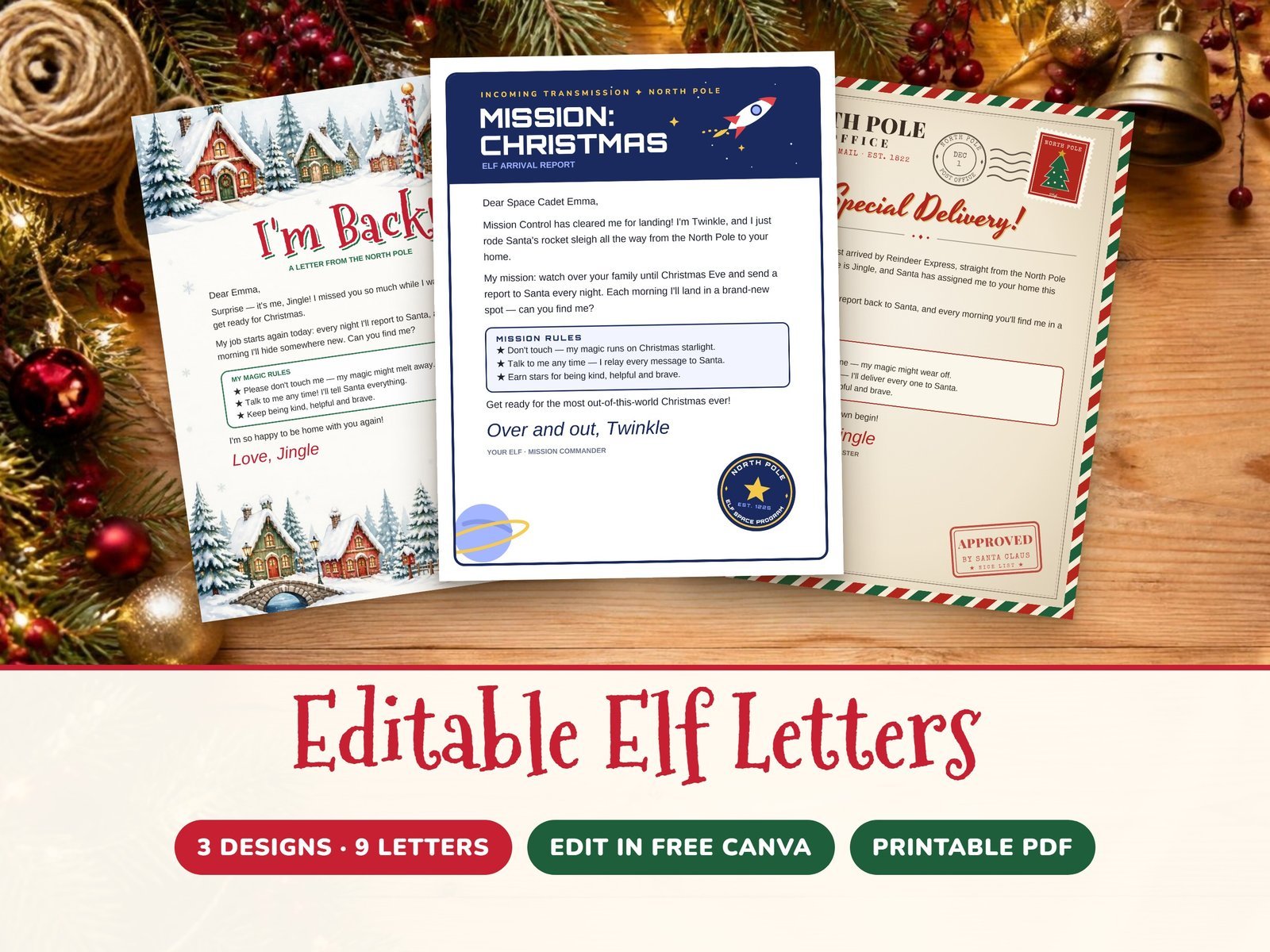
Nine elf letters, done tonight
Arrival, return and goodbye letters in three designs: Space Mission, Snowy Village and North Pole Post Office. Type the names in free Canva, or print the fill-in version and write them by hand.
Get the elf letter set →Arrival, return and goodbye letters, explained
Many families end up needing three letters, not one: an arrival letter for the first morning, a return letter for years when the same elf comes back, and a goodbye letter for Christmas Eve. Planning all three at once is what keeps you from writing a farewell at 10 p.m. on December 24th.
When I put the set together, I made three letters per design for exactly that reason. The arrival letter introduces the elf, the “I’m back” letter skips the introductions for a returning elf, and the goodbye letter gives the season an ending. A goodbye that says “I’ll tell Santa about the kind things you did” lands softer than the elf just vanishing.
I also made one of the three designs a Space Mission set, where the elf “reports in” from North Pole mission control. A lot of elf printables look alike: red, green, a cartoon elf. A kid who’s into rockets gets a letter that feels written for them, and that surprise on arrival morning is the whole point.
Handwritten or printed: which should you use?
Use whichever version you’ll actually finish tonight. A printed letter looks official and is easier to read for early readers. A handwritten note feels personal but takes longer, and some parents worry kids will recognize their handwriting.
The middle path is a printed letter with a handwritten name, and that’s why the set includes fill-in PDFs alongside the Canva files. I added the fill-in version for people who don’t want to edit anything online, like a grandparent printing it at their own house. Both come in US Letter and A4, so they print on whatever paper is already in the printer.
A few mistakes that make the letter harder than it needs to be
- Writing it the night before, from scratch, every year. Save your letter. Next year you only change the names and the date.
- Promising a daily surprise. If the letter says the elf will bring something every day, you’ve just signed up for a small purchase every single morning. Promise a new hiding spot instead.
- Tying every rule to presents. It works for a week, then it’s a threat you have to keep enforcing. Kindness-first letters are easier to live with.
- Forgetting siblings. If there are two kids, both names go in the first line. They will check.
FAQ
When should the elf arrive?
Pick a start date that fits your December, such as the day after Thanksgiving or December 1st, and have the elf leave on Christmas Eve. A shorter season is easier on busy weeks.
Where can I get an elf welcome letter?
You can write one yourself using the four parts above, or use a ready-made set. The Money Aesthetic elf letter set includes arrival, return and goodbye letters in three designs, editable in free Canva or as fill-in PDFs.
What if my elf forgot to come on the first day?
Use a late-arrival letter: a snowstorm, a sleigh delay or a detour to another house all work. Kids accept a good story faster than an apology.
Do I need Canva Pro to edit the elf letters?
No. The Money Aesthetic elf letters open in a free Canva account, and the fill-in PDFs don’t need a computer at all.
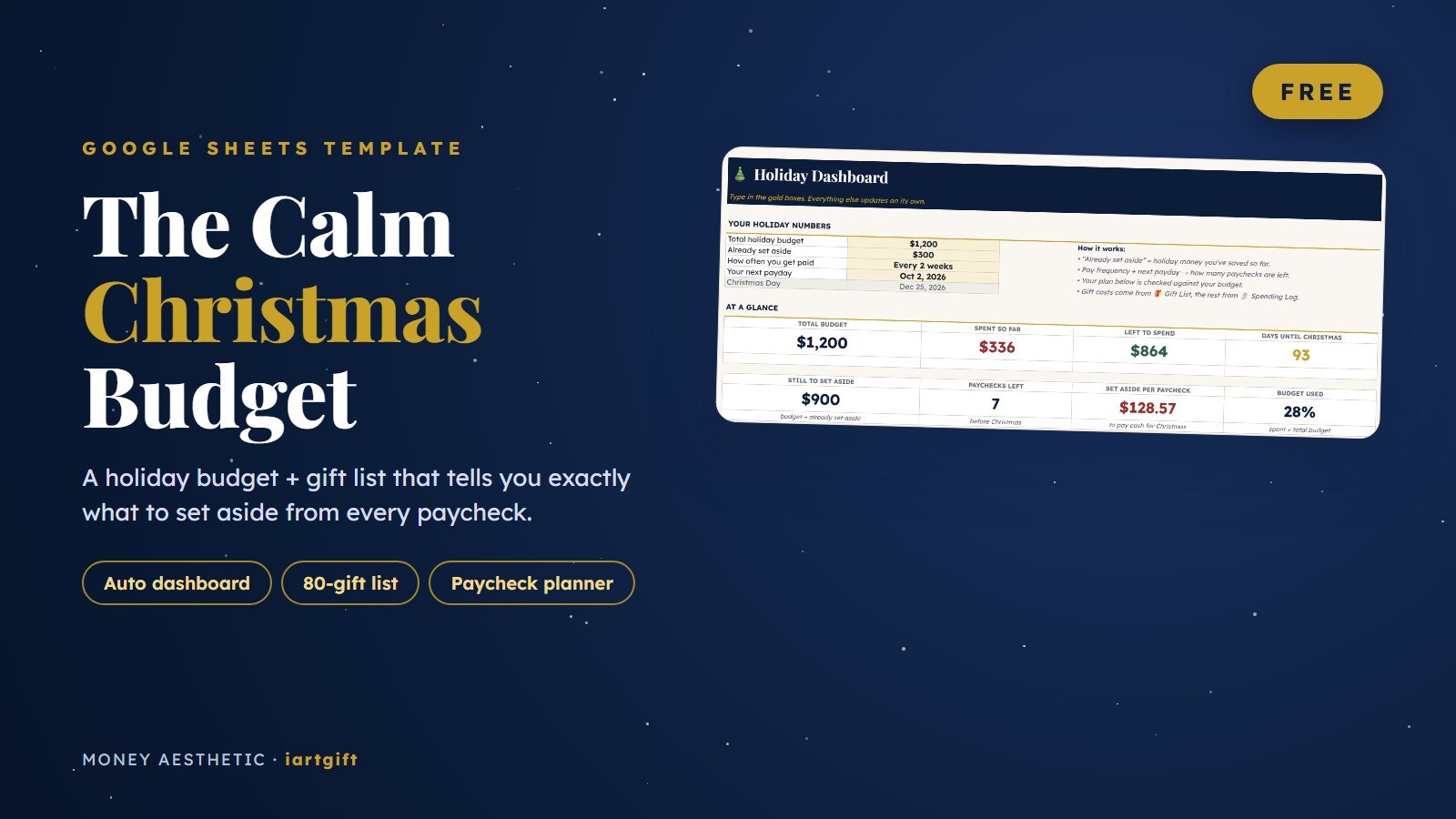
Keep the rest of Christmas on a plan
The free Christmas Budget Planner sets one total for the holiday, tells you what to set aside each payday, and keeps a gift list with a budget next to every name.
Get the free Christmas Budget Planner →This article is general information, not financial advice. Spending figures are from the source named above as of its publication date. The Elf on the Shelf® is a trademark of its owner; Money Aesthetic is not affiliated with it.