

Quick answer
Pay yourself first means moving money into savings the moment you get paid (before rent, groceries, or fun), often 10–20% of each paycheck, sent automatically. It works because saving stops being “whatever’s left.” And leftovers often aren’t enough: per the Fed’s May 2026 report, only 55% of U.S. adults had emergency savings to cover three months of expenses in 2025.
A lot of budgets share the same quiet flaw: savings went last. You paid the bills, bought the groceries, lived your life, and promised that whatever survived until the end of the month would go into savings.
Nothing survived until the end of the month. It rarely does.
That’s often less a discipline problem than an order-of-operations problem. As long as saving is the caboose, the restaurant, the store run, and the “it was on sale” get to eat first. Pay yourself first just flips the line: savings gets served before anyone else even sits down.
Key takeaways
- Pay yourself first = savings comes out on payday, automatically, before you can spend it. The rest of your budget runs on what’s left.
- Aim for 10–20% of take-home pay, but a small automatic amount can beat a heroic manual 20% you end up quitting.
- Park the money in a separate high-yield account. The national average savings rate was 0.38% as of August 2026 (FDIC), so shop for one that pays more.
- There’s a smart order for your first dollars: employer match → starter emergency fund → expensive debt → the fun stuff.
What does pay yourself first actually mean?
It’s sometimes called reverse budgeting, and the whole method fits in a sentence: when your paycheck lands, a fixed slice goes straight to savings, and then you budget the rest as if the slice wasn’t there.
You’re not saving what’s left after spending. You’re spending what’s left after saving. Same words, completely different bank account.
The “pay” part matters, too. You show up, you work, you make someone else’s business run, and future-you is the person on the payroll who gets stiffed? Rude. Treat your savings like a bill with your own name on it: fixed amount, due on payday, non-negotiable.
Why this beats a normal budget (with receipts)
Americans are not, as a group, drowning in spare cash. The personal saving rate was 3.0% in July 2026, per the Bureau of Economic Analysis. And the Federal Reserve’s latest well-being survey (published May 2026) found just 55% of adults had emergency savings to cover three months of expenses in 2025, unchanged from 2024.
Here’s the interesting part: that’s often not just a math problem. It can be a design problem. Money sitting in checking can read as “spendable” to your brain, and your brain is an extremely motivated lawyer. Pay yourself first works by not letting the case go to trial. The money’s gone before the arguing starts.
Automation does the heavy lifting. No monthly willpower check, no “I’ll transfer it Sunday,” no negotiation. Payday comes and it just… happens, and after a while you may realize you stopped noticing. That’s the trick: a budget that runs whether or not you’re feeling disciplined that week. If you want the full picture around that automatic slice, a monthly budget template (that one’s free) shows where the rest goes.
How to set it up
- Pick your number. The classic target is 10–20% of take-home pay. Truly tight month-to-month? Start small, for example 2%. The habit is the asset; the percentage grows later.
- Open a separate high-yield savings account. Not a savings account at the same bank as your checking, a tap away from ruin. Per the FDIC, the national average savings rate was 0.38% as of August 17, 2026, so it pays to shop for an account that beats the average. Same money, better landlord.
- Automate the split. Either ask payroll to direct-deposit a slice into savings (the money skips checking, chef’s kiss), or set an auto-transfer for the morning after each payday.
- Budget what’s left. This is where plenty of guides wave goodbye, and where a lot of setups faceplant. The money that remains still needs a job list: bills, groceries, fun, in that order, per paycheck.
- Raise the number regularly. For example, nudge 2% to 4%, or 10% to 12%. You adapted to inflation; you can adapt to this, except this version ends with you rich(er).
Step 4 is honestly the make-or-break. Paying yourself first and then winging the rest is how you end up raiding the savings account before the next payday. Knowing what’s left to spend after savings and bills are handled is the whole ballgame, and a budget sheet can do that math for you.
Pay yourself first, then see what’s left
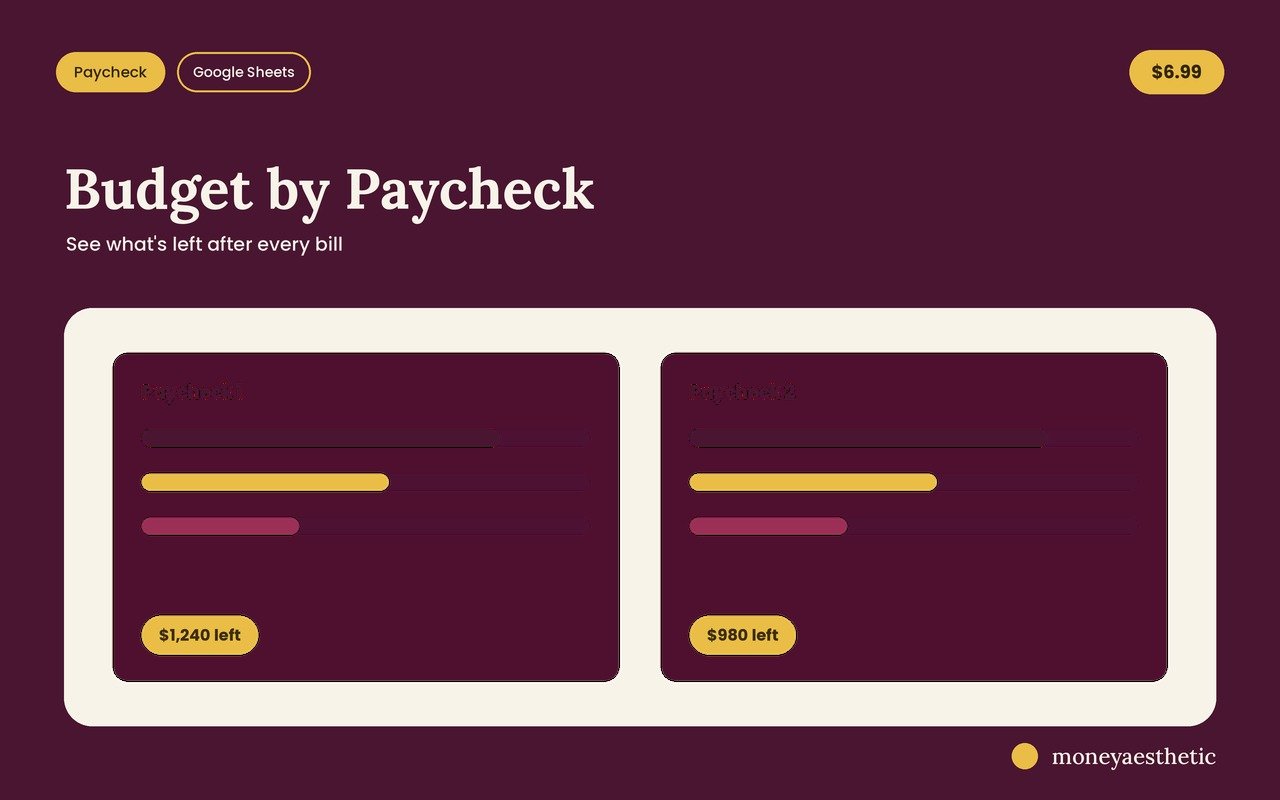
The Budget by Paycheck template turns weekly, biweekly or semi-monthly pay into a monthly figure, tracks fixed and variable expenses as budgeted vs. actual, and shows how much money is left. A bill calendar and savings goals live in the same file, so payday stops being a guessing game.
Get Budget by Paycheck →A smart order to pay yourself
“Put money in savings” is like “eat better”: directionally true, uselessly vague. Your first dollars have a sensible order, because some of them earn instant returns and some mainly keep you out of new debt:
| Priority | Where the money goes | Why this order |
|---|---|---|
| 1 | 401(k) up to the employer match | An employer match adds money on top of what you put in. Skipping the match is declining a raise. |
| 2 | Starter emergency fund (a small first cushion) | Keeps a bad week from becoming credit card debt. |
| 3 | High-interest debt | A typical savings account earns far less than a 20%+ card charges. Kill it, then redirect the payment to savings. |
| 4 | Full emergency fund (3–6 months) | The sleep-at-night tier. This is what that 55% stat is about. |
| 5 | Goals: investing, sinking funds, house, travel | Now the fun compounding starts. |
Not sure how big tier 4 should be for your life? We did the math on how much emergency fund you actually need. It varies more from person to person than the internet pretends.
Common misconceptions
“Pay yourself first means treat yourself.” Wrong direction entirely. It’s paying future you, the one who wants to quit a bad job someday or survive a transmission repair without a payment plan. Present you still gets fun money; it’s just budgeted honestly.
“You need to save 20% for it to work.” The percentage is a dial, not an entry fee. An automatic 2% you don’t touch can outrun a 20% you manage once or twice a year, because the 2% happens on payday after payday: 26 times a year on a biweekly schedule.
“It’s the same as the 50/30/20 rule.” Cousins, not twins. The 50/30/20 rule tells you how to divide the pie; pay yourself first is about when the savings slice leaves the plate: first, automatically. You can absolutely run both at once.
“I live paycheck to paycheck, so this isn’t for me.” This method can work on tight budgets too, just at a smaller scale. Saving is a timing problem before it’s an amount problem. Even a small amount each check builds the muscle, and the muscle is what eventually builds the balance.
The part that trips people up: the raid
Here’s what often kills pay-yourself-first setups: not the saving, the un-saving. Late in the pay period, checking runs dry, and you quietly transfer the money back. Do that a few times and the system starts to become theater.
A few raid-proofing moves worth trying:
- Add friction. Keep savings at a different bank with no debit card, where moving money back can take days. A waiting period gives the impulse time to fade.
- Name the account. If your bank lets you rename accounts, pulling money out of “Leaving My Lease” hits different than pulling it from “Savings.”
- Budget a buffer. Plenty of raids aren’t emergencies. They’re a birthday gift, an oil change, a Tuesday. A small “life happens” category in your spending plan absorbs those hits so your savings doesn’t have to.
If the raid keeps happening anyway, the savings slice may be set too high for right now. Lower it, keep it automatic, and let it be boring. Boring is what winning looks like here.
FAQ: pay yourself first
What does pay yourself first mean?
Moving a set amount into savings the moment you’re paid (before bills, before fun), then budgeting the rest as your real income. Also known as reverse budgeting, because savings jumps the line.
How much should you pay yourself first?
The classic range is 10–20% of take-home pay. Tight month? Start small (for example 1–5%) and climb. The automatic part matters more than the amount: 2% on each biweekly payday adds up to more over a year than 20% saved twice a year.
Is this the same as the 50/30/20 rule?
Related but different jobs. 50/30/20 divides the pie (needs/wants/savings); pay yourself first decides when the savings slice leaves: first, automatically. They stack nicely together.
Does it work if I live paycheck to paycheck?
It can, just scaled down. Even a small amount each check builds the habit and a starter buffer. Saving is a timing problem before it’s an amount problem.
Where should the money actually go?
A smart order: 401(k) up to the employer match → starter emergency fund in a separate high-yield account → high-interest debt → full 3–6 month emergency fund → goals like investing and sinking funds.
Pay myself first or pay off debt first?
Both, in order: take the free employer match, park a small starter fund, then hit the expensive debt hard. A typical savings account earns far less than a 20%+ card charges, but a small buffer stops new debt from forming while you fight the old.
How do I automate it?
Ask payroll to split your direct deposit so a slice lands straight in savings, or schedule an auto-transfer for the morning after payday. The payroll split is stronger, because money that skips checking is harder to spend.
Why is saving money so hard for so many people?
One common reason is order of operations: saving often happens last, after the other spending. The personal saving rate was 3.0% in July 2026 (BEA), and only 55% of adults had emergency savings to cover three months of expenses (Federal Reserve, May 2026). Money that sits in checking looks spendable, and automation quietly removes the temptation.
Don’t have a budget sheet yet?
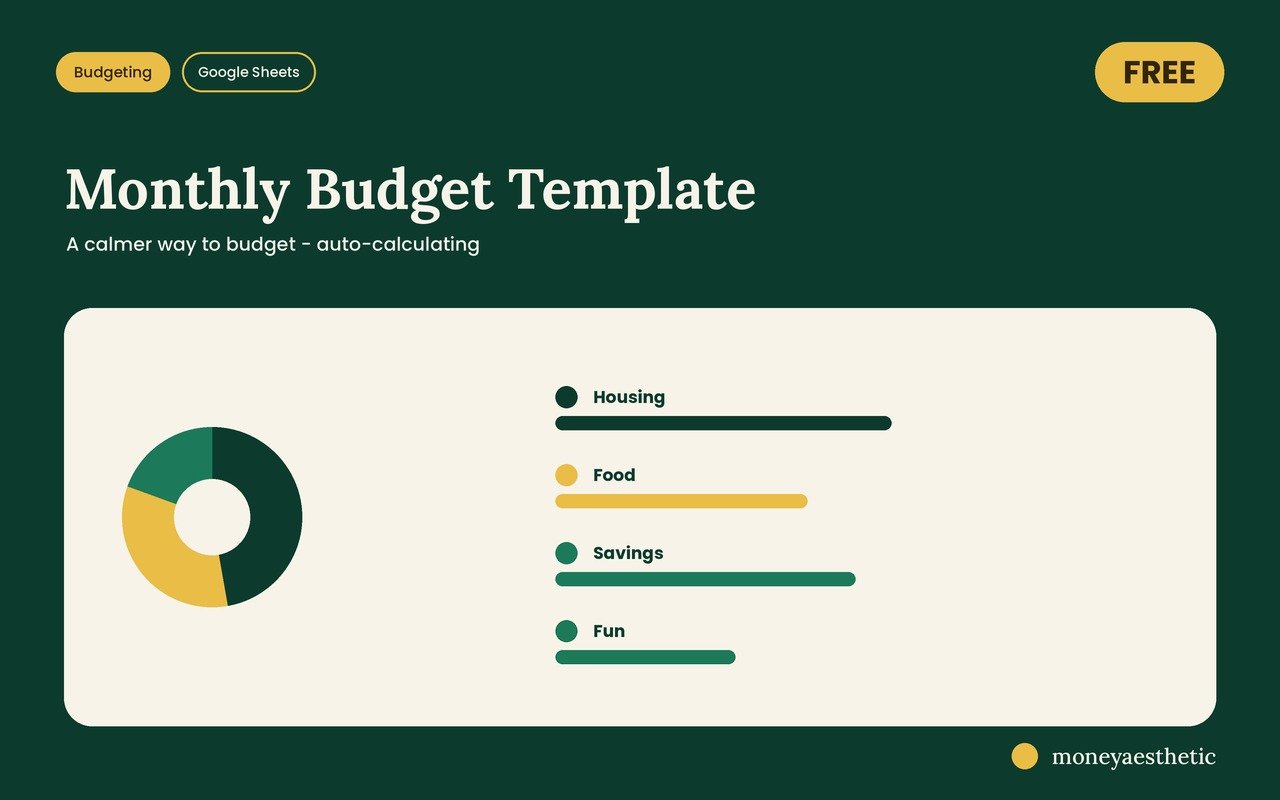
The free Monthly Budget Template is an easy place to start: one tab, income at the top, a bill checklist at the bottom, and the totals calculated for you. It costs nothing.
Get the free Monthly Budget Template →This article is for general information only and isn’t financial advice. Your situation is unique. For personal guidance, talk to a qualified financial professional.