

Quick answer: Here’s how to save for Christmas without a January credit-card hangover: open a separate account today, decide your number, and divide it by the weeks left before mid-December. A $900 goal works out to roughly $45 a week if you start in late July, or about $70 a week if you start in mid-September. Paying from that fund keeps gifts off a card: credit card accounts charged interest averaged 22.15% in the second quarter of 2026, per the Federal Reserve’s September 2026 G.19 release.
Here’s a pattern that isn’t fun: overspending at Christmas often isn’t a decision. You just… run out of runway. It’s mid-December, the gifts aren’t bought, the plane tickets are somehow the price of a small kidney, and the credit card is right there, being helpful. So you use it. And then January shows up with a bill.
You already know how that story ends, because you’ve probably lived it. In LendingTree’s December 2025 holiday debt survey, 37% of U.S. consumers said they took on holiday debt, those who did averaged $1,223, and 63% of them expected to need three months or longer to pay it off. Months of paying for a December panic. No thanks.
The good news: the fix doesn’t have to be willpower or earning more. It can be timing. Start a small holiday stash months ahead, well before the December rush, and future-you can shop calm, pay cash, and walk into January without a holiday card balance. Let’s set it up.
Key takeaways
- A Christmas fund is just a sinking fund: you save a little each payday for a known future cost, so it’s already paid for when it lands.
- NRF’s 2025 holiday survey found consumers planned to spend $890.49 per person on average, and gifts were about 70% of that.
- Starting in late July instead of November turns a scary ~$150/week into a much smaller ~$45/week.
- Keep it in a separate high-yield account so it’s harder to “accidentally” spend it on a random Tuesday.
What a Christmas fund actually is (spoiler: a sinking fund)
A Christmas fund sounds festive and special, but mechanically it’s something pretty unglamorous: a sinking fund. You take a big expense you know is coming, divide it by the months until it arrives, and stash that slice each payday. By the time the expense shows up, the money’s already sitting there. No scramble, no card. And if you are saving for more than Christmas, a sinking funds tracker helps you line them up by due date.
Part of what makes the holidays hard on a budget is that we tend to treat them like a surprise. Christmas is on December 25th. It has been for a while. It’s a completely predictable “emergency,” which makes it a good thing to pre-fund. Once you see it that way, the pressure kind of melts. You’re not scrambling for $900 in December; you’re setting aside a manageable amount each week, starting early.
Why starting early beats December-you
Let’s talk real numbers, because this is where it clicks: the later you start, the bigger each deposit has to be.
For a sense of scale, the National Retail Federation’s 2025 survey found consumers planned to spend an average of $890.49 per person, with about $628 going to gifts and another $263 to seasonal items like food, decorations, and cards. That was the second-highest amount in the survey’s 23-year history.
Now watch what timing does to a round $900 goal. The later you start, the more each deposit has to hurt:
| If you start… | Weeks until mid-December | Weekly to reach $900 | Vibe |
|---|---|---|---|
| Late July | ~20 | ~$45 | Barely notice it |
| Early September | ~15 | ~$60 | Totally doable |
| November | ~6 | ~$150 | Ouch |
| December | ~2 | ~$450 | Hello, credit card |
Same goal, wildly different feeling, and that “December” row is where a credit card starts to look awfully tempting. Starting in the middle of summer feels almost too easy, which is the point. A great time to plant this tree was last year; the next good time is today, while you’re reading this.
One more perk of the head start that has nothing to do with the math: you get to actually shop the sales. When the money’s ready early, you can shop sales as they come up instead of panic-buying whatever’s still on the shelf in the last days before Christmas.
How to save for Christmas in 5 steps
Here’s the whole system. Once the transfer is automated, it mostly runs itself.
- Pull your real number from last year. Don’t guess. Open last December’s bank and card statements and total up everything holiday: gifts, food, travel, décor, wrapping, the “just because” stuff. Add a small buffer for price increases and the gift you’ll forget (for context, consumer prices rose 3.4% over the 12 months ending August 2026, per BLS’s August 2026 CPI release). That total is your goal.
- Divide by the weeks left. Take your number and split it across the paydays between now and mid-December. That’s your weekly (or per-paycheck) amount. For a $900 goal started in late July, that’s about $45 a week; started in mid-September, about $70.
- Open a separate account. A separate high-yield savings account can work well: it’s out of sight, out of spending range, and earns interest, so your holiday cash grows a little instead of sitting bored in checking. Compare its APY with the FDIC’s national average savings rate, which was 0.38% in the August 17, 2026 update. Nickname it something you won’t raid.
- Automate the transfer. Set it to move the day after payday, before your brain notices the money exists. That way the money moves before you have a chance to spend it.
- Track it somewhere you’ll look. Watching the number climb toward your goal can be weirdly motivating, and it helps keep the holiday line from quietly bleeding into your grocery money. This is the kind of thing a monthly budget template handles for you: your Christmas fund can sit in the savings goals section, with its target, amount saved, and % done, right next to the rest of your budget.
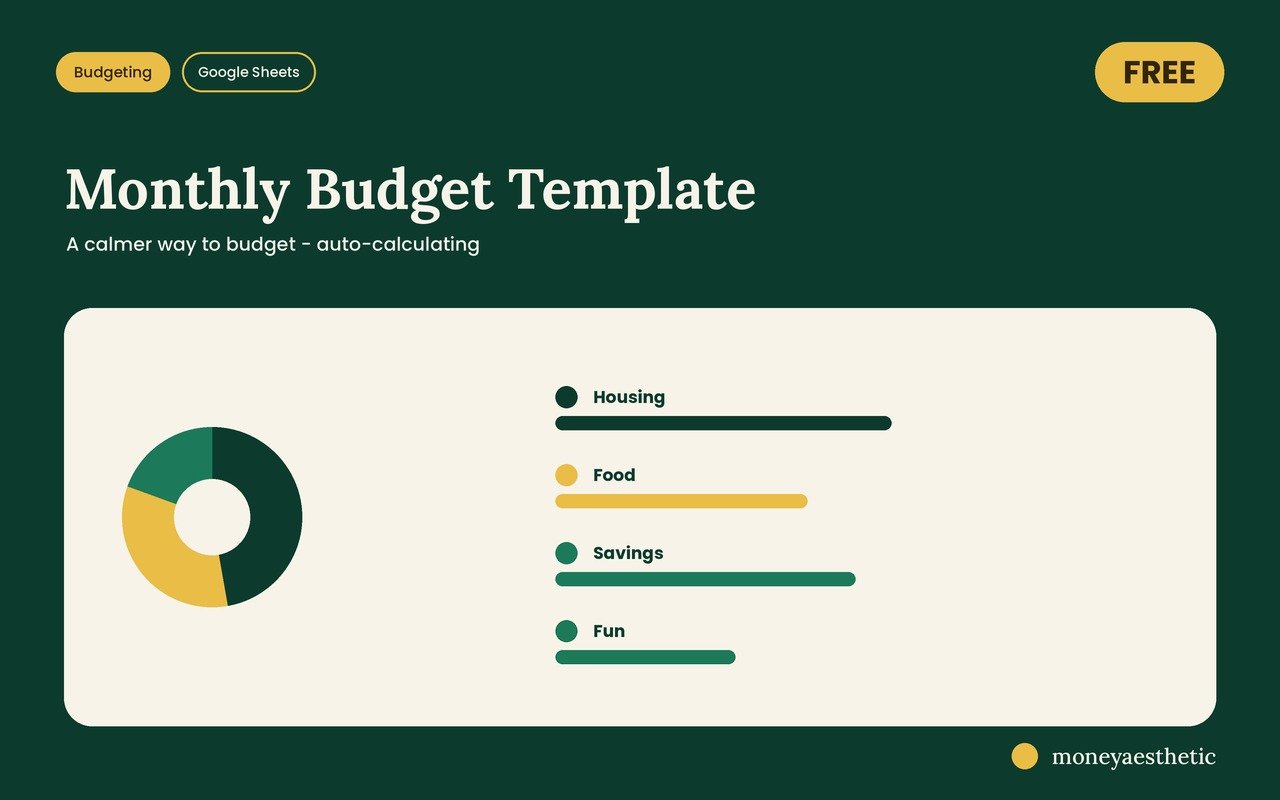
Find your $45 a week (free template)
Not sure where the holiday money comes from? The free Monthly Budget Template adds it up for you: enter your income, spending, and savings, and the snapshot shows what’s left over, so you can decide how much to move into your Christmas fund. Pretty and self-totaling.
Get the free budget template →Common misconceptions about saving for Christmas
“It’s too early to think about Christmas in July.” The opposite is true: starting early makes it easier to fund, because each extra week shrinks the deposit. Waiting until it “feels” like the season is what makes the December deposits so big.
“I’ll just put it on the card and pay it off in January.” A holiday balance can take longer to clear than planned: in the LendingTree survey above, 63% of people with holiday debt expected to need three months or longer to pay it off. Credit card accounts charged interest averaged 22.15% in the second quarter of 2026 (Federal Reserve G.19), so an $890 balance at that rate adds roughly $16 in interest in the first month alone. Gifts paid from a savings fund stay off the card, so they don’t collect card interest.
“A few dollars a week won’t make a dent.” Forty-five dollars a week for twenty weeks is $900, a full holiday goal like the one in the table above. Small and boring is kind of the point.
The part of Christmas people forget to budget for
Here’s the part that’s easy to skip. When people set a holiday number, they think gifts: the presents under the tree. But look back at that NRF breakdown above: gifts were only part of the total, and the rest went to seasonal items like food, decorations, and cards. And that survey’s breakdown doesn’t list travel, which can be a big one for families who head home for the holidays.
So the mistake to watch for isn’t overspending on gifts. It’s budgeting for presents, nailing it, feeling great… and then getting blindsided by the grocery haul for Christmas dinner, the plane tickets home, the trendy decoration you swore you’d skip, the teacher gifts, the tip for the mail carrier, the ugly-sweater party. Those “little” extras are where a December budget can break.
The fix is simple: when you set your number in step one, list the non-gift stuff on purpose. Travel, food, décor, wrapping, cards, tips, and the mystery category (there’s usually one). If money’s genuinely tight this year, this is also where a quick no-spend challenge in a slow month can help top up the fund, or where trimming a few habits with a little help on how to stop spending money can free up the weekly deposit. Budget for the whole holiday, not just the presents, and December is less likely to ambush you.
Frequently asked questions
How much should I save for Christmas?
Your real number comes from last year’s statements. Total your actual holiday spending, including gifts, food, travel, and décor, add a small buffer, and save toward that.
When should I start saving for Christmas?
As early as you can, and any head start helps. Starting in late July gives you roughly 20 weeks before mid-December, which turns a $900 goal into about $45 a week instead of about $150 a week in November.
Where should I keep my Christmas fund?
In a separate high-yield savings account, not your checking. It stays out of spending range and earns interest while it waits, so compare APYs before you pick one. Don’t invest short-term holiday cash in the stock market.
How do I save for Christmas on a tight budget?
Start smaller and start early, because even a small weekly amount adds up over months. Build the fund from last year’s real number, automate a tiny transfer each payday, and use a no-spend stretch or trimmed subscriptions to top it up.
Is a Christmas fund the same as a sinking fund?
Yes. A Christmas fund is a sinking fund for a known, dated expense: you divide the total by the months until it’s due and save that slice each payday so it’s fully funded before the holidays arrive.
How much is $45 a week over the year?
About $2,340 a year (45 × 52), which covers a $900 holiday goal more than twice over. For just the roughly 20 weeks from late July to mid-December, $45 a week reaches about $900.
Should I use a Christmas Club account?
You can. Check the club account’s rate, fees, and withdrawal rules first, and compare them with a regular high-yield savings account, which gives you the same separate-bucket benefit.
What if I already have holiday debt from last year?
Tackle both gently: automate a small Christmas-fund transfer so you don’t repeat the cycle, while putting extra toward the balance. Prioritize the highest-interest cards first.
This article is for general educational purposes only and isn’t financial advice. Savings account rates and figures cited reflect the dated sources named above and change over time. For guidance on your specific situation, consider speaking with a qualified financial professional.